

Puissance de découpe laser: De combien as-tu vraiment besoin?
La puissance de découpe au laser est l’un des facteurs les plus importants pour déterminer l’épaisseur de coupe, vitesse, efficacité, et coûts d’exploitation. Choisir le bon niveau de puissance affecte directement la productivité, Qualité de coupe, et ROI à long terme.
Les découpeuses laser industrielles modernes couvrent généralement une très grande variété de spectres — des systèmes à faible puissance d’environ 30 watts à des machines industrielles lourdes atteignant 40 kW . Dans la fabrication de tôle, Les machines de découpe laser à fibre sont couramment disponibles de 1 kW jusqu’à 40 kW . Comprendre ce que signifient ces chiffres — et comment ils influencent votre processus — est crucial avant d’investir dans un système.
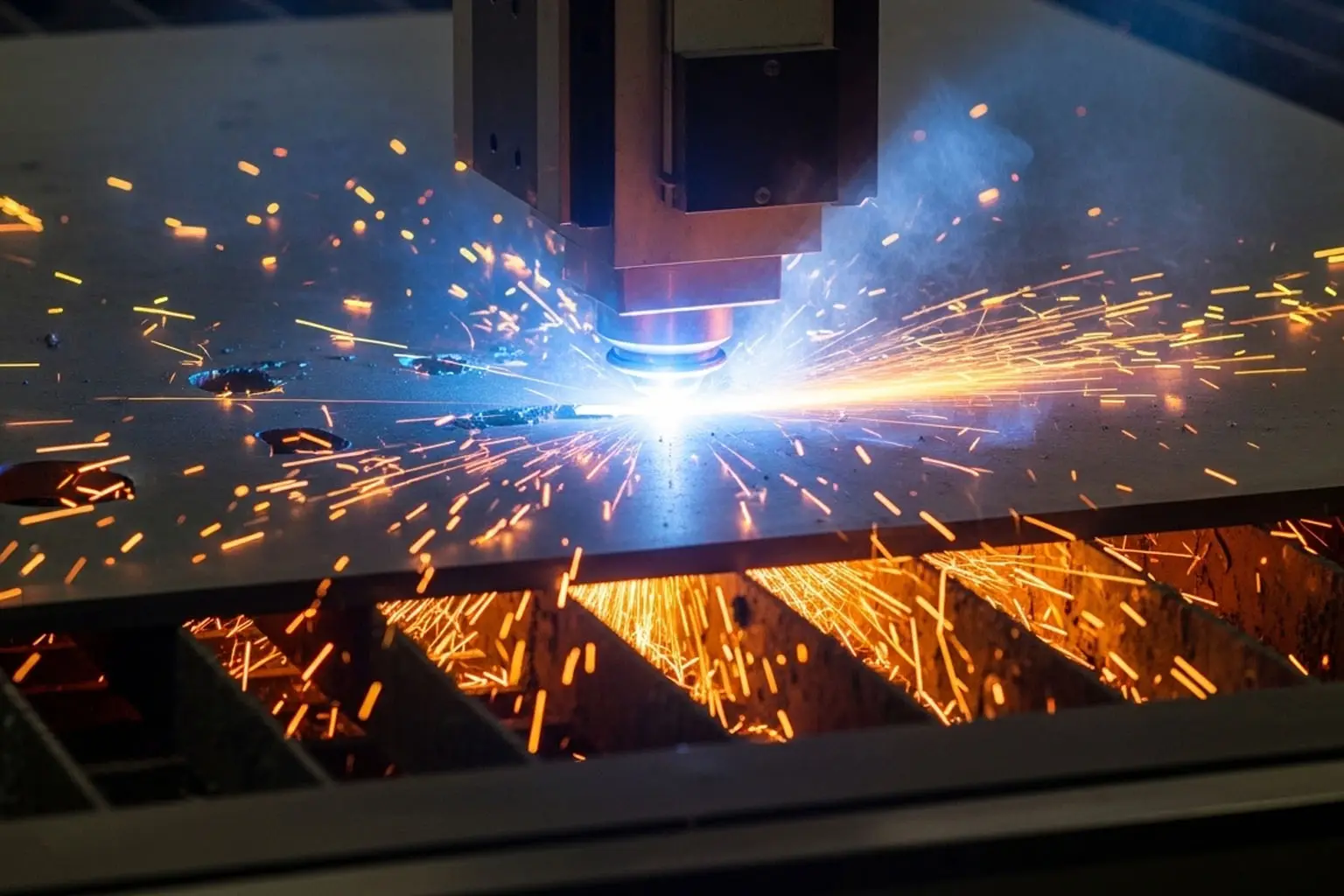
Qu’est-ce que signifie « la puissance de coupe laser ?” Méchant?
La puissance de découpe laser fait référence à la puissance de sortie de la source laser, mesuré en kilowatts (KW) pour les systèmes industriels. Plus la puissance est élevée, plus la densité d’énergie délivrée au matériau est grande..
La découpe laser fonctionne en dirigeant un faisceau laser de haute puissance à travers des optiques et un contrôle de mouvement CNC pour fondre, brûlure, ou vaporiser le matériau . L’apport thermique nécessaire dépend de:
-
Type de matériau
-
Épaisseur du matériau
-
Méthode de coupe (gaz réactif ou inerte)
-
Vitesse de coupe souhaitée
En termes simples, Les matériaux plus épais ou plus réfléchissants nécessitent une puissance laser plus élevée pour rester propres, Coupes rapides.
Plages de puissance typiques dans la découpe laser industrielle
Les découpeuses laser industrielles fonctionnent généralement dans ces plages:
-
Faible puissance (1–2 kW) – Tôle fine
-
Puissance moyenne (3–6 kW) – Fabrication générale
-
Puissance élevée (8–20 kW) – Coupe de plaques épaisses
-
Ultra haute puissance (30–40 kW) – Production industrielle lourde
Machines de découpe laser’ Consommation totale d’énergie (y compris les systèmes auxiliaires) La puissance varie généralement entre 0,1 kW et 15 kW selon la configuration .
Il est important de distinguer entre Puissance de sortie de source laser et Consommation électrique totale, ce qui inclut les unités de refroidissement, Systèmes d’échappement, et équipements périphériques .
Fibre vs CO₂: Différences de puissance et d’efficacité
L’efficacité du laser influence significativement la quantité d’énergie électrique convertie en puissance de coupe utilisable.
Les lasers CO₂ fonctionnent généralement à 5–10 % d’efficacité, tandis que les lasers à fibre atteignent environ 20–Efficacité de 30 % pour la découpe de la tôle .
Cela signifie:
-
Les lasers à fibre nécessitent moins d’énergie d’entrée pour obtenir le même résultat de coupe.
-
Une plus grande efficacité réduit les coûts énergétiques à long terme.
-
La gestion de la chaleur devient plus facile avec les systèmes à fibre.
Pour la fabrication du métal, Les lasers à fibre sont devenus dominants grâce à ce taux de conversion d’énergie amélioré .
Comment la puissance du laser affecte l’épaisseur de coupe
La puissance du laser détermine l’épaisseur efficace d’un matériau.
Les lasers plus puissants peuvent couper des matériaux plus épais mais peuvent réduire la précision à des niveaux extrêmes . Inversement, Des réglages de puissance plus bas améliorent la précision mais limitent la capacité d’épaisseur .
Selon les données d’entrée de chaleur industrielle:
-
Inox (3,2 mm) peut nécessiter ~1500 W
-
Inox (6,4 mm) peut nécessiter ~2500 W
-
Aluminium (6,4 mm) peut nécessiter jusqu’à 10,000 Dans
Cela illustre à quel point la puissance requise augmente considérablement à mesure que l’épaisseur augmente.
Relation vitesse de coupure vs puissance
Une puissance plus élevée permet non seulement une coupe plus épaisse — Cela augmente également considérablement la vitesse de coupe.
La découpe laser utilise des méthodes telles que le système de fusion et de soufflage (Coupe par fusion), où un gaz à haute pression enlève le matériau en fusion de la coupure . Lorsque suffisamment de puissance est appliquée:
-
Le temps de perçage diminue
-
La qualité des tranchants s’améliore
-
Le temps du cycle de production raccourcit
Pour des environnements de production à fort volume, passer de 3 kW à 6 kW peut réduire significativement le temps de fabrication par pièce.
Facteurs clés qui influencent les besoins en puissance des lasers
La demande de puissance de coupe laser n’est pas déterminée uniquement par la puissance. Plusieurs variables influencent la quantité d’énergie nécessaire:
1. Durée d’exploitation
Une durée de fonctionnement plus longue augmente directement la consommation d’énergie .
2. Réglage de puissance maximale du laser
Faire fonctionner une machine en continu à puissance maximale consomme beaucoup plus d’électricité .
3. Équipements périphériques
Unités de refroidissement, Systèmes d’échappement, et les systèmes de gestion de l’air contribuent tous à la consommation totale .
4. Conditions environnementales
Des températures ambiantes élevées augmentent la charge de refroidissement et la consommation totale d’énergie .
Optimiser les paramètres de coupe peut réduire la consommation d’énergie inutile tout en maintenant les performances.
Consommation d’énergie et efficacité des coûts
La découpe laser est souvent considérée comme rentable en raison du coût d’exploitation par heure relativement faible.
Les machines industrielles peuvent consommer entre 0,1 kW et 15 kW selon la configuration . Malgré une puissance instantanée élevée, Les coûts d’exploitation horaires globaux peuvent rester compétitifs par rapport aux technologies de découpe mécanique .
Améliorations d’efficacité — En particulier dans les systèmes laser à fibre — contribuer à une réduction du coût total de possession .
Considérations de puissance et de sécurité du laser
Les lasers à haute puissance présentent des risques de sécurité importants.
Les lasers supérieurs à 500 mW relèvent de la classe IV et peuvent causer de graves lésions oculaires ou cutanées . Les systèmes industriels de découpe laser fonctionnent généralement bien au-delà de ce seuil et nécessitent:
-
Cabines de coupe fermées
-
Systèmes d’interverrouillage de sécurité
-
Mise à la terre correcte
-
Protocoles de protection des opérateurs
Les augmentations de puissance doivent toujours être accompagnées d’une ingénierie de sécurité appropriée.
Comment choisir la bonne puissance de découpe laser
Le choix de la bonne puissance de découpe laser dépend de votre application:
Choisir 1–3 kW si:
-
Tu coupes une feuille fine (≤5 mm)
-
La précision et les faibles coûts d’exploitation sont des priorités
-
Les volumes de production sont modérés
Choisir 4–6 kW si:
-
On coupe des matériaux d’épaisseur mixte
-
La rapidité est cruciale
-
Vous voulez de la flexibilité
Choisir 8 kW si:
-
Tu coupes régulièrement des plaques épaisses
-
Un débit élevé est nécessaire
-
Votre objectif est la production à grande échelle
Adapter la puissance du laser au type de matériau et au volume de production assure un équilibre optimal entre la vitesse, coût, et qualité.
Dernières réflexions
La puissance de découpe laser influence directement:
-
Épaisseur de coupe
-
Vitesse de production
-
Consommation d’énergie
-
Coût opérationnel
-
Exigences de sécurité
Les systèmes industriels vont désormais des unités à faible puissance à des machines lourdes de 40 kW . Efficacité du laser à fibre (20–30%) comparé au CO₂ (5–10%) a encore amélioré la performance des coûts dans la fabrication moderne .
Plutôt que de simplement choisir la puissance la plus élevée disponible, Les fabricants performants alignent la puissance du laser avec les besoins des matériaux, Objectifs de production, et efficacité opérationnelle à long terme.