

Laser à fibre vs Laser CO₂: Différences clés et comment choisir
La décision d’utiliser un laser à fibre ou un laser CO2 dépend du type de découpe que vous souhaitez découper, L’épaisseur du matériau, Volume de production et coût d’exploitation à long terme. Les deux technologies sont très populaires dans la fabrication de nos jours, mais leurs longueurs d’onde varient, efficacité, Entretien et compatibilité des matériaux, Diffèrent grandement.
La comparaison réalisée par ACCURL montre que les lasers à fibre utilisent la technologie à semi-conducteurs et les fibres optiques pour fournir l’énergie laser, tandis que les lasers CO2 reposent sur un tube rempli de gaz et une délivrance miroir du faisceau. Ces performances varient dans leur conception, ce qui a un impact direct sur la performance et l’économie d’exploitation.
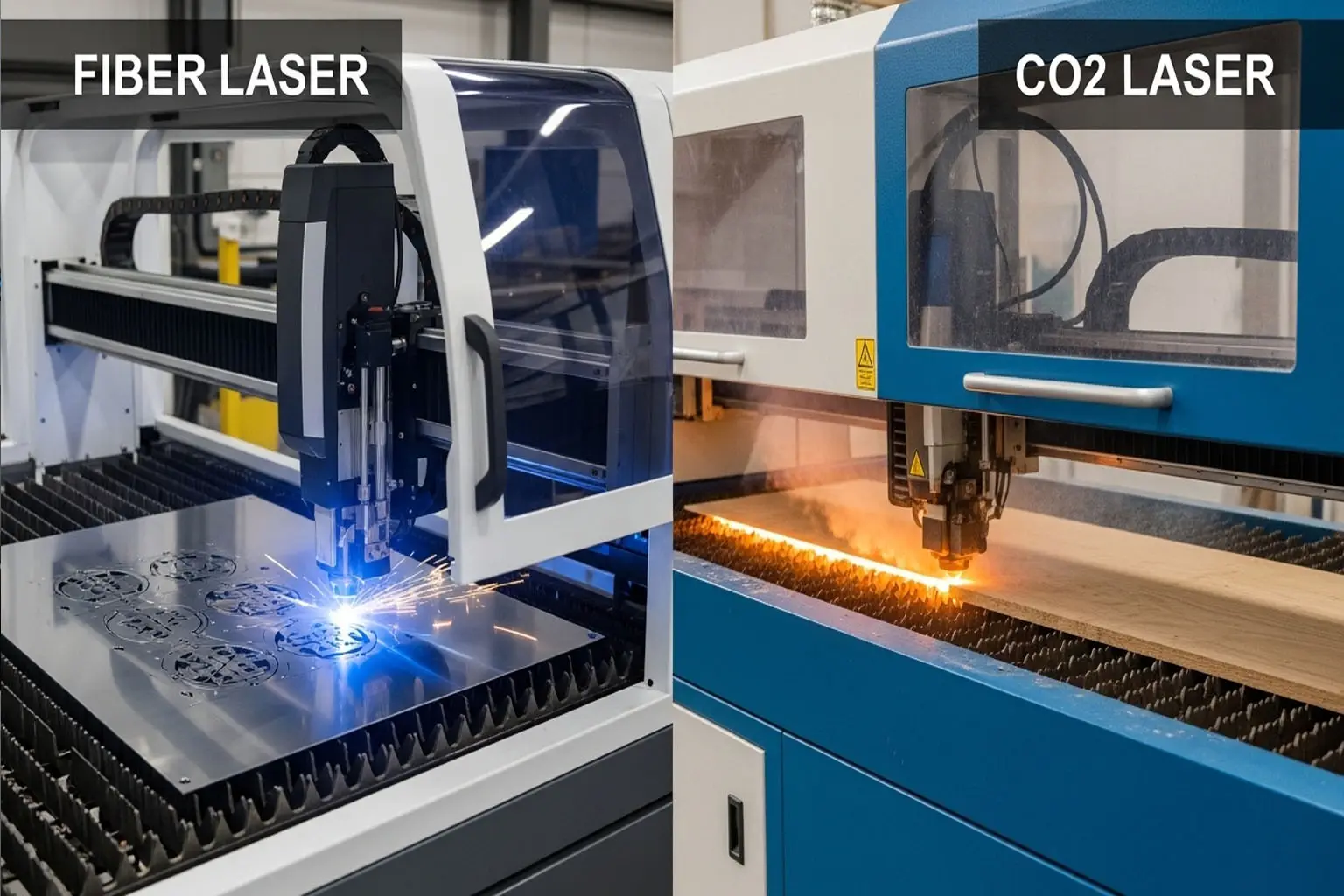
1. Différences technologiques fondamentales
Laser à fibre
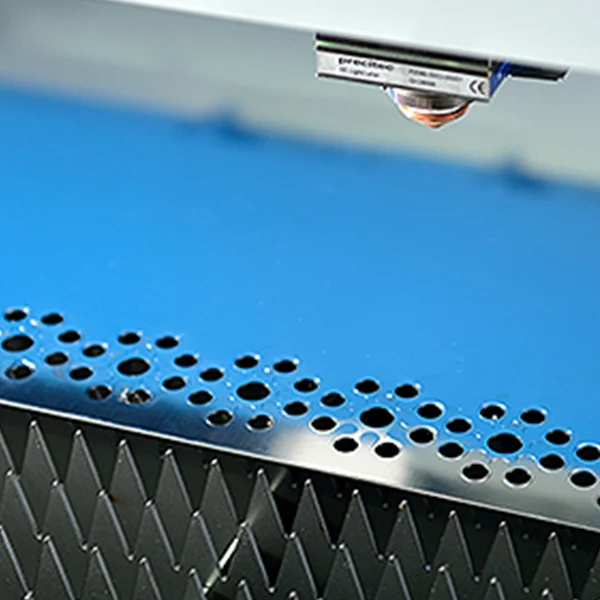
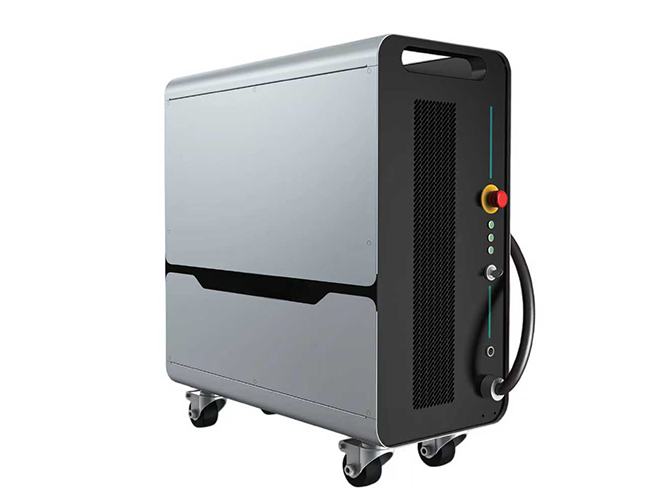
Un laser à fibre est un laser à semi-conducteurs qui génère de la lumière à l’aide d’une diode laser et l’amplifie via des câbles à fibre optique . Cette conception crée un trajet de faisceau compact avec des exigences minimales d’alignement.
Les lasers à fibre fonctionnent généralement dans la plage infrarouge autour de 780–2200 nm , ce qui améliore l’absorption dans les métaux—Surtout les matériaux réfléchissants comme l’aluminium et le cuivre .
Traits clés:
-
Haute qualité de faisceau
-
Forte absorption des métaux
-
Alignement optique minimal
-
Longue durée de vie de la source (souvent 100,000Horaires)
CO₂ Laser
Les lasers CO₂ génèrent de la lumière laser en stimulant électriquement un mélange gazeux à l’intérieur d’un tube . La poutre est dirigée vers la tête de coupe à l’aide de miroirs.
Les lasers CO₂ fonctionnent à une longueur d’onde plus longue (environ 10,600 nm) , qui interagit plus efficacement avec les matériaux non métalliques comme le bois, acrylique, Cuir, et textiles .
Traits clés:
-
Excellent pour les non-métaux
-
Finition à bord lisse sur matériaux épais
-
Technologie éprouvée en signalétique et en menuiserie
2. Réduction de la vitesse et de la productivité
Les lasers à fibre surpassent systématiquement les lasers CO₂ à la vitesse de coupe fine des métaux. Une comparaison de performances montre que les lasers à fibre coupent de l’acier fin jusqu’à cinq fois plus vite que les systèmes CO₂ .
Par exemple:
-
Laser à fibre: ~1,417 IPM sur acier de calibre 16
-
Laser CO₂: ~260 IPM sur acier de calibre 16
Une comparaison sur Reddit note aussi qu’une fibre de 2 kW peut couper aussi vite qu’une 5–Laser CO₂ de 6 kW dans des scénarios de matériaux minces .
Implication:
Pour la fabrication métallique à grande grande quantité—Particulièrement une feuille fine à moyenne—Les lasers à fibre offrent d’importants avantages de productivité.
3. Capacité d’épaisseur
La performance en épaisseur dépend fortement du niveau de puissance.
-
Lasers à fibre haute puissance (20 kW et plus) peut couper de l’acier à environ 1,5 pouce (≈38 mm) .
-
Les données de l’industrie montrent également des systèmes en fibre coupant de l’acier au carbone jusqu’à 20 mm avec une excellente qualité à 15 kW .
Cependant, Les lasers CO₂ offrent souvent des finitions plus lisses lors de la découpe de matériaux plus épais ou non métalliques .
Tendance générale:
-
Fibre → Idéal pour le métal fin à moyen
-
CO₂ → Préféré pour les surfaces épaisses non métalliques et la finition esthétique des bords
4. Efficacité énergétique et coût d’exploitation
L’efficacité énergétique est l’un des plus grands facteurs de différenciation.
Les lasers à fibre atteignent généralement 25–35 % d’efficacité murale , tandis que les systèmes CO₂ fonctionnent à environ 8–15% .
En termes réels:
-
Un système fibre de 6 kW peut consommer ~20–25 kW de puissance totale du système
-
Un système CO₂ de 4 kW peut consommer 40–50 kW
Plus de 10 ans,000 Heures d’ouverture, Cela peut entraîner des différences de coût énergétique supérieures à 15 $,000–25,000 .
Conclusion:
Les lasers à fibre offrent généralement un coût total de possession plus faible pour la fabrication du métal.
5. Exigences de maintenance
Les lasers à fibre ont moins de pièces mobiles et pas de tubes à gaz. L’entretien se limite généralement au remplacement de la buse et au nettoyage de vitres protectrices .
Les lasers CO₂ nécessitent:
-
Remplissages d’essence
-
Nettoyage et réglage des miroirs
-
Remplacement de tube tous les 2,000–10,000 Horaires
Cela entraîne une main-d’œuvre d’entretien plus élevée et des temps d’arrêt pour les systèmes CO₂.
Les utilisateurs de Reddit insistent fréquemment sur la moindre maintenance et la simplicité opérationnelle de la fibre .
6. Qualité de la coupe et finition des tranchants
Les lasers à fibre excellent par leur précision et produisent une propreté, Coupes étroites en coupure dans les métaux .
Cependant, Les lasers CO₂ produisent souvent des bords plus lisses dans l’acrylique épais ou le bois . Un exemple utilisateur coupant 3/8" L’acrylique montrait des différences notables de polish des bords selon l’objectif et la configuration .
Pratiquement:
-
Précision métallique → Fibre
-
Qualité esthétique des contours sur les organiques → CO₂
7. Compatibilité des matériaux
Les lasers à fibre sont optimisés pour:
-
Acier au carbone
-
Inox
-
Aluminium
-
Cuivre
Les lasers CO₂ restent la solution dominante pour:
-
Bois
-
Acrylique
-
MDF
-
Cuir
-
Caoutchouc
Si votre entreprise coupe principalement des matériaux non métalliques, La fibre peut ne pas convenir.
8. Investissement initial
Les lasers à fibre nécessitent généralement un investissement initial plus important . Les systèmes CO₂ ont souvent des coûts initiaux plus faibles mais des coûts énergétiques et d’entretien à long terme plus élevés .
Exemple de comparaison des coûts sur 5 ans:
-
Fibre de 6 kW: ~165 $,000 Total
-
4 kW CO₂: ~185 $,000 Total
Malgré un coût initial plus élevé, La fibre l’emporte souvent en ROI à long terme pour la coupe des métaux.
Résumé rapide de la comparaison
| Catégorie | Laser à fibre | CO₂ Laser |
|---|---|---|
| Meilleur pour | Métaux | Non-métaux |
| Vitesse de coupe | Très rapide (métaux fins) | Plus lent |
| Efficacité énergétique | 25–35% | 8–15% |
| Entretien | Low | Supérieur |
| Coût initial | Supérieur | Baisser |
| Finition du tranchant | Coupes précises du métal | Lisse sur des métaux épais non métalliques |
Recommandation finale
Choisir Laser à fibre si:
-
Tu coupes surtout du métal
-
La rapidité et la productivité comptent
-
L’efficacité énergétique est essentielle
-
Vous voulez un entretien réduit
Choisir Laser CO₂ si:
-
Tu coupes principalement du bois, acrylique, Textiles, ou caoutchouc
-
La douceur des bords sur des matériaux organiques épais est importante
-
Les contraintes budgétaires favorisent un investissement initial plus faible
Les deux technologies restent pertinentes—mais pour la fabrication moderne du métal, Les lasers à fibre sont devenus la solution dominante en raison de leur efficacité, vitesse, et avantages en termes de coûts à long terme