

Frein à pression électrique 40 tonnes: Meilleurs cas d’utilisation et facteurs de retour sur investissement
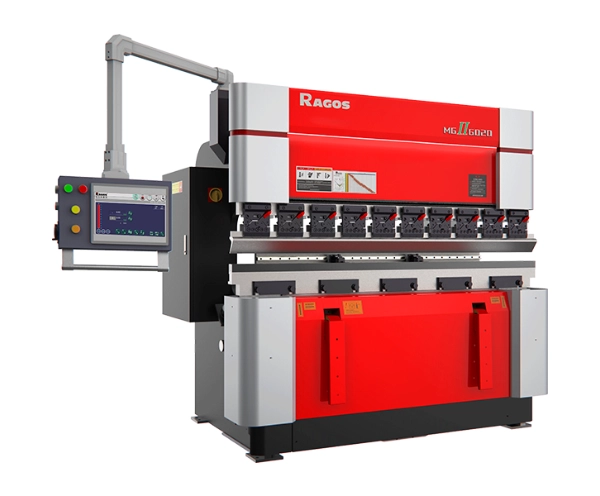
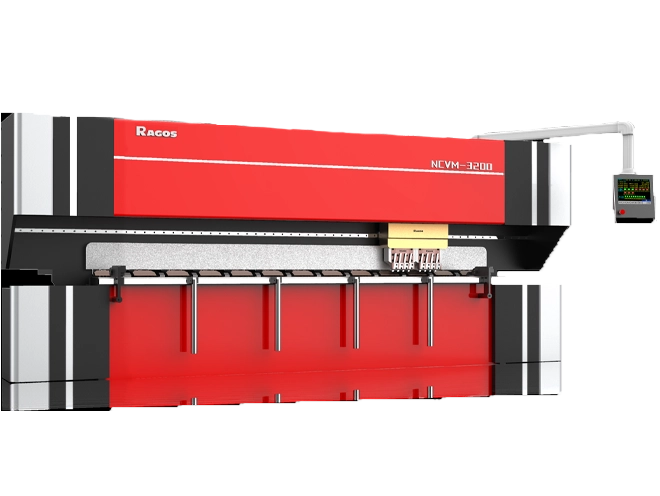
Un Frein à pression électrique (40 ton) est une haute précision, Machine servo conçue pour la flexion à haute vitesse de pièces de petite à moyenne taille. Contrairement aux systèmes hydrauliques traditionnels, Ces machines utilisent des moteurs électriques pour fournir un couple instantané, ce qui permet de réduire les temps de cycle et d’obtenir une précision nettement supérieure (souvent à l’intérieur de /- 0.01mm). Ils sont mieux utilisés pour des matériaux de faible épaisseur — généralement jusqu’à 3 mm ou 4 mm d’épaisseur selon la longueur de courbure — dans des industries comme l’électronique, Dispositifs médicaux, et aérospatiale. Pour les fabricants, la valeur principale se trouve dans le Coût par pièce plus bas Obtenue grâce à une consommation d’énergie réduite de 50 %, Zéro entretien de l’huile hydraulique, et des temps de configuration réduits. Si votre production implique un volume élevé, Composants complexes, Le modèle électrique de 40 tonnes est la norme industrielle en matière d’efficacité.
Pourquoi choisir un frein à pression électrique de 40 tonnes pour une courbure de précision?
La capacité de 40 tonnes représente le "Sweet spot" pour les ateliers de tôle de précision. Tandis que les machines plus grandes peuvent supporter des plaques plus lourdes, Ils manquent de l’agilité nécessaire pour les petits, Supports ou enceintes complexes. Les modèles électriques utilisent un Système d’entraînement par courroie ou vis à billes Cela élimine le "Temps de séjour" Courant dans les vérins hydrauliques.
L’avantage de la technologie de servo-entraînement
Dans un système électrique, L’énergie n’est consommée que lorsque la RAM bouge. Cela offre un avantage considérable dans répétabilité. Parce qu’il n’y a pas d’huile hydraulique à chauffer, Les performances de la machine ne varient pas pendant un quart de travail. On obtient la même courbure parfaite à 90 degrés à 8 degrés:00 AM comme tu le fais à 4 heures:00 PM.
Quels sont les meilleurs cas d’utilisation pour un frein à pression électrique de 40 tonnes?
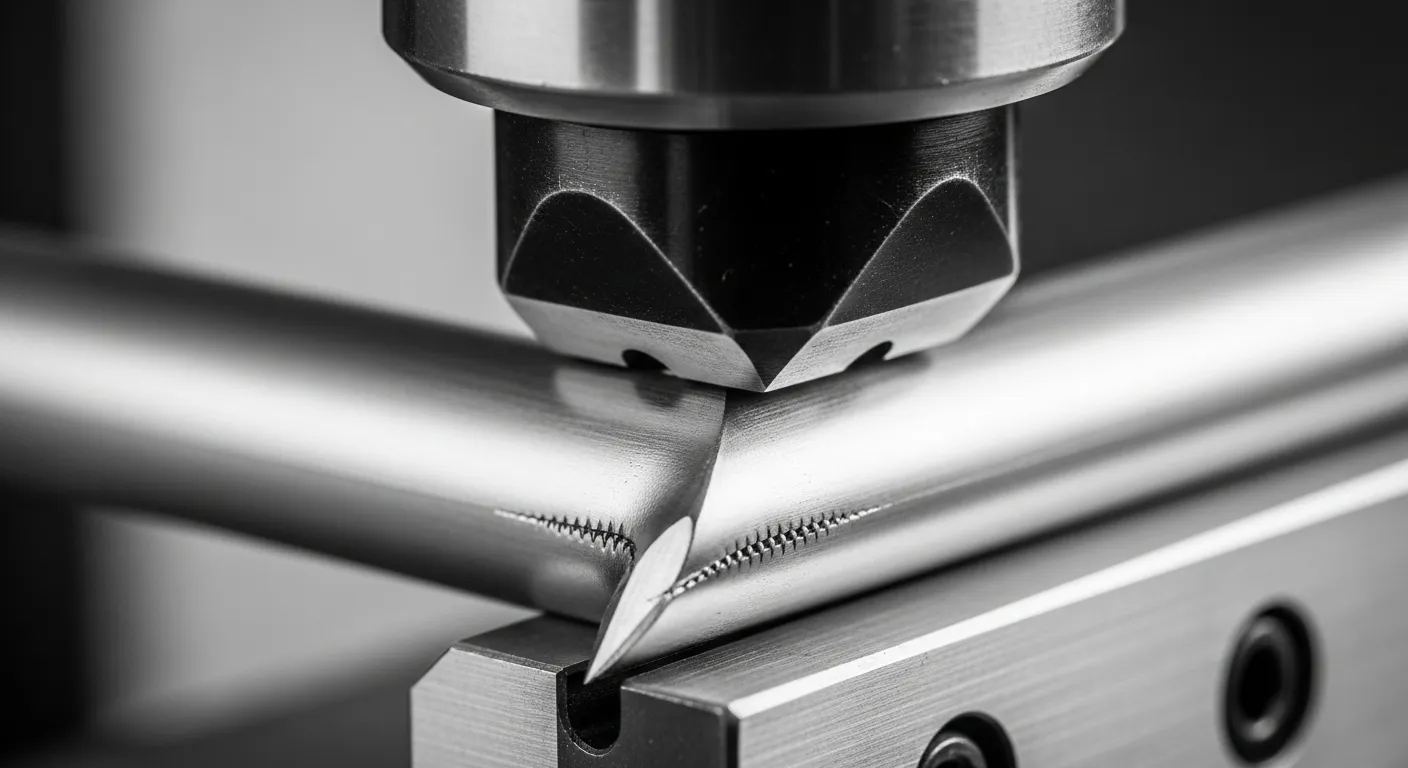
Un frein à pression électrique de 40 tonnes est idéal pour les pièces nécessitant des tolérances strictes et des changements fréquents de réglage. En raison de son châssis compact, Il est souvent utilisé dans Cellules de fabrication allégées où l’espace au sol est limité.
- Boîtiers électroniques: Plier de petits boîtiers en aluminium ou en acier inoxydable pour les circuits imprimés.
- Équipement médical: Créer des composants complexes en acier inoxydable nécessitant une précision chirurgicale.
- Brackets automobiles: Produire rapidement de petits supports où la vitesse est plus critique que le tonnage brut.
- Prototypage: La facilité de programmation la rend parfaite pour les missions à court terme et la recherche&D.
Maximiser ces cas d’utilisation, Choisir le bon Outillages et accessoires pour freins à pression est essentiel pour garantir que la machine puisse gérer différentes géométries sans endommager le matériau.
Combien de puissance un frein à pression électrique économise-t-il?
En moyenne, Un frein à pression électrique utilise 50 % à 70 % en moins d’électricité qu’une machine hydraulique comparable. Alors qu’une pompe hydraulique fonctionne en permanence pour maintenir la pression, Le moteur électrique ne consomme un courant significatif que pendant la course de courbure réelle.
| Caractéristiques | Frein à pression hydraulique (40T) | Presse plieuse électrique (40T) |
| Consommation d’énergie au repos | Haut (La pompe reste en marche) | Proche de zéro |
| Entretien | Vidange d’huile, Sceaux, Filtres | Graissage des pièces mécaniques |
| Précision | /- 0.05mm | /- 0.01mm |
| Niveau de bruit | 75-85 dB | < 70 dB |
Quelle épaisseur un frein à pression de 40 tonnes peut-il plier?
Un frein à pression de 40 tonnes peut généralement se plier Acier doux jusqu’à 3 mm (Calibre 11) sur une longueur standard d'1 mètre. Si la largeur de la pièce est significativement plus courte, comme le 200 mm, Il peut supporter des matériaux plus épais jusqu’à 6 mm, à condition que l’ouverture en V de l’outillage soit correctement dimensionnée.
La relation entre tonnage et épaisseur est régie par la largeur de la puce en V. Une puce plus étroite nécessite plus de pression. Lors de l’acquisition d’équipements, Il est utile d’utiliser un Modèle RFQ Global CNC Pressbrake Sourcing pour s’assurer que le fournisseur fournit un tableau de tonnage spécifique aux capacités de leur entraînement électrique.
Un frein à pression électrique est-il meilleur qu’un frein à pression hydraulique?
Oui, pour les applications de moins de 100 tonnes, Les freins à pression électriques sont généralement supérieurs en termes de vitesse, précision, et l’efficacité énergétique. Toutefois, Les machines hydrauliques restent le meilleur choix pour les applications à très gros tonnage (200 tonnes) ou lorsque le prix d’achat initial est une préoccupation plus importante que les coûts d’exploitation à long terme.
Les machines électriques offrent un "Nettoyage" Environnement de la boutique. Il n’y a pas de fuites, aucun déchet dangereux lors des vidanges d’huile, et la réduction du bruit rend l’espace de travail beaucoup plus confortable pour les opérateurs.
Calcul du ROI: Facteurs qui financent la machine
Lors de l’évaluation du ROI d’un Frein à pression électrique de 40 tonnes, Ne regardez pas seulement le prix affiché. Regardez le Coût total de possession (TCO).
- Temps de cycle réduit: Le mouvement de la RAM à grande vitesse peut augmenter les pièces par heure jusqu’à 30 %.
- Zéro coût du pétrole: Vous économisez des milliers de dollars sur la durée de vie de la machine en évitant les remplacements de fluides hydrauliques et de filtres.
- Précision / Moins de ferraille: Une grande répétabilité signifie moins de pièces endommagées, ce qui est essentiel lorsqu’on travaille avec des matériaux coûteux comme le cuivre ou l’acier inoxydable poli.
- Efficacité de la main-d’œuvre: Les freins électriques modernes sont souvent équipés d’interfaces CNC avancées qui rendent outillage & Automatisation des freins à pression CNC Plus facile à intégrer, Réduire le besoin de main-d’œuvre manuelle hautement qualifiée.
Peut-on automatiser un frein à pression électrique de 40 tonnes?
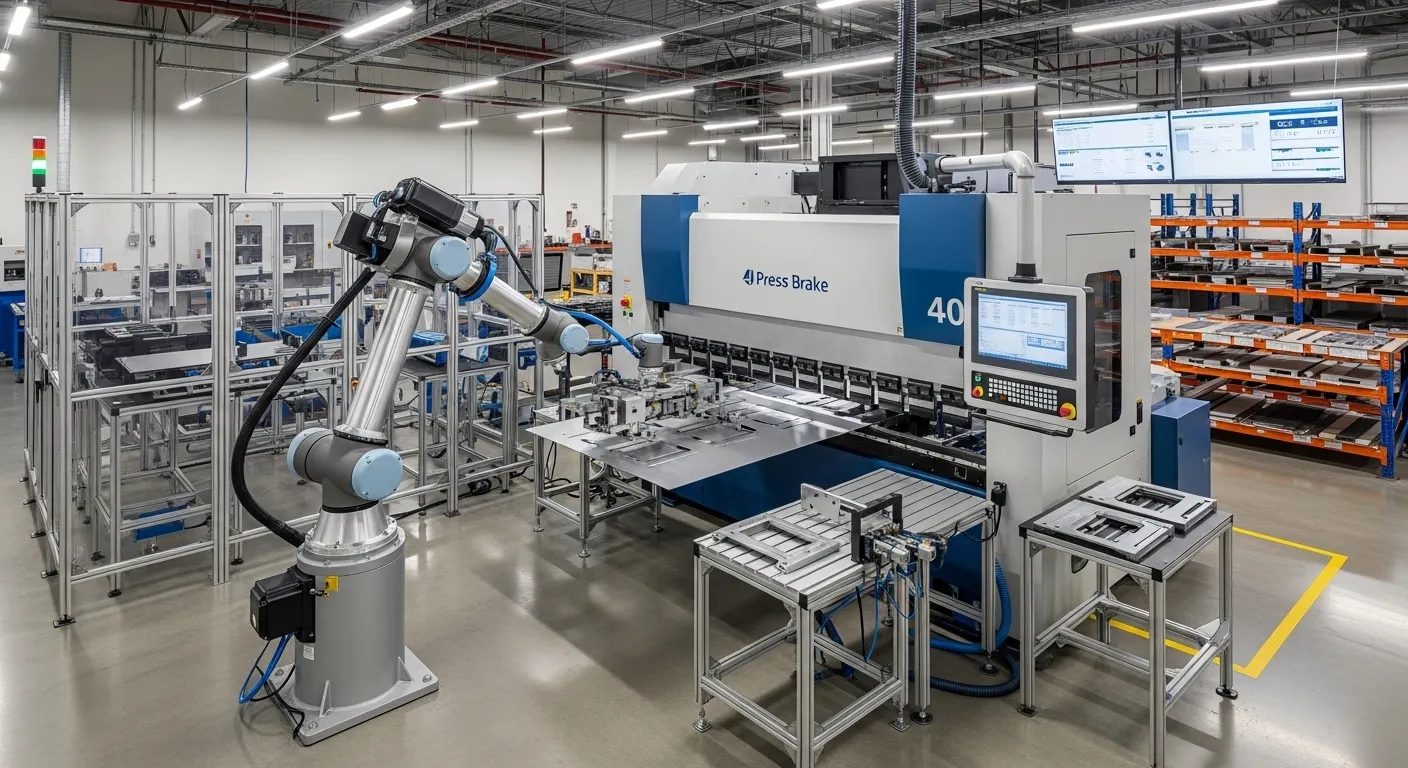
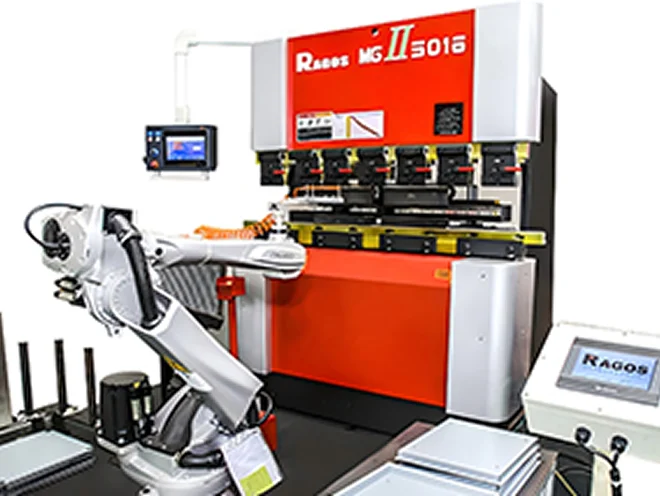
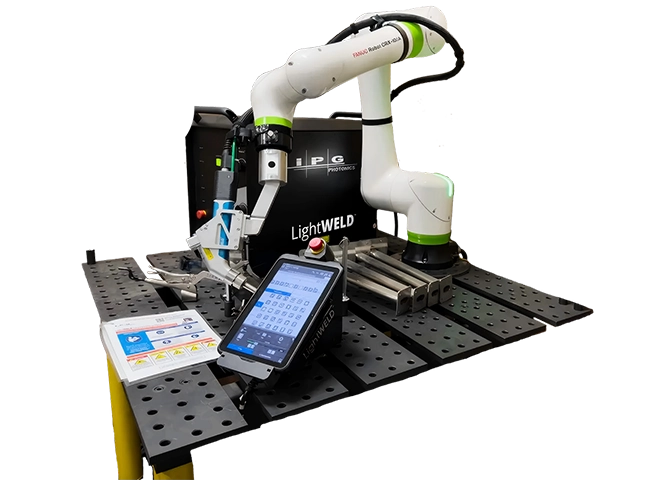
Absolument. Parce que les freins électriques sont contrôlés numériquement et très cohérents, ils sont la plateforme préférée pour Automatisation des freins à pression CNC.
De petites unités de 40 tonnes sont fréquemment associées à Cobots (Robots collaboratifs). Le robot gère les retournements et positionnements répétitifs des petites pièces, tandis que le frein électrique assure la course à haute vitesse. Cette combinaison permet de "extinction des feux" Fabrication sur des travaux simples de support.
Questions fréquemment posées
Avec une lubrification appropriée des vis à billes ou des courroies, Un frein à pression électrique peut durer 15 à 20 ans. L’absence d’usure due à la chaleur (ce qui affecte les joints hydrauliques) cela conduit souvent à une durée de vie plus longue des composants.
La plupart des modèles de 40 tonnes fonctionnent avec une alimentation industrielle triphasée standard. Parce qu’ils n’ont pas le démarrage à forte puissance d’un gros moteur hydraulique, Ils sont souvent plus faciles sur le réseau électrique d’une installation.
La plupart des freins électriques de 40 tonnes ont une longueur de caisse comprise entre 1250 mm et 1500 mm. Cela les rend idéaux pour les pièces de petite à moyenne taille.
Conclusion
Le Frein à pression électrique 40 tonnes est une référence pour les ateliers de fabrication modernes cherchant à augmenter le débit sans augmenter leur empreinte carbone ni leur surface de sol. Bien que l’investissement initial puisse être plus élevé qu’avec une machine hydraulique traditionnelle, Les gains de vitesse, précision, et les économies d’énergie offrent un retour sur investissement rapide.
Prêt à améliorer la précision de votre boutique? Commencez par évaluer vos tailles et épaisseurs de pièces les plus courantes, et assurez-vous d’avoir le droit Outillages et accessoires pour s’adapter à vos nouvelles capacités à haute vitesse.