

Machine à laminer à plaques à 4 rouleaux Heavy Duty: Comment définir les paramètres et lancer automatiquement
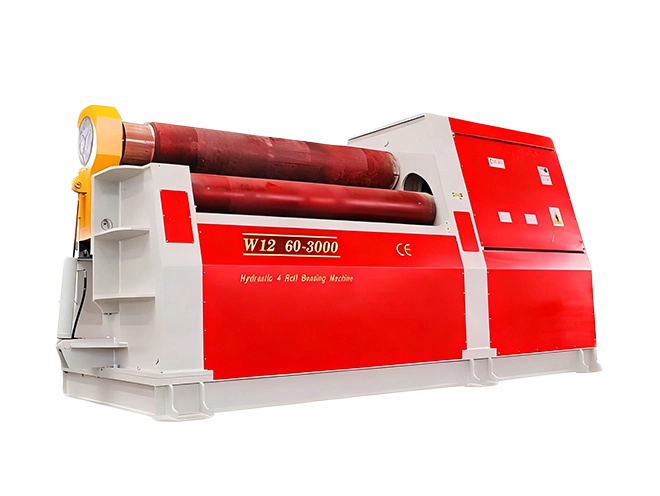
Machine à laminer à plaques 4-rouleaux Équipement lourd joue un rôle important dans le formage moderne des plaques car il aide les fabricants à produire des cylindres avec un meilleur contrôle, répétabilité, et efficacité. À JS RAGOS, Nous pensons que de nombreux utilisateurs comprennent mal le roulement automatique. En production réelle, La machine ne crée pas elle-même le chemin de roulement. Il répète un chemin de formage confirmé créé par l’opérateur via un roulage manuel d’essai. Ce principe soutient la formation stable des cylindres, Surtout lorsque les utilisateurs exigent une précision de diamètre constant, Meilleure rondeur, et qualité de production reproductible.
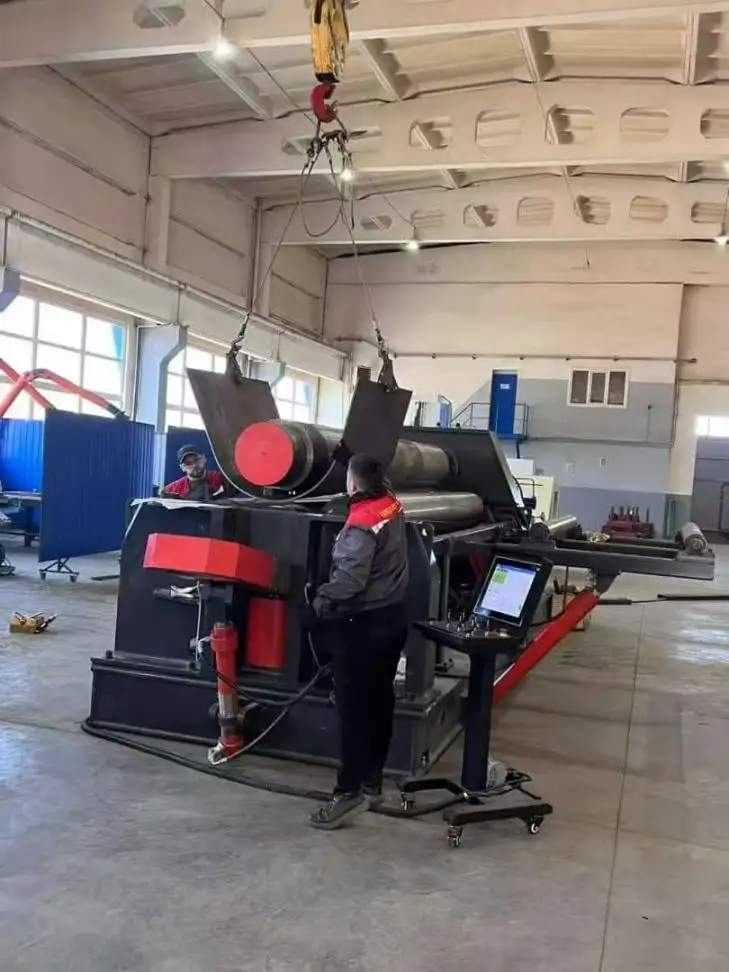
Les références industrielles notent également que les machines à quatre rouleaux sont largement appréciées pour faciliter l’alignement des plaques, Meilleures performances de pré-maîtrise, et une meilleure cohérence de formage par rapport à des configurations plus simples. Ces avantages les rendent très adaptés aux environnements de production automatique et orientés précis.
Pourquoi le fonctionnement intensif de la machine à laminage à 4 rouleaux commence par la logique
Un opérateur professionnel ne devrait jamais considérer le mode automatique comme un raccourci qui remplace la compréhension du processus. Dans un système de machine à laminage à plaques à 4 rouleaux Heavy Duty, Le formage dépend du déplacement coordonné des rouleaux. Le rouleau supérieur entraîne la plaque, le rouleau inférieur la serre, et les rouleaux latéraux créent la courbure requise. En raison de cette structure, La bonne position compte plus que simplement augmenter la pression.
Du point de vue du client, Cela apporte un avantage pratique important: une fois le bon chemin de mouvement vérifié, La machine peut reproduire des pièces similaires avec beaucoup moins de variations. Cela fait des systèmes à quatre rouleaux un choix pratique pour les applications où la répétabilité et la performance de production contrôlée sont importantes. Des sources industrielles décrivent également les machines à quatre rouleaux comme un choix solide pour le travail de précision et les lignes automatiques, car elles offrent un alignement stable et un risque de déformation réduit.
À JS RAGOS, Nous recommandons toujours aux clients de construire d’abord la stabilité des processus, puis poursuivre une production plus élevée. Cette séquence réduit le gaspillage de matière et raccourcit le temps d’ajustement dans les lots ultérieurs.
Préparation de la machine avant le roulage
Avant l’utilisation d’un programme, La machine doit établir une référence de coordonnées correcte. Cette étape n’est pas optionnelle. Toutes les valeurs de déplacement ultérieures dépendent de la position d’origine.
Le processus de préparation doit inclure les points suivants:
• Démarrer la machine et démarrer le système hydraulique
• Déplacez le rouleau inférieur et les deux rouleaux latéraux à leur position la plus basse
• Réinitialiser les valeurs de coordonnées sur l’interface de contrôle
• Confirmer que cette position devient le point zéro mécanique
Si l’origine n’est pas réinitialisée correctement, Les valeurs stockées ne correspondront plus aux positions réelles des rouleaux. En conséquence, La machine peut suivre correctement le programme à l’écran mais produire quand même le mauvais cylindre sur le sol.
Pour les clients, Cela signifie un fait simple: même un système CNC avancé ne peut pas protéger la qualité de production si la position de référence est incorrecte. Quelques minutes de préparation correcte peuvent éviter des retouches coûteuses, ferraille, et des ajustements répétés des essais.
Comment vérifier les paramètres avant le roulement automatique
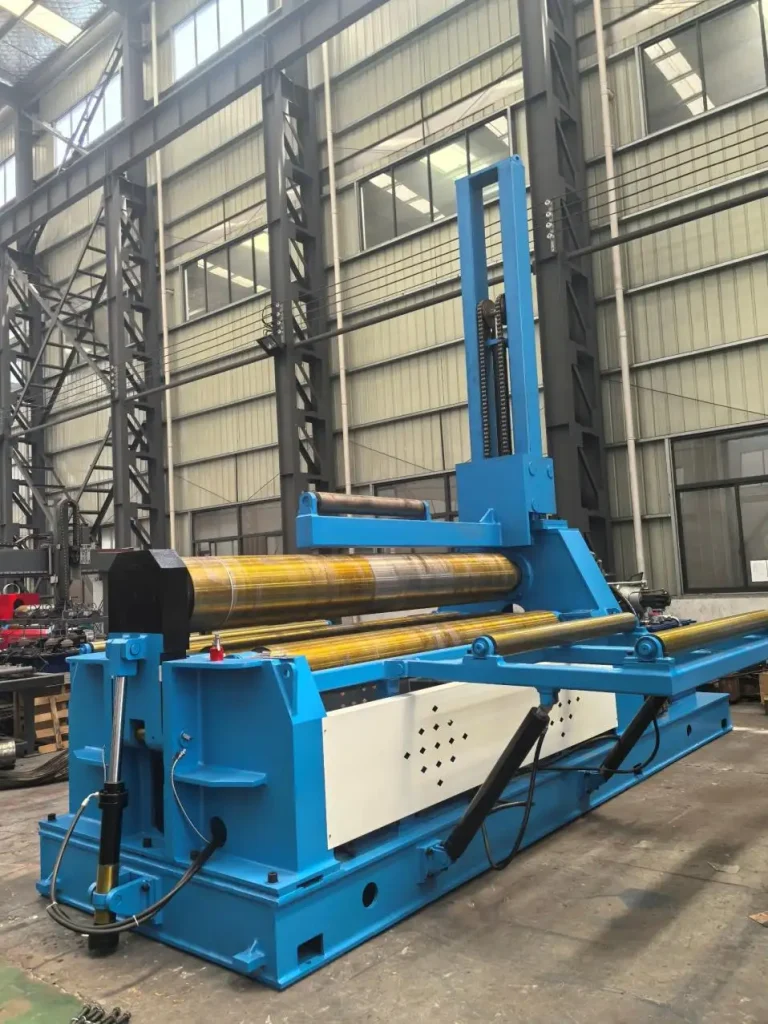
Un programme de machine à roulage à 4 rouleaux Heavy Duty ne devient fiable qu’après que la première pièce a été roulée manuellement et confirmée. Ce premier essai consiste à déterminer par l’opérateur la trajectoire de formation réelle pour la plaque donnée.
Durant cette période, L’opérateur doit ajuster progressivement les rouleaux latéraux tout en observant l’écart de couture, Rondeur, et la forme globale du cylindre. Une fois le résultat correct, Les valeurs de déplacement affichées à l’écran doivent être enregistrées. Ces valeurs ne sont pas théoriques. Ils sont le véritable chemin de formation pour ce matériau, Épaisseur, et diamètre de la cible.
Avant de stocker les données pour le mode automatique, plusieurs paramètres doivent également correspondre aux conditions réelles de production:
• Utiliser l’épaisseur mesurée, pas seulement l’épaisseur nominale de la plaque
• Régler l’espace d’alignement pour que la plaque entre correctement dans la ligne centrale du rouleau
• Ajuster le coefficient de serrage pour maintenir la plaque solidement sans endommager la surface
• Définir la longueur de retrait pour un relâchement sûr après le roulement
Cette distinction est très importante. Les paramètres définissent les conditions de roulement, tandis que les valeurs de déplacement enregistrées définissent le trajet de roulement. Quand ces deux parties fonctionnent ensemble, Le cycle automatique devient fiable.
À JS RAGOS, Nous expliquons cela clairement aux clients car cela les aide à éviter un malentendu courant: L’automatisation ne remplace pas la connaissance de la configuration. À la place, L’automatisation protège une configuration éprouvée et la répète efficacement.
Séquence automatique de roulage automatique à 4 rouleaux
Une fois la pièce de test manuelle vérifiée, La machine peut répéter le même mouvement en mode automatique. La séquence de roulage suit le processus de formage réel étape par étape.
Premier, La plaque entre dans la machine et établit la position de référence. Ensuite, le rouleau inférieur se soulève pour fixer la plaque solidement. Après ça, un rouleau latéral se déplace vers son point de départ programmé. La plaque tourne jusqu’à atteindre la bonne zone de formation entre les galets supérieur et inférieur.
L’étape suivante est la pré-maîtrise. Un rouleau latéral monte pour réduire la ligne droite à l’extrémité d’attaque. Après ça, Le rouleau revient à sa trajectoire programmée et le rouleau du côté opposé poursuit le processus de roulement pour former progressivement le cylindre. Finalement, La machine inverse la rotation pour retirer la ligne droite restante, Baisse la pression, et libère la pièce finie.
Cette séquence est importante car elle soutient la principale force de la technologie à quatre rouleaux: La plaque peut être serrée et alignée tôt dans le processus, ce qui aide à mieux contrôler lors du roulis. C’est l’une des raisons pour lesquelles les machines à quatre rouleaux sont souvent reconnues comme plus faciles à utiliser et bien adaptées à la production automatique.
Rémunération, Conditions de nouvelle tentative, Et les erreurs courantes
Même avec un programme stocké, Les conditions de production ne restent pas correctes éternellement. Si les espaces de couture deviennent inégaux sur toute la longueur du cylindre, Le problème est souvent lié au parallélisme des rouleaux. Dans ce cas, La compensation doit être appliquée sur le côté inférieur jusqu’à ce que les deux lectures de déplacement retrouvent leur équilibre.
Cette approche offre aux clients un véritable avantage opérationnel: Une meilleure rondeur peut souvent être restaurée grâce à une compensation correcte, sans augmenter inutilement la force de roulement.
Toutefois, Un nouvel essai manuel est nécessaire lorsque les conditions suivantes changent:
• Changements d’épaisseur de la plaque
• Changements de type de matériau
• Modifications du diamètre de la cible
• La largeur de la plaque varie significativement
• Les rouleaux sont entretenus ou remplacés
De nombreux problèmes de fonctionnement surviennent parce que les utilisateurs sautent cette étape et exécutent le mode automatique trop tôt. Les erreurs courantes incluent l’échec de réinitialiser l’origine, entrée d’une épaisseur incorrecte, ou en essayant de corriger les problèmes de forme en augmentant la pression au lieu de corriger la position des rouleaux. Ces erreurs conduisent généralement à des pièces ovales, Rondeur instable, ou des pertes répétées en réglage.
Ce que les clients bénéficient du support JS RAGOS
À JS RAGOS, nous ne présentons pas un modèle lourd de machine à roulement à 4 rouleaux comme un simple équipement. Nous la présentons comme une solution de production basée sur une logique de formage stable, Contrôle pratique de l’installation, et roulement automatique reproductible.
Pour les clients, Cela signifie une valeur claire:
• Transition plus rapide de la vérification manuelle à la production en lots
• Meilleur contrôle de la consistance des cylindres entre les pièces répétées
• Réduction du gaspillage causé par des hypothèses de paramètres incorrectes
• Une formation plus facile pour les opérateurs ayant besoin d’une séquence structurée de roulement
• Plus de confiance lors de la production de composants de plaques exigeants
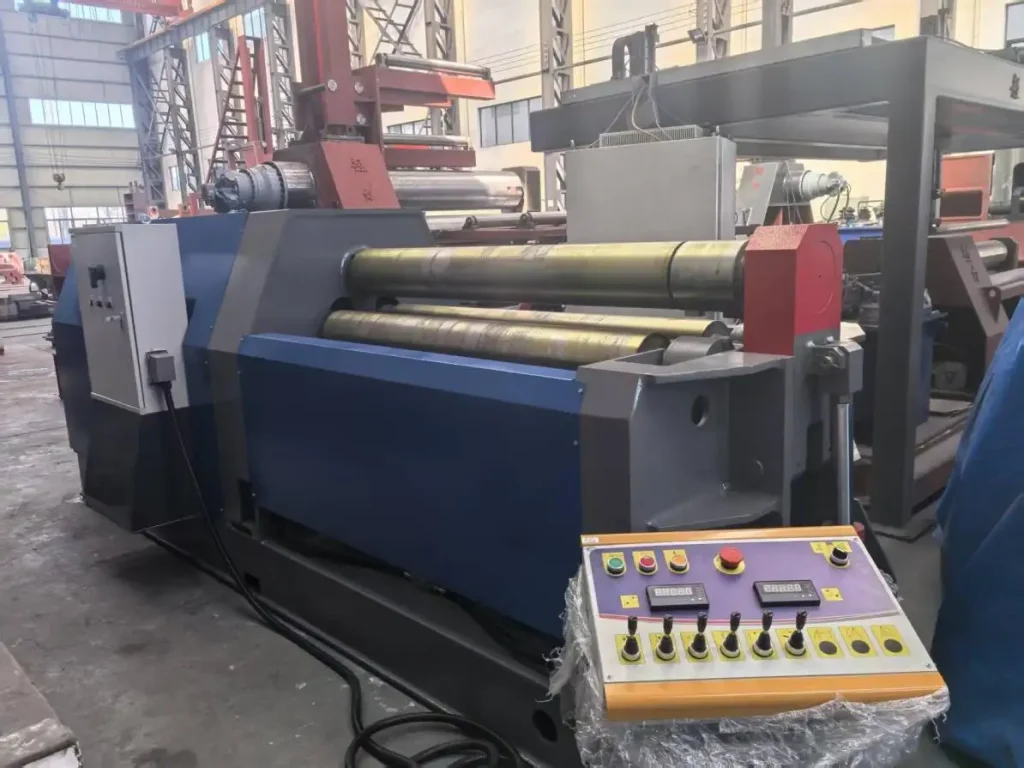
Pour référence plus large, les lecteurs peuvent également consulter les discussions de l’industrie sur la conception des machines à quatre rouleaux et les tendances de production des machines à roulement, issues de sources telles que des articles techniques de type HARSLE et Faccin., qui discutent régulièrement du contrôle de l’alignement, Capacité de pré-maîtrise, et la répétabilité automatisée dans les systèmes de laminage modernes.
Si votre équipe évalue un nouveau projet de laminage de plaques, Ou si vous souhaitez améliorer la stabilité automatique du roulement sur les emplois actuels, contactez JS RAGOS dès aujourd’hui. Nos ingénieurs peuvent vous aider à examiner les conditions des matériaux, Logique des paramètres, Séquence de mouvement des rouleaux, et configuration de la machine, Ainsi, votre prochaine production de bouteille commence à partir d’un chemin de formage vérifié au lieu d’un processus d’essais et erreurs.
Dans le laminage des plaques, Une automatisation fiable commence par une référence manuelle correcte. Lors du réglage d’origine, Appariement des paramètres, Ajustement de la rémunération, et l’enregistrement de trajectoire est géré correctement, Le roulement automatique devient un véritable avantage de production plutôt qu’une source d’incertitude.