

Comment fonctionne une machine à frein à pression CNC? Un guide complet
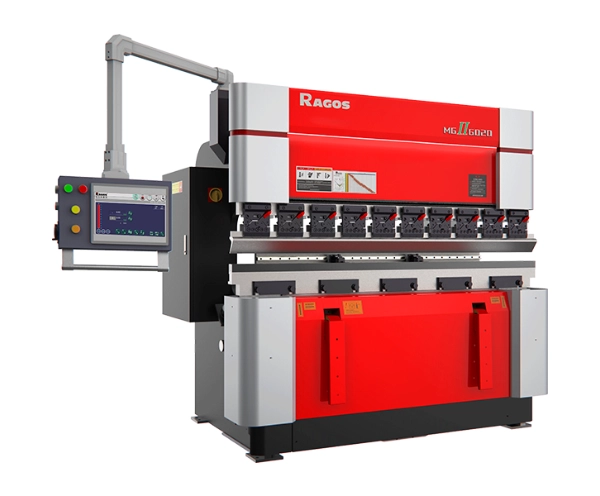
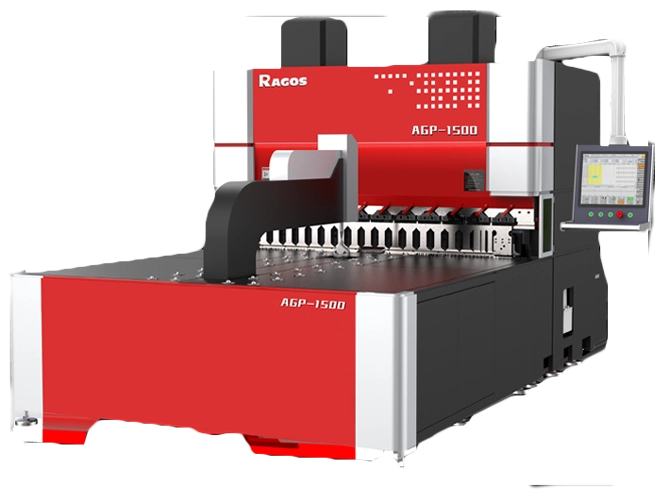
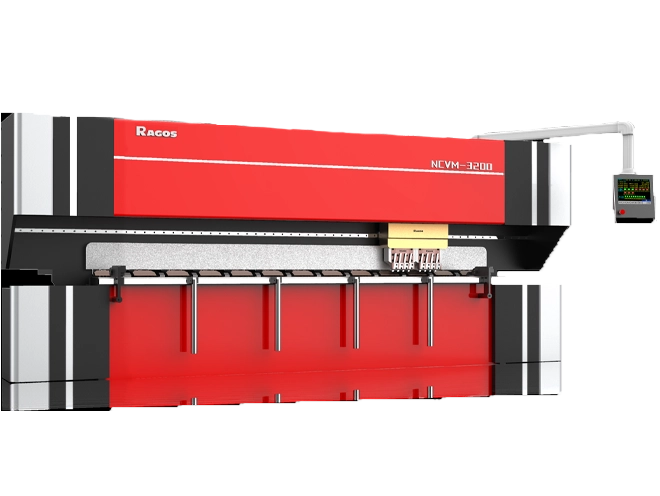
L’un des meilleurs outils de fabrication de tôle dans le monde contemporain est une machine de brasage à presse CNC. Il est conçu pour plier la tôle et la plaque à leur angle et forme exacts en serrant la pièce entre un poinçonne et une matrice.
Un CNC (Contrôle numérique informatique) Le frein à pression dispose d’une programmation contrôlée par ordinateur pour automatiser les paramètres utilisés dans les programmes de flexion; Les paramètres sont la position de la RAM, L’angle de flexion, et la position de la jauge arrière. L’automatisation, Dans ce cas, Améliore la répétabilité et la précision ainsi que l’efficacité en production.
Ce guide va expliquer ce qu’est un frein à pression CNC, Comment cela fonctionne étape par étape, Quels sont ses éléments les plus profonds, et les raisons pour lesquelles c’est la clé de la fabrication industrielle.
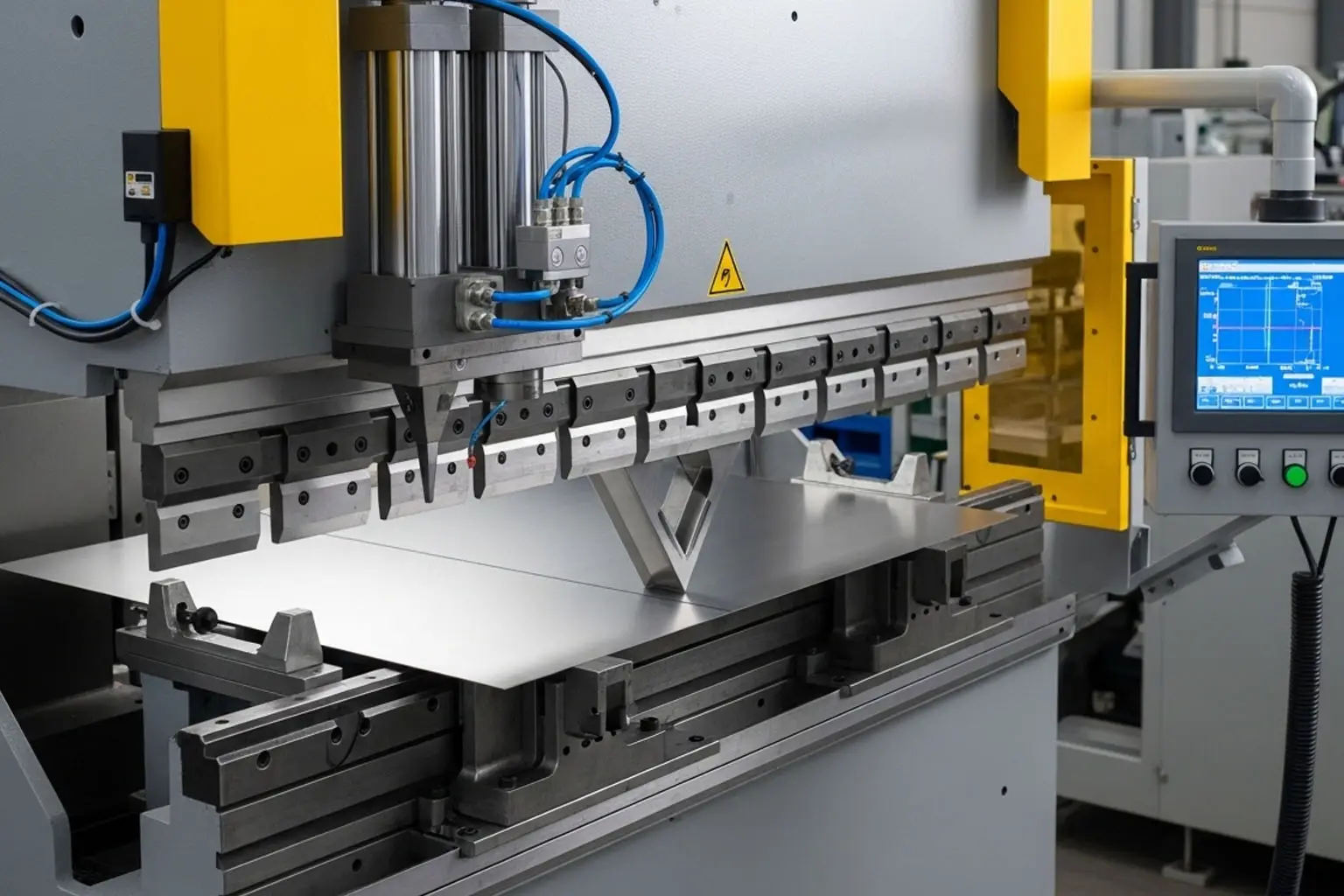
Qu’est-ce qu’un frein à pression CNC?
Un frein à pression est une machine utilisée pour plier le matériau de la feuille et de la plaque en formes prédéterminées en serrant la pièce à travailler entre un poinçon correspondant (Meilleur outil) et mourir (Outil du bas) .
Un frein à pression CNC améliore ce procédé grâce à un contrôle informatique. Le système CNC gère tous les paramètres de flexion numériquement, réduisant ainsi l’erreur manuelle et permettant de programmer et répéter avec précision des séquences de courbure complexes .
Les freins à pression CNC modernes sont largement utilisés dans des industries nécessitant une grande précision et une grande répétabilité, y compris l’automobile, aérospatial, construction, et la fabrication de machines lourdes .
Principaux composants d’un frein à pression CNC
Comprendre le fonctionnement de la machine commence par comprendre sa structure.
1. Châssis et C-Frames
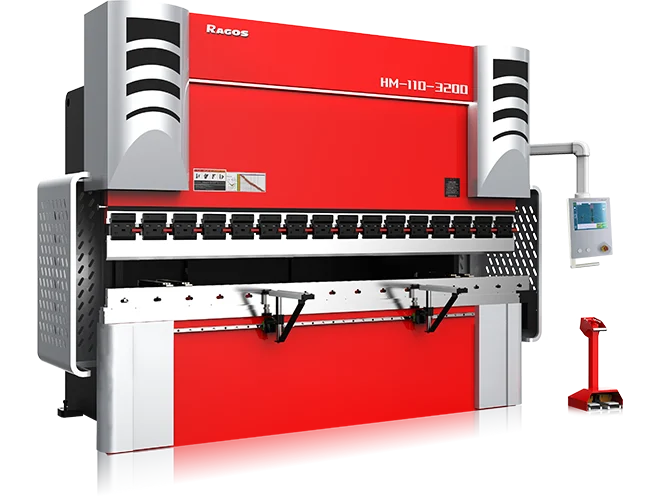
La plupart des freins à pression utilisent deux châssis en C formant les côtés de la machine, reliés par une table inférieure et une poutre mobile supérieure . La conception rigide du châssis assure la stabilité structurelle lors de courbures à fort tonnage.
2. Punch and Die
Le coup de poing (monté sur la poutre supérieure) Applique une force vers le bas, Pendant qu’ils meurent (monté sur le lit) fournit une contre-force. La tôle est placée entre elles et pliée dans le profil de la puce .
L’interaction entre la géométrie du poinçonnet et la matrice détermine l’angle de courbure final et la forme.
3. Ram (Largeur supérieure)
Le bélier se déplace verticalement pour appuyer le poinçon sur le matériau. Selon le type de machine, Le Ram peut être alimenté par des cylindres hydrauliques, Systèmes servo-électriques, ou entraînements mécaniques .
4. Système de contrôle CNC
Le système CNC est le « cerveau »” de la machine. Il contrôle la profondeur de la RAM, Mouvement de la jauge arrière, Séquence de courbe, et la précision angulaire grâce à des instructions programmées .
Types de systèmes d’entraînement à frein à pression CNC
Les freins à pression CNC peuvent être actionnés de différentes manières:
Frein à pression CNC hydraulique
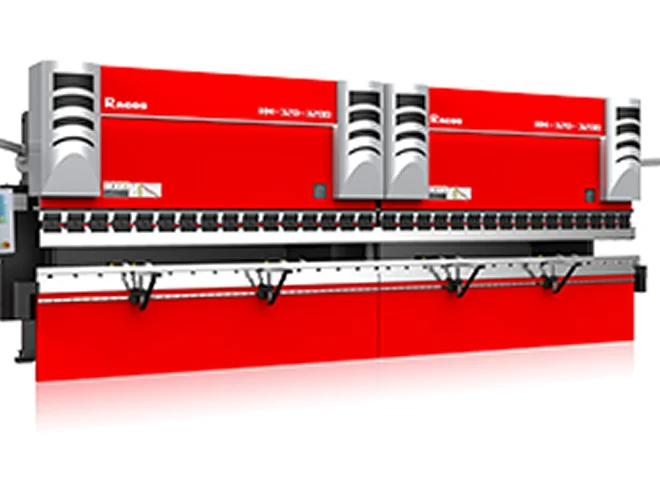
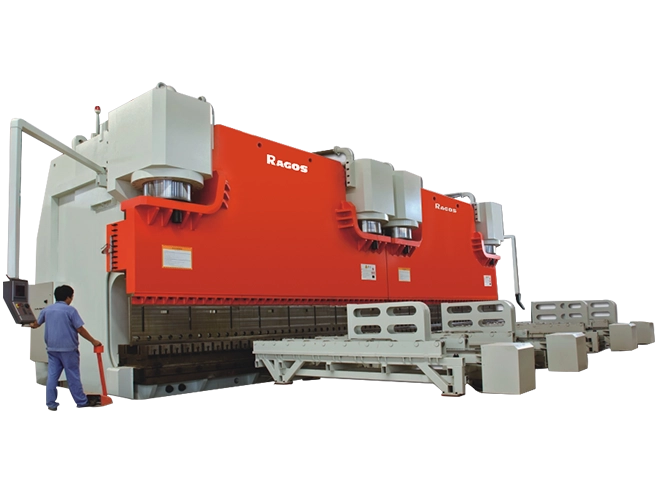
Les systèmes hydrauliques utilisent des vérins hydrauliques synchronisés pour déplacer la poutre supérieure et générer une force de flexion . Ces machines sont couramment utilisées pour des applications lourdes et à forte tonnage .
Frein à pression servo-électrique
Les systèmes servo-électriques utilisent des moteurs et des entraînements mécaniques pour exercer une force sur le bélier . Ces systèmes sont souvent choisis pour leur efficacité énergétique et leur contrôle de précision.
Les deux types fonctionnent sous automatisation CNC, mais les systèmes hydrauliques restent largement utilisés dans la courbure à l’échelle industrielle.
Étape par étape: Comment fonctionne un frein à pression CNC
Étape 1: Programmation du Bend
L’opérateur saisit les informations produit dans le contrôleur CNC. Cela inclut:
-
Angles de flexion
-
Épaisseur du matériau
-
Séquence de courbure
-
Sélection d’outils
-
Positions arrière de la jauge
Le système CNC calcule la profondeur de bélier et la force nécessaires pour atteindre l’angle programmé .
Dans de nombreux systèmes, Le logiciel CAO/FAO peut générer le code machine requis, qui est ensuite téléchargé dans le contrôleur CNC .
Étape 2: Installation des outils
Le punch et la matrice corrects sont montés sur la machine. Le choix de l’outil est crucial car différentes ouvertures de la puce en V et les rayons de poinçon influencent la force de flexion et la géométrie finale .
Un bon réglage garantit une flexion précise et protège les outillages contre la surcharge.
Étape 3: Positionnement des matériaux
La tôle est placée entre la poinçonne et la matrice et alignée à l’aide du système de jauge arrière .
Le manomètre arrière positionne automatiquement la feuille pour garantir une position précise de la courbure et une répétabilité.
Étape 4: Mouvement du bélier et flexion
Quand le cycle commence, le bélier contrôlé par CNC abaisse la poinçon sur la feuille. Le poinçon presse le matériau contre la matrice, ce qui le fait plier selon l’angle programmé .
La force appliquée dépend du type de matériau, Épaisseur, et longueur de courbure. Les systèmes hydrauliques génèrent cette force via des cylindres synchronisés .
Étape 5: Retour et contrôle de séquence
Après avoir atteint la profondeur cible, Le bélier se rétracte. Si la pièce nécessite plusieurs courbes, le contrôleur CNC repositionne automatiquement le manomètre arrière et exécute la courbure suivante en séquence .
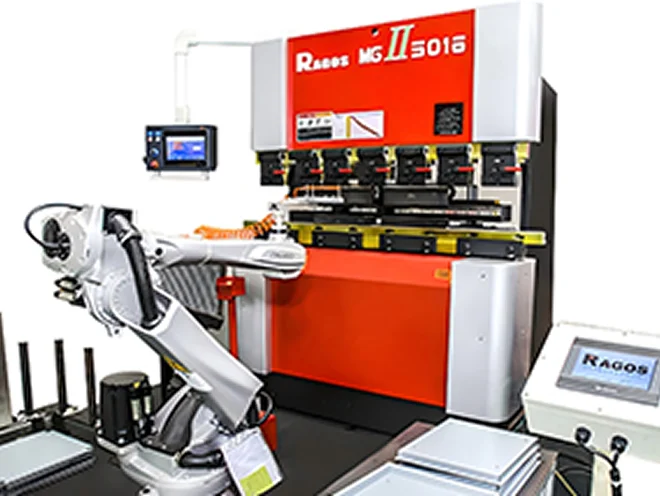
Cette automatisation améliore considérablement l’efficacité par rapport aux machines à plier manuelles.
Freins à pression CNC vs NC
Les premiers freins à pression étaient NC (Contrôle numérique), Contrôlant typiquement uniquement des axes de base. Systèmes CNC, en revanche,, peut contrôler plusieurs axes (souvent 3 ou 1), permettant des géométries de courbure plus complexes et une précision plus élevée .
Les freins à pression CNC fournissent généralement:
-
Une plus grande automatisation
-
Meilleure répétabilité
-
Pièces finies de meilleure qualité
Pourquoi les freins à pression CNC sont essentiels dans la fabrication moderne
Les freins à pression CNC sont des outils essentiels dans les environnements de fabrication modernes car ils offrent:
1. Haute précision
Le contrôle informatique minimise l’erreur humaine et permet un contrôle d’angle cohérent .
2. Répétabilité
Une fois programmé, La même pièce peut être reproduite avec une grande constance entre les lots .
3. Efficacité
L’automatisation réduit le temps de mise en place et permet à un opérateur de gérer des séquences de courbure complexes .
4. Polyvalence
Les freins à pression CNC peuvent plier une grande variété de matériaux, y compris l’acier, aluminium, et cuivre .
Applications des machines à frein à pression CNC
Les freins à pression CNC sont utilisés dans de nombreux secteurs:
-
Projets de construction et d’infrastructures
-
Fabrication aérospatiale et de défense
-
Carrosserie automobile et composants structurels
-
Fabrication de machines lourdes et d’équipements industriels
Leur capacité à plier avec précision des tôles épaisses les rend indispensables dans la fabrication structurelle et industrielle.
Dernières réflexions
Une machine à frein à pression CNC est utilisée car elle intègre force mécanique et intelligence numérique. Il est utilisé pour plier la tôle en estampant une poinçonne dans une matrice, et un système de contrôle CNC est utilisé pour contrôler l’action du ram, Force et positionnement très précis.
Les freins à pression CNC redirigent le métal plat vers des composants conçus grâce à une grande précision et répétabilité, basé sur la programmation et la mise en place, aux cycles de flexion, qui sont automatisés. Ces machines sont des composants essentiels de l’industrie manufacturière actuelle, qu’il soit alimenté hydrauliquement ou électriquement.