


Frein à pression robuste pour plaque d’acier: Comment le spec correctement
La flexion de la plaque d’acier est un procédé à haute énergie qui diffère fondamentalement de la tôlerie. Tandis que le pliage des feuilles met l’accent sur l’esthétique et la précision des surfaces, Le formage des plaques nécessite une pénétration profonde de contrainte pour compenser la résistance massive à la déformation transversale des sections lourdes.
Spécifier un frein à pression robuste ne consiste pas seulement à choisir un chiffre élevé sur un tableau de tonnage; il s’agit d’adapter l’architecture structurelle de la machine au comportement physique du métal. Si la machine ne supporte pas le comportement de déplacement de l’axe neutre de la plaque, La pression de contact élevée qui en résulte entraînera inévitablement une fatigue du châssis ou une défaillance catastrophique des outils.
- Plaque vs. Feuille: La plaque nécessite une déformation plastique complète sur toute l’épaisseur, Pas seulement en surface.
- Intégrité structurelle: Le châssis de la machine doit gérer le chemin d’énergie pour éviter la torsion sous des charges décentrées.
- Risque de spécification: Sous-spécifier mène à "banane" des coins courbés ou fissurés qui peuvent devenir des risques pour la sécurité.
- Correspondance des forces: Le tonnage doit être calculé à l’aide d’un tampon de sécurité tenant compte des variations de limite d’élasticité du matériau.
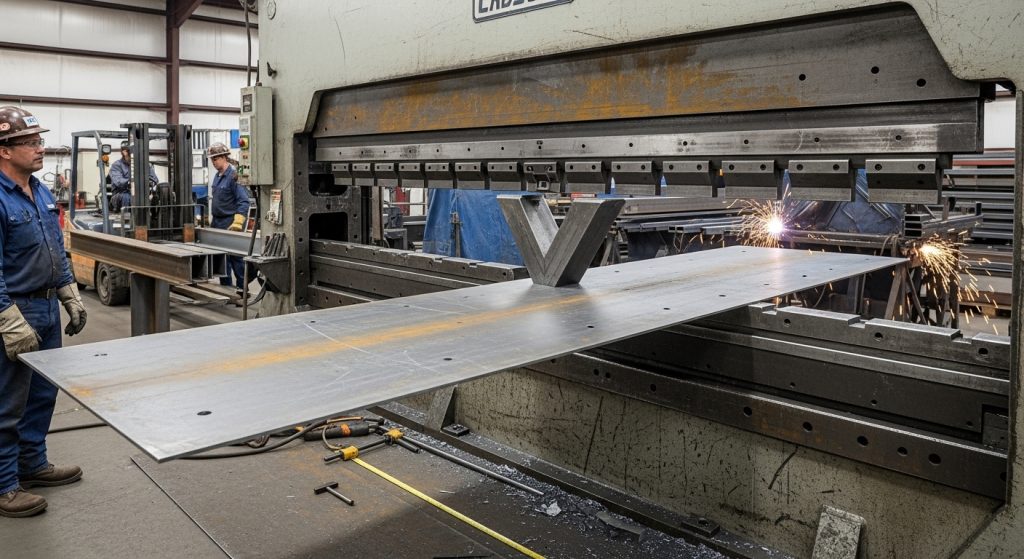
où les freins à pression robustes deviennent obligatoires pour le travail sur plaques d’acier
Les machines standard échouent souvent lorsqu’elles sont poussées dans l’enveloppe de formation de la plaque de section lourde. Les modèles robustes sont obligatoires lorsque la résistance à la charge d’élasticité du matériau dépasse les limites élastiques des cadres standards. Dans ces scénarios, La zone de concentration de contrainte sur le bord de la plaque est si intense que les composants standards se déformeraient de façon permanente.
- Construction navale et marine: Formant d’énormes plaques de coque et des cloisons internes.
- Infrastructures: Création de segments de poutres structurelles et de composants de pont où l’intégrité de la plaque est non négociable.
- Équipement lourd: Fabrication de châssis pour machines minières et de construction opérant dans un espace étroit fenêtre de déformation en section épaisse.
La véritable fabrication de haute résistance nécessite une machine conçue pour une production constante, Cycles de charge élevée où la durée de vie de fatigue du châssis est calculée en décennies, pas seulement quelques milliers de coups.
Comment l’épaisseur de la plaque d’acier influence les exigences de tonnage des freins à pression robustes
La force nécessaire pour plier la plaque d’acier augmente de façon exponentielle avec l’épaisseur. Le Multiplicateur de force d’épaisseur de section signifie que doubler l’épaisseur de la plaque nécessite bien plus que le double du tonnage. Les ingénieurs doivent utiliser un Plage tampon du facteur de sécurité de charge pour tenir compte des "Durcissement par le travail" qui se produit pendant l’AVC.
Tableau d’escalade de la force des plaques (Approximation pour l’acier S355)
| Épaisseur de la plaque (mm) | Ouverture en V recommandée (mm) | Tonnage par mètre (T/m) | Force Gradient |
| 12mm | 100mm | 85T | Référence |
| 20 mm | 160mm | 145T | Augmentation de 1,7x |
| 30 mm | 250mm | 210T | Augmentation de 2,5 fois |
| 50 mm | 400 mm | 350T | Augmentation de 4,1x |
La formule de base pour l’estimation est $F = frac{k cdot S cdot L cdot t^2}{V}$, où $F$ est force, $t$ correspond à l’épaisseur, et $V$ est l’ouverture du dé. Au fur et à mesure que $t$ augmente, le Gradient d’escalade de force de formation devient le facteur principal dans la sélection de la machine.
Architecture mécanique qui distingue les véritables freins à pression robustes des modèles standards
Un frein à pression robuste est défini par sa Rigidité du chemin de charge du châssis. Contrairement aux modèles plus légers, Le plateau et le bélier sont nettement plus profonds pour fournir Géométrie de compensation de déviation du lit. Le Syétrie de charge du cylindre hydraulique garantit que même sous pression maximale, La force est répartie uniformément entre les guides de bélier.
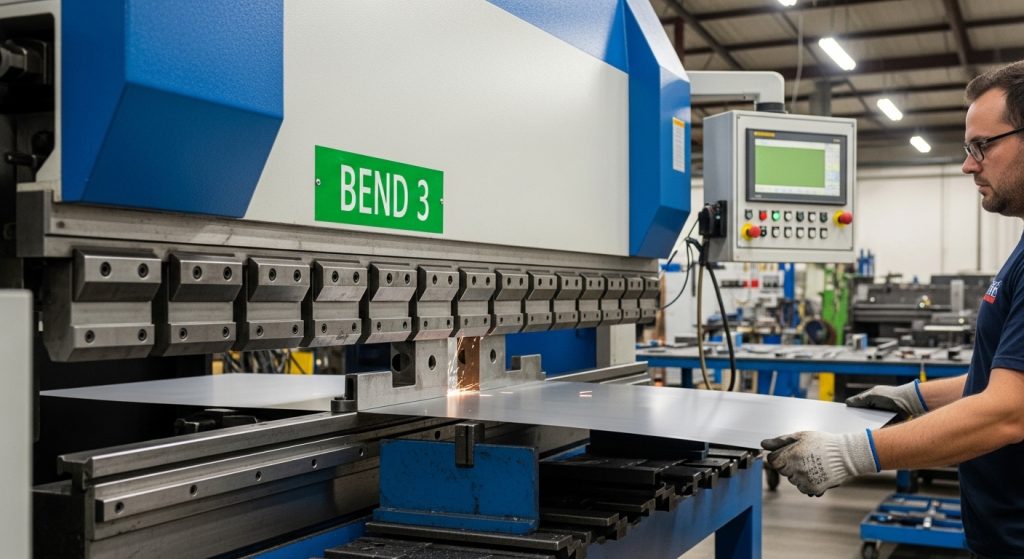
- Rigidité du châssis: Des boîtiers latéraux surdimensionnés et des profondeurs profondes permettent d’avoir de grandes brides sans sacrifier Contrôle de charge parallèle de la RAM.
- Conception des cylindres: Joints lourds et pistons haute pression conçus pour des cycles de travail industriels 24h/24 et 7j/7.
- Renforcement du lit: D’énormes dalles d’acier soudées et soulagées pour supporter les charges ponctuelles concentrées des grandes matrices en V.
- Couronnement intégré: Des systèmes actifs qui réagissent au tonnage spécifique de chaque course pour maintenir une ligne de courbe droite.
Ingénierie des outillages pour la plaque d’acier sur freins à pression robustes
L’outillage pour les plaques lourdes repose sur tout Dispersion de charge d’ouverture du dén. Utiliser un dé trop étroit augmente Endurance de la pression de contact de l’outil Exigences dépassant les limites de l’acier à outillage standard, menant à Interface de résistance à la gallerie de surface Échec.
| Type de matériau | Rayon de poing | L’ouverture (V) | Niveau de risque |
| Acier doux | 1 $.0 fois t$ | 8–10 $ times t$ | Low |
| Haute résistance (S700) | 3 $.0 fois t$ | 12 $ fois t$ | Moyen |
| Résistante à l’usure (AR450) | 5 $.0 fois t$ | 12–15 $ fois t$ | Haut |
Le Contrôle du rayon de contrainte du nez est critique; Un coup de poing sec sur une assiette lourde agit comme un couteau, initier une fissure dans le matériau plutôt qu’une courbure.
Pourquoi les systèmes de couronnement deviennent essentiels dans le pliage des plaques lourdes
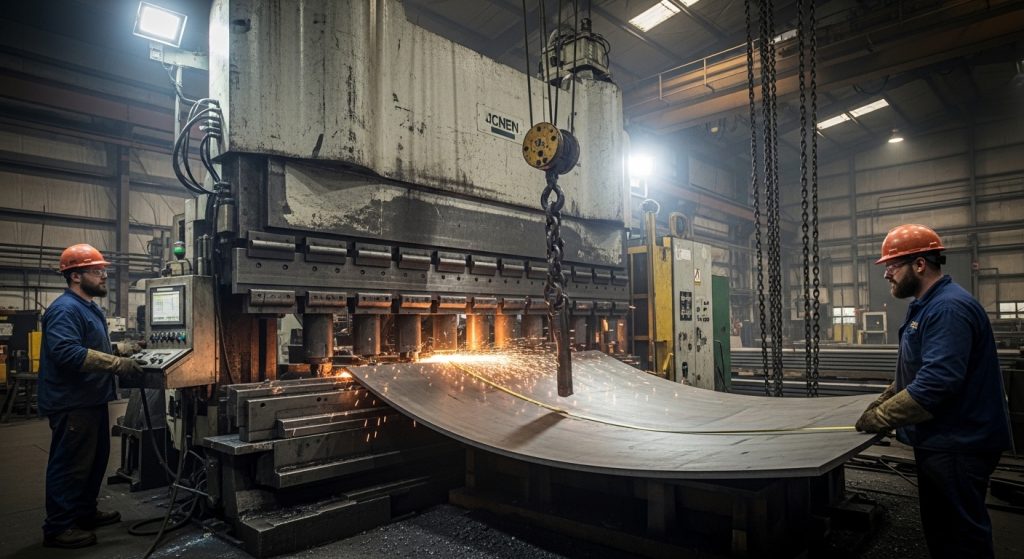
Alors que le bélier pousse vers le bas, Le lit et le bélier se fléchissent naturellement au centre — c’est le Courbure de déviation élastique du lit. Sans correction, La plaque aura un angle plus large au centre qu’aux extrémités. A Modulation de pression de couronnement dynamique le système compense légèrement cela "Réconfort" Le lit vers le haut.
Exactement Contrôle de compensation de courbure à envergure totale est vital pour le travail sur plaques car les forces sont si élevées que le calage manuel est impossible. Sans lui, le Correction du gradient de variation d’angle devient un goulot d’étranglement, nécessitant des retravails coûteux et chronophages ou un meulage secondaire.
Synchronisation multi-cylindres et pourquoi elle est importante au-delà du tonnage lourd
Dans les machines à gros tonnage, Maintenir une RAM stable dépend de Suppression de la déviation par inclinaison du ram. Si un côté de la plaque est légèrement plus dur que l’autre, La résistance sera inégale. A Harmonisation synchronisée de la pression du cylindre Le système utilise des vannes à haute vitesse pour équilibrer instantanément le débit.
- Bilan de débit hydraulique: Cela garantit que le bélier se déplace parfaitement verticalement, quelle que soit la charge décentrée.
- Distribution des vecteurs de charge: Gère les forces pour empêcher le bélier de "torsion" Dans les guides.
- Stabilité: Critique pour les plaques de grand format où une légère déviation au niveau du cylindre se traduit par une grosse erreur au bord de la plaque.
Risques de défaillance lorsque les pièces de plaques d’acier fonctionnent sur des freins à pression sous-spécificés
Pousser une machine au-delà de son objectif Dépassement du rendement de la contrainte de cadre Limites crée Nucléation par fissure par micro-fatigue. Ces fissures sont souvent invisibles jusqu’à ce qu’elles provoquent un Défaillance par cisaillement par surcharge d’outil ou un châssis de machine fissuré.
| Mode de défaillance | Signes d’alerte | Conséquences techniques |
| Fracture de l’outil | Fort "craquement" ou son de bip | Débris métalliques volants (Danger pour la sécurité). |
| Fatigue du châssis | Déformation permanente du bélier et du lit | Perte de précision de la machine; Cassure finale de l’image. |
| Fissurage des plaques | Déchirures visibles en surface dans la courbure | Propagation de la fracture de la plaque; Pièce de grande valeur mise à la ferraille. |
Fonctionner constamment à 95 % de sa capacité est une stratégie à haut risque; Les meilleures pratiques industrielles suggèrent de rester dans 80 % du tonnage nominal pour le travail sur plaques.
Liste de contrôle des spécifications: Comment choisir un frein à pression robuste pour la plaque d’acier
Avant de finaliser un achat, Assurez que le Liste de contrôle pour la validation de la conformité aux spécifications Couvre ces fondamentaux de l’ingénierie:
- [ ] Exigence en tonnage: Calculé pour votre matériau le plus difficile, Pas seulement de l’acier doux.
- [ ] Enveloppe de charge: La machine a-t-elle la hauteur d’ouverture pour vos grandes chips en V et vos brides profondes?
- [ ] Compatibilité des outillages: Vérifié Matrice de vérification de la compatibilité des outils pour les épaisseurs spécifiques de vos plaques.
- [ ] Classe structurelle: Est-ce un "Travail lourd" construit ou simplement un châssis standard avec des vérins plus grands?
- [ ] Méthode de couronnement: Système en coin hydraulique ou mécanique actif adapté aux charges sur plaques.
- [ ] Cycle de service: Évalué pour le nombre de courbes par heure que votre production nécessite.
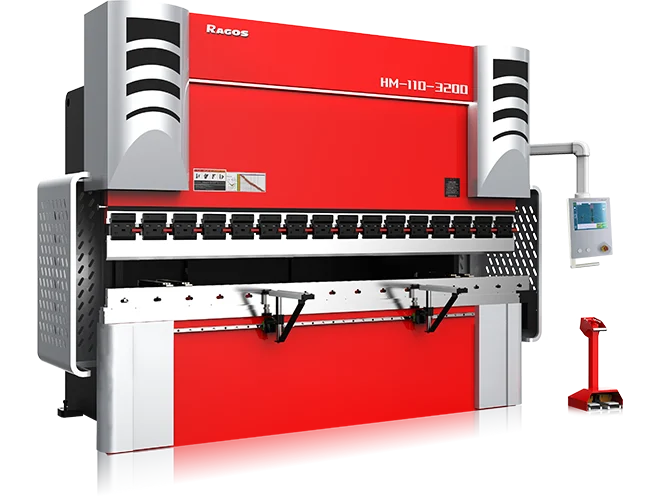
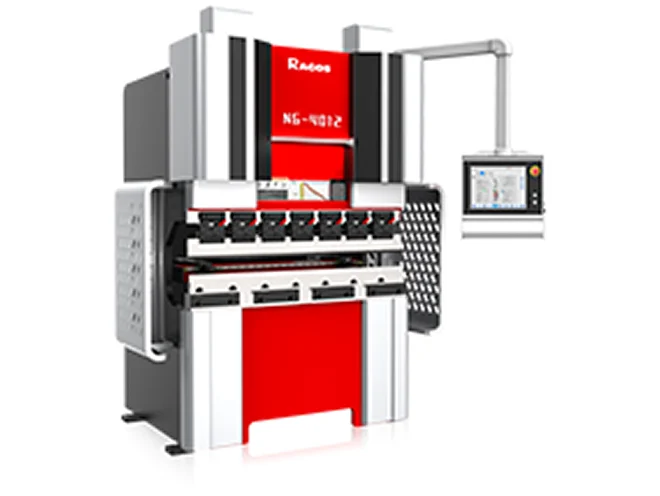
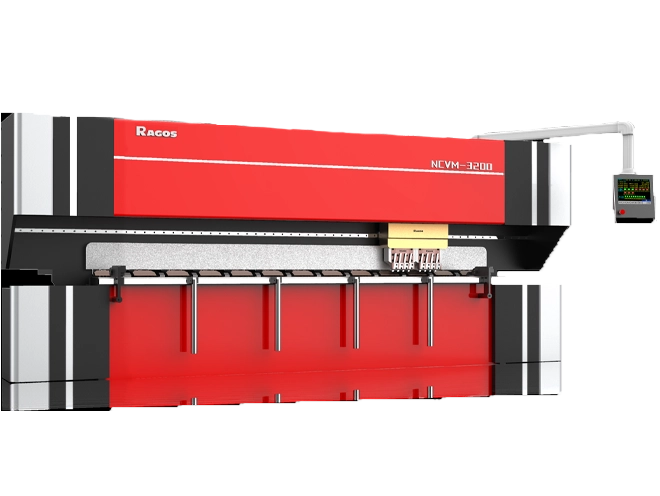
Sélection Modèles à freins à pression robustes Cela implique de comprendre les limites de votre fabrication actuelle. Pendant qu’un Frein à pression de 3200 mm est souvent la norme pour le travail général sur plaques, Les projets plus importants nécessitent fréquemment le Frein à pression de 4000 mm pour gérer des longueurs étendues sans compromettre le tonnage. Utilisation d’un Tableau de capacité des freins à pression est la première étape de la planification, Mais il faut aussi prendre en compte comment Changements d’ouverture de la matrice; Une puce en V plus grande peut réduire la force requise mais augmentera la longueur minimale de la bride.