

Machine à frein à presse hybride Servo: Comment ça fonctionne, Ce que cela sauve, et Qui en a besoin
UnMachine à frein à pression hybride Servo combine un servomoteur avec un système de puissance hydraulique pour fournir une flexion précise à un coût énergétique nettement inférieur à celui d’une machine hydraulique conventionnelle. Le concept est simple: au lieu de faire fonctionner une pompe hydraulique en continu à pleine puissance, Le servomoteur n’active la pompe que lorsque le RAM doit réellement bouger. Cette seule différence modifie le profil énergétique, Le niveau de bruit, La température de l’huile, et les besoins en maintenance de la machine — tout cela en même temps.
Ce guide explique exactement comment fonctionne la technologie hybride servo, Ce qu’il sauve en chiffres réels, et quels environnements de production en bénéficient le plus.
Qu’est-ce qui différencie une machine à frein à pression hybride servo?
Un frein à pression hydraulique standard fait fonctionner son moteur de pompe en permanence — du moment où la machine démarre jusqu’à ce que l’opérateur l’arrête. Pendant les périodes d’inactivité, Temps d’attente, et le repositionnement de la cartoirisation arrière, La pompe continue de fonctionner à pleine charge. Cette aspiration continue représente une part significative de la consommation totale d’énergie sans effectuer de travail de flexion productif.
UnMachine à frein à pression hybride Servo remplace le moteur à induction à vitesse fixe par un servomoteur directement couplé à la pompe hydraulique. Le servomoteur ne tourne que lorsque le système de contrôle exige un mouvement de bélier — et précisément à la vitesse nécessaire pour cette phase spécifique du cycle de flexion.
Le résultat est une machine qui:
- Consomme de l’énergie uniquement lors du mouvement actif de la RAM
- Génère moins de chaleur, ce qui prolonge la durée de vie de l’huile hydraulique et la longévité du joint
- Fonctionne à des niveaux de bruit nettement inférieurs à ceux d’une machine hydraulique conventionnelle
- Permet une reproductibilité de positionnement plus serrée grâce à un retour servo en boucle fermée
En termes pratiques, Une machine à frein à pression hybride servo n’est pas une machine entièrement électrique — elle utilise néanmoins du liquide hydraulique et des cylindres pour générer une force de flexion. Le servomoteur contrôle quand et à quelle vitesse cette force est délivrée. Cette distinction est importante lors du choix du type de machine adapté à vos besoins de production.
Comment fonctionne réellement le système hybride Servo
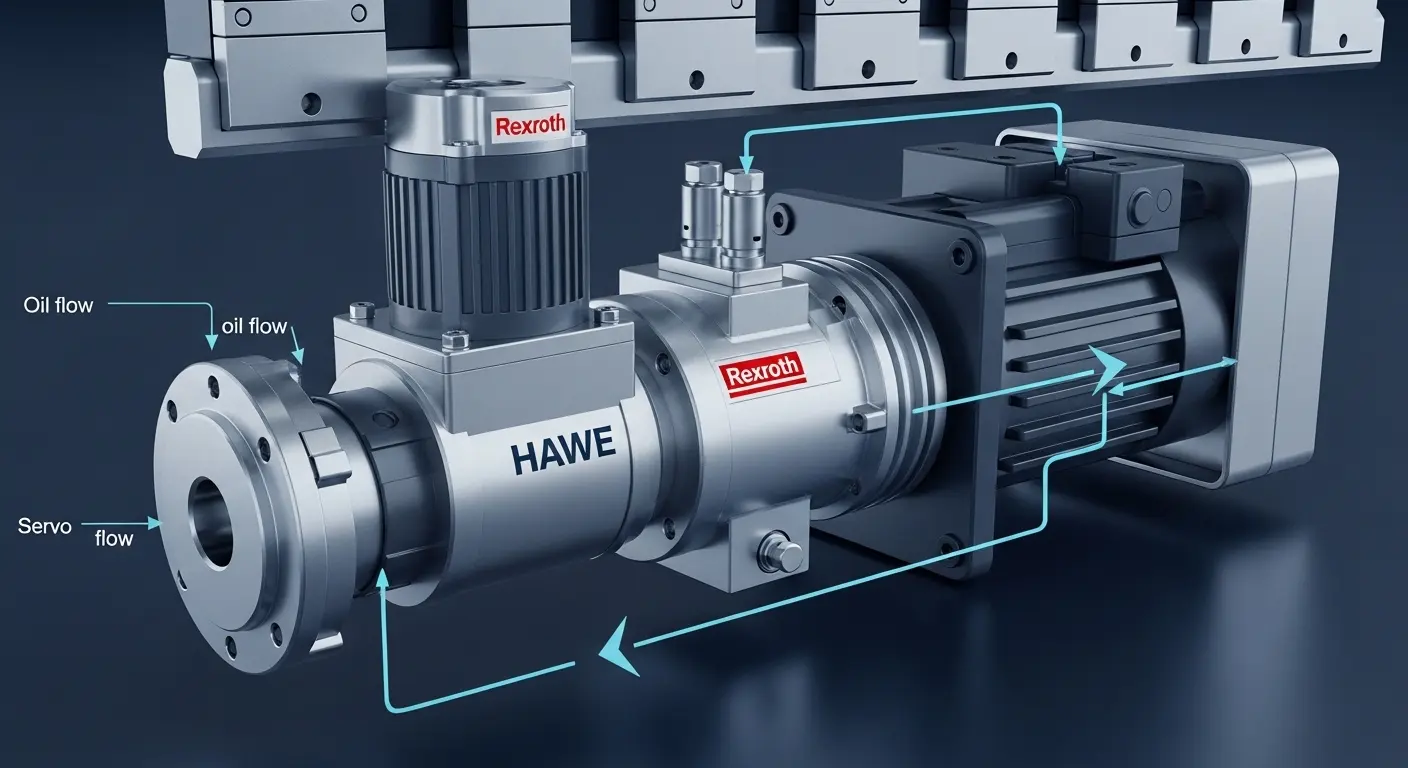
Le noyau d’une machine à frein à pression hybride servo est unSystème d’entraînement servo-hydraulique — soit une conception contrôlée par pompe, soit une conception contrôlée par une vanne, selon le fabricant.
Systèmes à commande par pompe (Rexroth DSVP)
Dans la configuration contrôlée par pompe — utilisée dans le système Rexroth DSVP installé dans les machines hybrides JS RAGOS — un servomoteur entraîne une pompe à pistons axiale qui délivre le fluide hydraulique précisément à la demande. Le système utilise un retour en boucle fermée provenant d’une règle à réseau magnétique pour surveiller la position du RAM en temps réel et ajuster la sortie de la pompe en conséquence.
Le système DSVP de Rexroth supporte jusqu’à 2,500–3,Configurations de presse de 200 tonnes, ce qui en fait le choix approprié pour les applications industrielles moyennes à lourdes où la force hydraulique est non négociable. Les JS RAGOSSystème de frein à pression hybride DSVP couvre la spécification technique complète pour les options de commande à pompe et de valve Rexroth pour différentes classes de tonnage.
Système servo hybride Hawe ePrAX®
Le système Hawe ePrAX® reprend le même principe à la demande et l’affine avec un servomoteur brushless directement couplé à la pompe hydraulique. La conception brushless réduit la friction mécanique, ce qui contribue à la capacité sonore du système de seulement 50 dB — comparable à un environnement de bureau calme, significativement en dessous des 75 dB d’une machine hydraulique conventionnelle.
Pour les ateliers de fabrication en milieu urbain, Bâtiments industriels partagés, ou des environnements où le confort de l’opérateur et la conformité à la protection auditive sont importants, La réduction du bruit justifie à elle seule la prime par rapport à une machine hydraulique standard.
Économies d’énergie réelles: Ce que montrent réellement les chiffres
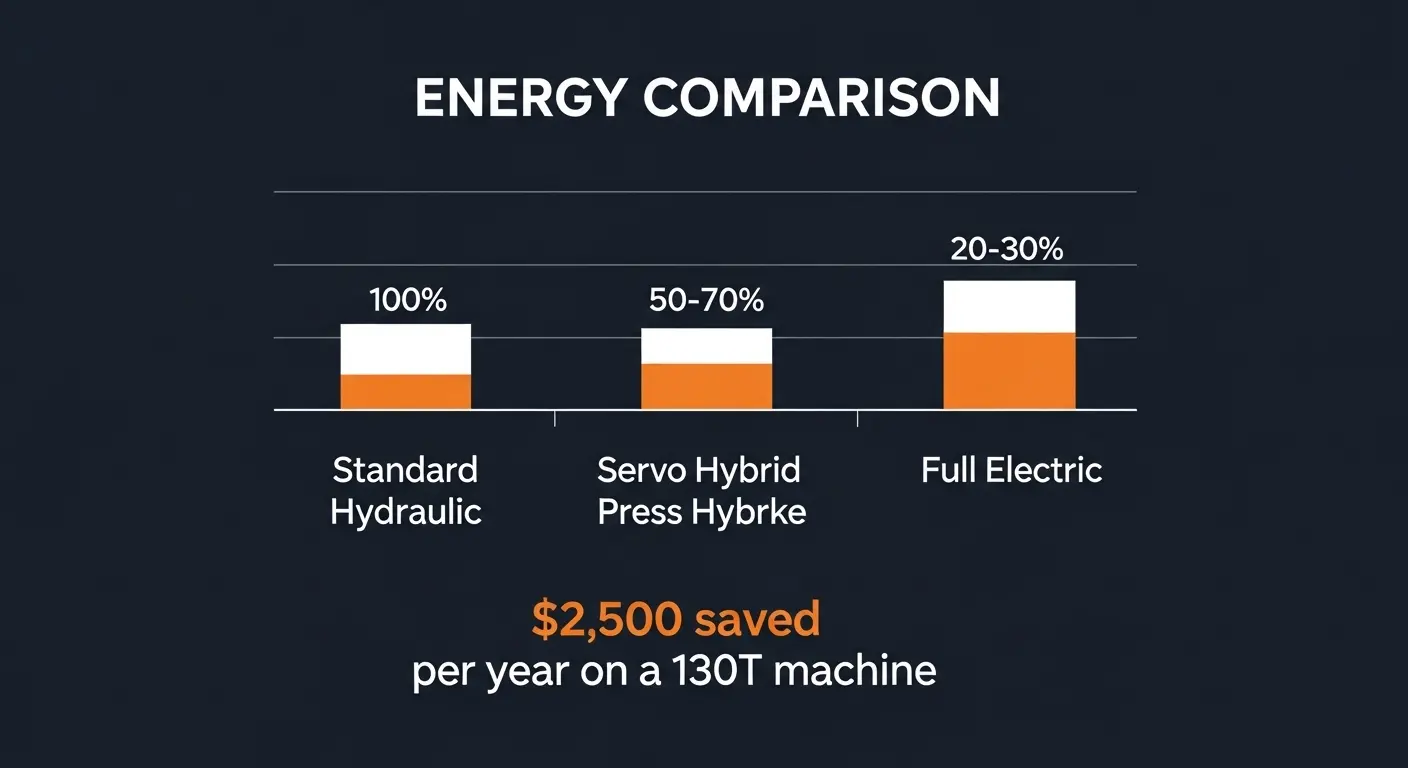
Les revendications d’économie d’énergie sur le marché des machines à frein à presse hybrides servo varient de 28 % à 73 %, Selon le système et la manière dont le test a été réalisé. Voici ce que signifient réellement les données en termes de production.
JS RAGOS publie des chiffres spécifiques pour le système Hawe ePrAX® installé dans leurs freins à pression CNC hybrides:
- Un Machine à frein à pression hybride servo de 130 tonnes avec un moteur principal de 13,5 kW fonctionnant 8 heures par jour, 300 jours par an, consomme environ 32,400 kWh par an à pleine hydraulique
- Avec le système servo hybride ePrAX®, Les économies d’énergie atteignent environ 65%, réduire la consommation annuelle d’environ 21,000 kWh
- À un coût d’électricité de 0,12 $ USD par kWh, ce qui est approximativement égal 2 $,500 économisés par machine et par an
- À ce rythme d’économies, Le système hybride S’auto-rembourse en 1 à 2 ans uniquement par la réduction d’énergie
Pour les ateliers utilisant deux ou trois machines à frein à pression hybrides servo sur deux équipes, Les économies annuelles cumulées dépassent les 10 $,000 par an — un chiffre qui modifie significativement le calcul du ROI.
À 90 % de charge sur une exploitation prolongée, Les données de test issues de la série WDK de Shenchong montrent des améliorations d’efficacité de 30 à 50 % et des économies d’énergie de 28 à 54 % selon le cycle de production. Des améliorations de précision de positionnement sur l’axe Y, allant jusqu’à 5 fois par rapport aux systèmes hydrauliques standards, ont été documentées dans les mêmes conditions d’essai.
Servo Hybrid vs Servo. Full Electric vs. Hydraulique standard — qui convient à votre atelier?
Le choix du bon système d’entraînement dépend de votre gamme de matériaux, Exigence en tonnage, et environnement de production. Voici une comparaison pratique:
| Spécification | Hydraulique standard | Frein à pression hybride servo | Frein à pression électrique complet |
|---|---|---|---|
| Répétabilité | ±0.01mm | ±0.005mm | ±0.001mm |
| Énergie vs. Référence | 100% | 50–70% | 20–30% |
| Niveau de bruit | 75 dB | ~50 dB | ~20 dB |
| Temps d’échauffement | 15–30 min | Moins de 5 min | Instantané |
| Tonnage maximal | 600T | 600T | ~150T |
| Huile hydraulique requise | Oui | Oui (Volume réduit) | Non |
| Le meilleur pour | Production intensive, Plaque épaisse | Production mixte, Ateliers économes en énergie | Travail de haute précision à écartement fin |
LeMachine à frein à pression hybride Servo se situe entre les deux extrêmes. Il gère un tonnage lourd que les machines entièrement électriques ne peuvent atteindre, tout en offrant des économies d’énergie et des niveaux de précision que les machines hydrauliques standard ne peuvent égaler.
Pour les ateliers qui doivent plier de l’acier doux ou de l’inox de 4 mm à 12 mm, travail à travers des types de matériaux mixtes dans un même shift, ou faire fonctionner une machine deux gardes par jour, Une machine à frein à pression hybride servo offre généralement un coût total de possession meilleur que les deux alternatives.
Pour les ateliers exclusivement axés sur le travail de précision à écartement fin — épaisseurs de feuilles inférieures à 3 mm, Petites pièces complexes, tolérances strictes — aFrein à pression électrique JS RAGOS offre des temps de cycle plus rapides et la plus grande précision positionnelle disponible. Pour une analyse complète côte à côte des deux systèmes, leGuide comparatif des freins à pression électriques vs hydrauliques Interprétation de reprises, entretien, et les données de coût pour les trois types de disques.
Applications où une machine à frein à pression hybride servo fonctionne le mieux
Tous les ateliers de fabrication n’ont pas besoin de technologie hybride servo. Les environnements de production où elle offre l’avantage le plus évident sont:
Production à cycle de service élevé. Les ateliers qui font un à trois quarts par jour enregistrent les plus grandes économies d’énergie. Plus la machine tourne d’heures, Plus le système d’alimentation à la demande économise par rapport à une pompe hydraulique conventionnelle fonctionnant en continu.
Production mixte de matériaux et de calibres. Quand un atelier plie de l’acier inoxydable fin le matin et des plaques en acier doux de 8 mm l’après-midi, La machine à frein à pression hybride servo s’adapte sans nécessiter de temps de chauffe ni d’ajustements de pression hydraulique entre les travaux.
Installations de fabrication urbaines et en espaces partagés. Le niveau de bruit de 50 dB d’un système Hawe ePrAX® contre 75 dB d’une machine hydraulique conventionnelle fait une différence significative dans le confort de l’opérateur, Compliance du bruit, et conditions du bail de construction.
Ateliers remplaçant les machines hydrauliques conventionnelles vieillissantes. Une machine à frein à pression hybride servo installée dans un atelier fonctionnant actuellement avec une machine hydraulique standard vieille de 15 ans récupère généralement sa prime de coût supplémentaire en 18 à 24 mois grâce aux économies d’énergie uniquement — avant de compter les coûts d’entretien réduits sur les joints hydrauliques, Filtres, et les défaillances des composants liées à la surchauffe.
Pour les configurations CNC hydrauliques standard avec une grande qualité de fabrication, leMeilleur guide de solutions pour freins à pression hydrauliques CNC Couvre les spécifications et recommandations des acheteurs pour les ateliers où une mise à niveau du servo hybride n’est pas encore justifiée par le volume.
Caractéristiques clés à vérifier lors de l’achat d’une machine à frein à pression hybride servo
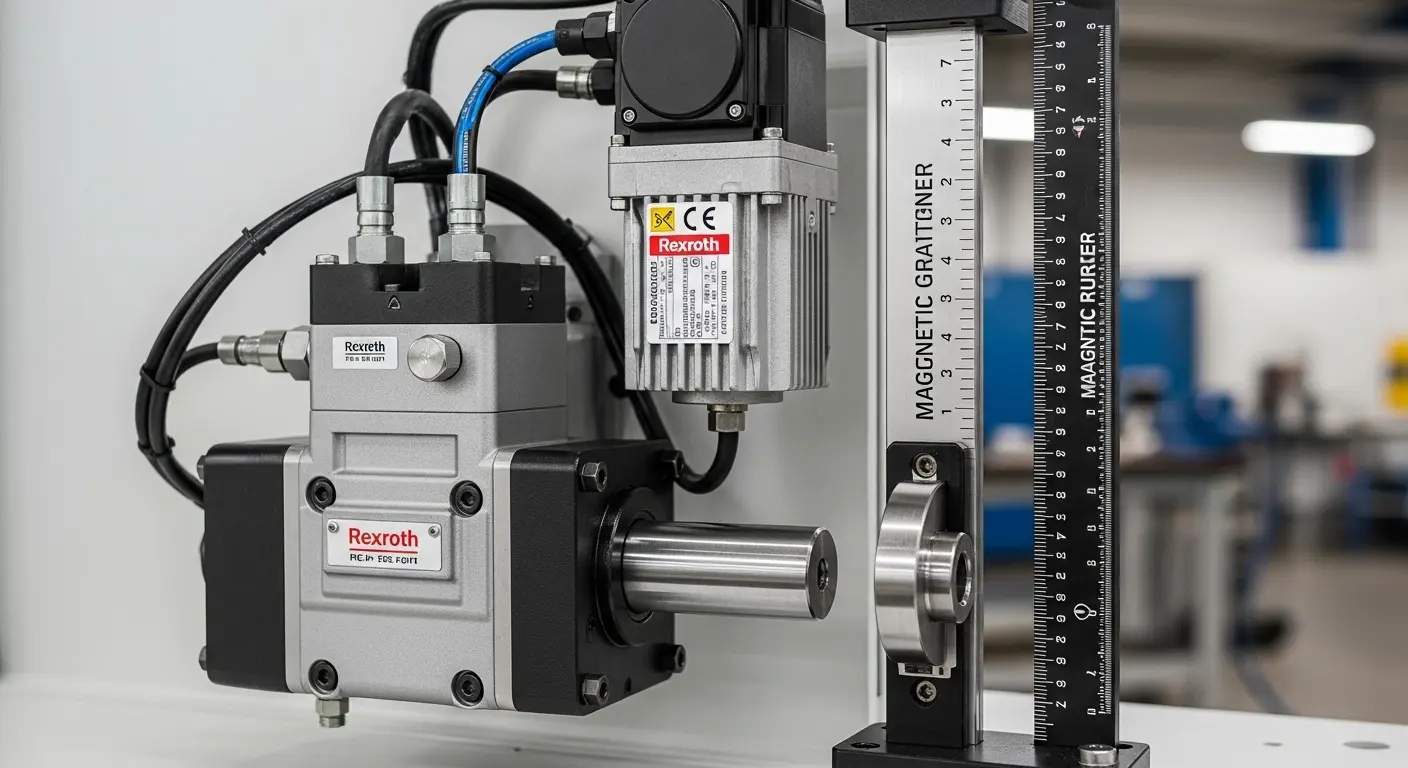
Toutes les machines hybrides servo ne sont pas construites de manière égale. Ce sont les points de spécification qui distinguent la qualité réelle d’un changement d’étiquette sur une machine hydraulique standard:
Marque de servomoteurs. Yaskawa, Siemens, et Mitsubishi sont les marques de qualité reconnues pour les servomoteurs dans les applications de frein à pression. Les servomoteurs génériques ou non nommés n’offrent aucune traçabilité significative et peuvent ne pas maintenir les spécifications dans le temps.
Origine des composants hydrauliques. Rexroth et Hawe sont les références pour les composants hydrauliques dans les systèmes hybrides servo. Les deux produisent des pompes et des vannes spécialement conçues pour la dynamique de pression des applications de freins à pression commandés par servocommande. Confirmez le nom de la marque sur les composants hydrauliques physiques — pas seulement sur la fiche technique.
Type et résolution de la règle de grille. Une règle à réseau magnétique avec 0.00La résolution de 1 mm est la référence actuelle pour le retour de position en boucle fermée. Demandez le fabricant de la règle et le numéro de modèle — c’est une spécification vérifiable.
Volume du réservoir de pétrole. Des réservoirs de pétrole plus petits réduisent la masse thermique, ce qui maintient la température de l’huile plus basse et prolonge la durée de vie du joint. Le système Hawe ePrAX® utilise un réservoir d’huile à volume réduit précisément pour cette raison.
Compatibilité des manettes. Les contrôleurs Delem DA-66T et DA-69T prennent en charge la boucle de rétroaction servo en boucle fermée complète requise pour les systèmes hybrides servo. Les contrôleurs E21 ou TP10 basiques ne le font pas. Confirmez que le contrôleur spécifié avec votre machine supporte nativement la programmation de contrôle de la servopompe.
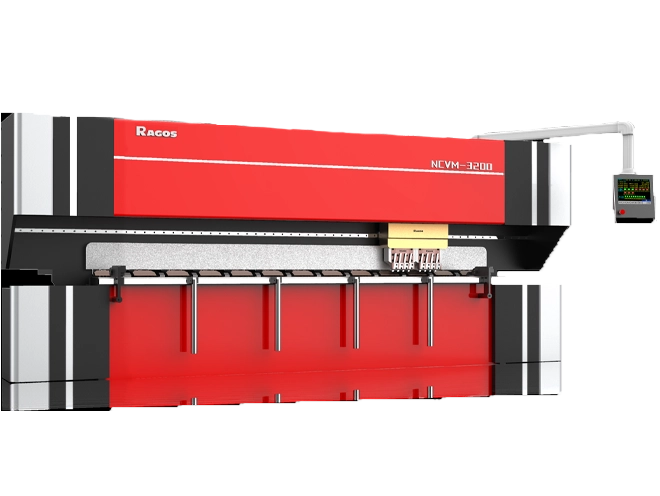
Pour toute la gamme de freins à pression CNC JS RAGOS — couvrant l’hydraulique standard, Hybride servo, et les configurations électriques de 40T à 600T — leGamme de produits de freins à pression CNC JS RAGOS fournit les spécifications, Options de configuration, et des conseils d’application pour chaque système de disques.
Machines à frein à presse hybrides servo pour applications à haute tonnage et tandem
Un avantage sous-estimé de la technologie hybride servo est sa capacité à atteindre un tonnage très élevé. Les freins à pression électriques complets plafonnent généralement à 150 T en raison des limitations des vis à billes et des servomoteurs. Une machine à frein à pression hybride servo évolue proprement jusqu’à 600T et au-delà en utilisant la même architecture hydraulique contrôlée par servo, car les cylindres hydrauliques gèrent la génération de force tandis que le servomoteur gère la précision et la consommation d’énergie.
Pour la fabrication de l’acier de structure, Fabrication de récipients sous pression, ou la production de gros composants nécessitant une flexion de 300T à 600T, Une machine à frein à pression hybride servo est généralement le choix optimal — combinant la force de sortie d’un système hydraulique robuste avec la précision et le profil énergétique du contrôle servo.
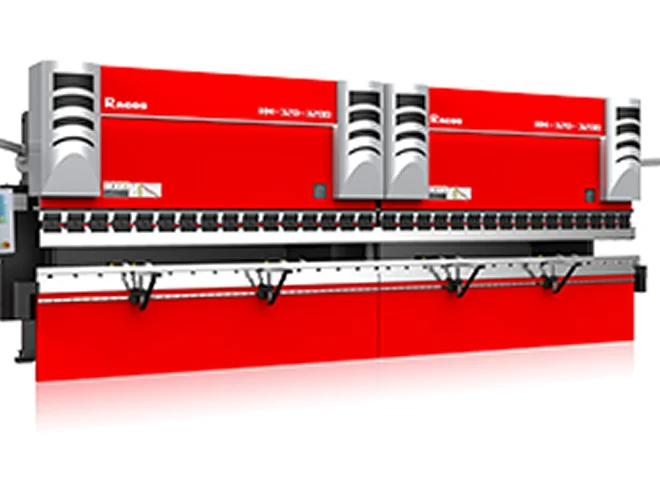
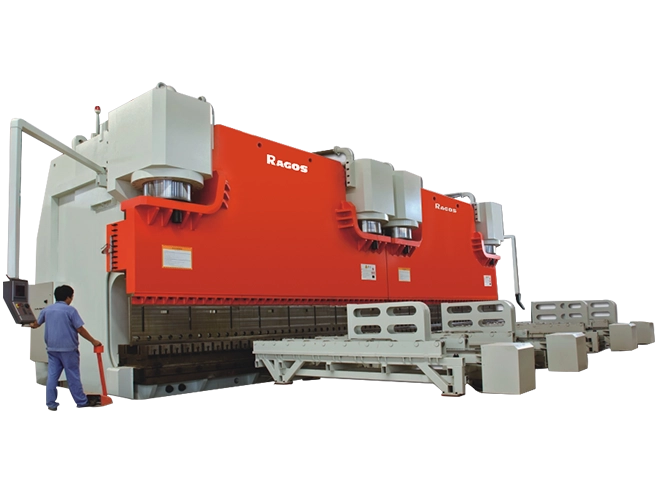
Pour les environnements de production nécessitant des flexions sur de très larges longueurs — 6,000mm à 12,000MM — Deux machines hybrides servo fonctionnant en synchronisation représentent une alternative pratique à une seule machine à plateau large conçue spécialement. LeSystème de frein à pression en tandem JS RAGOS Explique comment fonctionne le fonctionnement synchronisé en deux machines à travers les configurations d’entraînement standard et hybride servo.
Pour les applications monomachine les plus lourdes — classe 400T à 600T — laLigne de freins à pression robustes Couvre les spécifications du cadre, Rapports tonnage/longueur, et les configurations de systèmes hydrauliques pour les grandes constructions structurelles.
Foire aux questions sur les machines à frein à pression hybrides Servo
Qu’est-ce qu’une machine à frein à pression hybride servo?
Une machine à frein à pression hybride servo utilise un servomoteur pour entraîner une pompe hydraulique à la demande — délivrant une force de flexion hydraulique uniquement lorsque le bélier bouge, plutôt que de faire fonctionner la pompe en continu. Le résultat est une consommation d’énergie inférieure de 28 à 73 % par rapport à un frein à pression hydraulique standard, Précision de positionnement de la RAM plus précise, Niveaux de bruit plus faibles, et une durée de vie plus longue des composants hydrauliques — tout en conservant la forte capacité de tonnage d’un système hydraulique.
Combien d’énergie une machine à frein à pression hybride servo économise-t-elle?
Dans des conditions d’essai de production documentées, Les systèmes hybrides servo permettent d’économiser entre 28 % et 73 % par rapport aux machines hydrauliques conventionnelles, selon le cycle de travail et le profil de charge. Pour une machine de 130 tonnes fonctionnant 8 heures par jour, 300 jours par an, le système Hawe ePrAX® en sauve environ 21,000 kWh par an — d’une valeur d’environ 2 $,500 aux tarifs industriels standards. Le système rembourse généralement sa prime de coût en 1 à 2 ans uniquement grâce à des économies d’énergie.
Une machine à frein à pression hybride servo est-elle la même qu’une machine à frein à pression électrique complète ??
Non. Une machine à frein à pression hybride servo utilise encore de l’huile hydraulique et des cylindres pour générer une force de flexion. Le servomoteur contrôle la vitesse et la sortie de la pompe à la demande, Mais la transmission de force est hydraulique. Un frein à pression électrique complet utilise des servomoteurs et des vis à billes pour générer directement une force de flexion, sans aucun système hydraulique du tout. Les machines électriques atteignent une précision positionnelle plus élevée mais sont limitées à environ 150 tonnes., tandis que les machines hybrides servo évoluent jusqu’à 600T et plus.
Quel entretien nécessite une machine à frein à pression hybride servo?
Nettement moins qu’une machine hydraulique conventionnelle. Des températures plus basses du pétrole signifient des intervalles d’entretien plus longs et une durée de vie d’étanchéité prolongée. Le volume réduit d’huile signifie un volume plus faible, Vidange d’huile plus propre. Le servomoteur lui-même nécessite un entretien minimal — lubrifiant périodiquement les roulements du moteur sur la plupart des conceptions. Attendez-vous à des intervalles de remplacement des joints hydrauliques 30 à 50 % plus longs qu’une machine hydraulique standard sous des charges de production équivalentes.
Quelle plage de tonnage convient le mieux à une machine à frein à pression hybride servo?
Les machines à frein à pression hybrides servo fonctionnent sur toute la plage de tonnage, de 40T à 600T et au-delà. Les économies d’énergie sont proportionnellement les plus élevées dans la catégorie de production 80T–250T, où les machines fonctionnent de longues heures quotidiennes et où l’écart entre la consommation continue de pompe hydraulique et la consommation de servo à la demande est le plus grand. Au-dessus de 300T, La configuration hybride Servo est généralement le seul choix pratique qui combine un tonnage élevé et une consommation d’énergie compétitive.