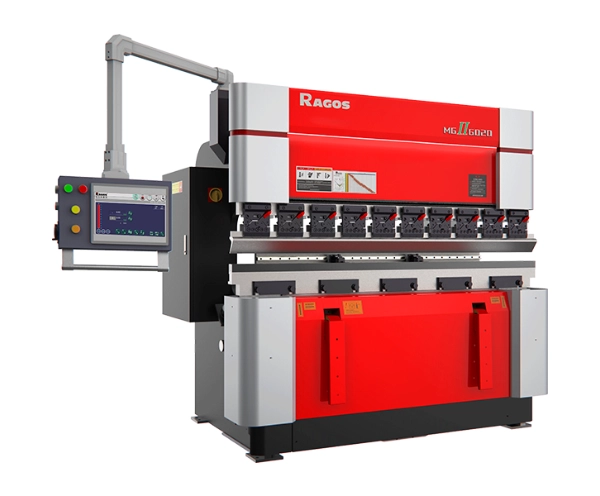
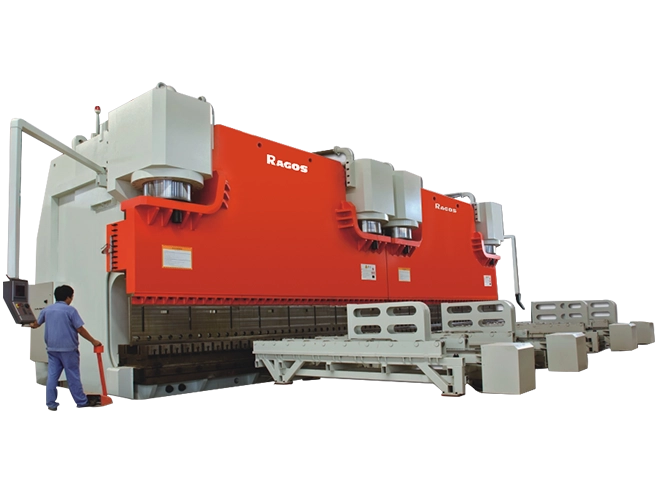
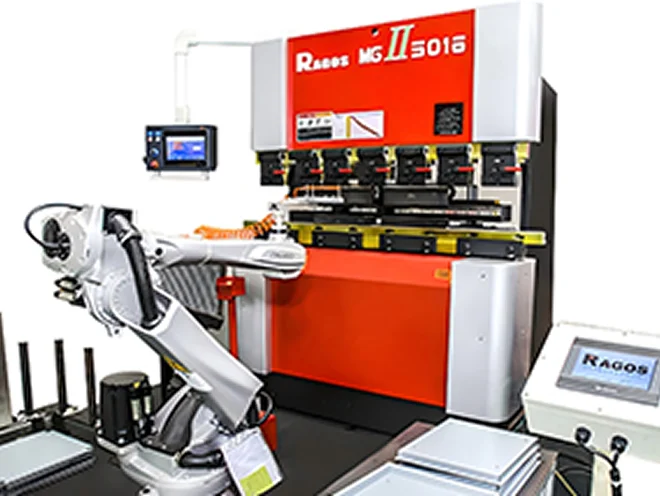


Frein à pression CNC pour la fabrication CVC: Flux de travail de pliage des conduits
L’efficacité dans la fabrication CVC dépend de la rapidité avec laquelle vous pouvez passer d’une plaque plate d’acier galvanisé à un composant fini. Comme les conduits nécessitent souvent plusieurs courbes dans une même séquence — comme le joint de Pittsburgh ou des transitions de décalage complexes — la précision d’un système CNC est indispensable. Ce guide explore comment optimiser votre Frein à pression CVC Flux de travail pour maximiser le débit et minimiser le gaspillage.
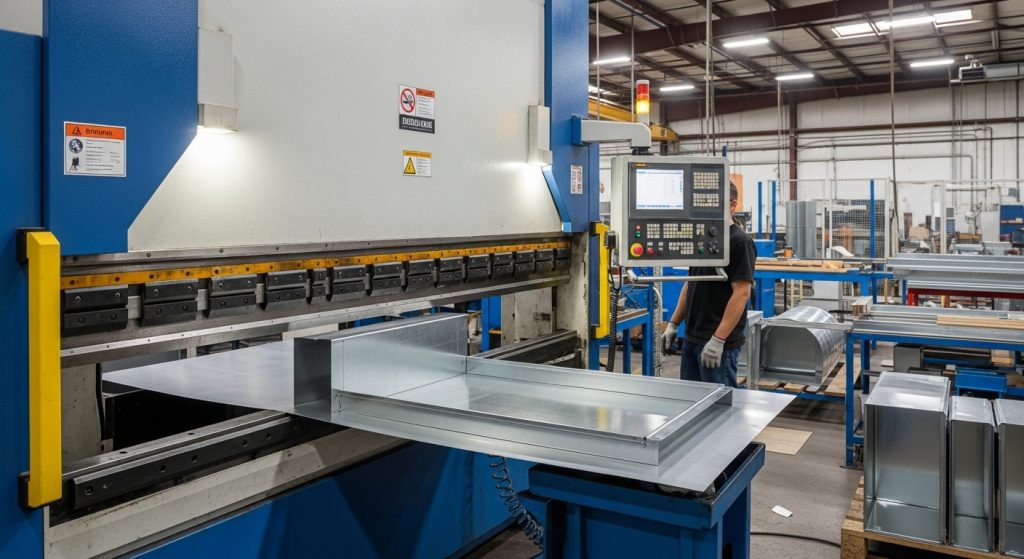
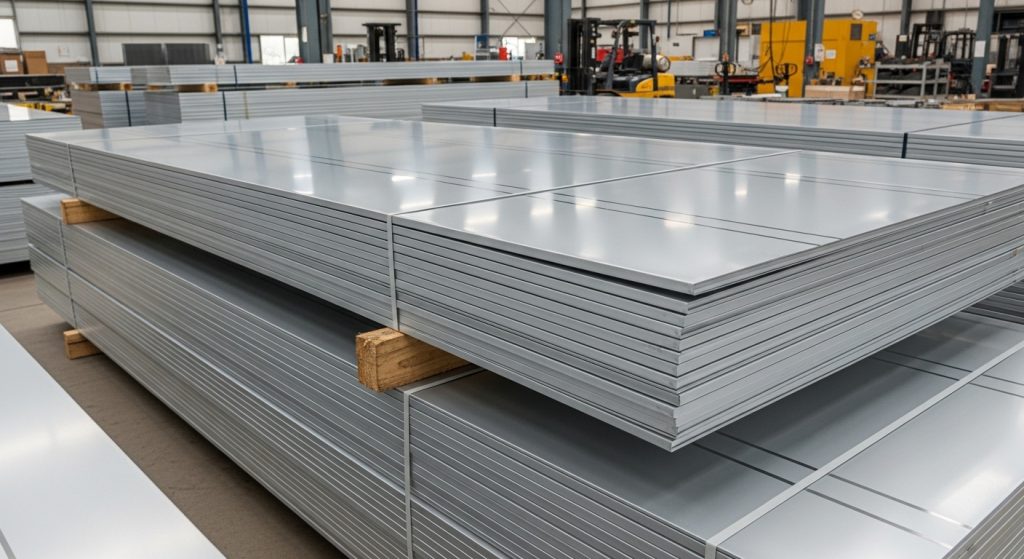
Que signifie généralement « tôle d’acier » dans la fabrication CVC?
Dans le contexte du CVC, L’acier en tôle fait généralement référence à l’acier galvanisé ou laminé à froid à écartement mince. Tandis que les ateliers industriels pourraient s’attaquer Courbure de plaques chaudières pour les systèmes lourds, La grande majorité des conduits se situe dans une plage d’épaisseur spécifique.
- Matériaux courants: Feuille d’acier galvanisée (G90/G60), Feuille d’acier doux, et occasionnellement en acier inoxydable ou en aluminium pour des environnements pharmaceutiques ou marins spécialisés.
- Plage d’épaisseur: La plupart des composants CVC varient de 0,8 mm (24 écartement) à 3mm (Calibre 11). Les supports structurels plus lourds peuvent atteindre jusqu’à 6 mm ou 12 mm.
Comprendre votre matériau est la première étape du calcul du tonnage. Par exemple, Si vous passez de l’acier galvanisé à un briquet Frein à piston en tôle d’aluminium Projet, vos réglages CNC doivent être ajustés pour éviter les fissures et les abîmes de surface.
Pourquoi un frein à pression CNC est-il idéal pour les conduits CVC?
Les freins mécaniques standards ou les plissoirs manuels servent l’industrie depuis des décennies, mais ils ne peuvent rivaliser avec l’automatisation d’un système hydraulique CNC.
Comment une grande précision de répétition bénéfique-t-elle la production par lots?
Les systèmes CVC nécessitent souvent des dizaines de sections de conduits identiques. Un système CNC garantit que la position du calibre arrière et du bélier est identique à chaque coup. Cela signifie que vos articulations à coulissement et enroulement seront toujours alignées, et vos rebords seront parfaitement carrés, Éliminer le besoin d’intervention sur site "Persuasion" Pendant l’installation.
Pourquoi le contrôle d’angle est-il vital pour l’efficacité du débit d’air?
La dynamique du flux d’air dépend des transitions douces. Si un décalage de 45 degrés est en réalité de 43 degrés, la turbulence résultante peut réduire l’efficacité de l’ensemble du système. Un Frein à pression CNC fournit une surveillance et une compensation en temps réel de l’angle, s’assurer que chaque courbe respecte les spécifications de conception de l’ingénieur.
Les freins CNC peuvent-ils gérer des séquences de flexion en plusieurs étapes?
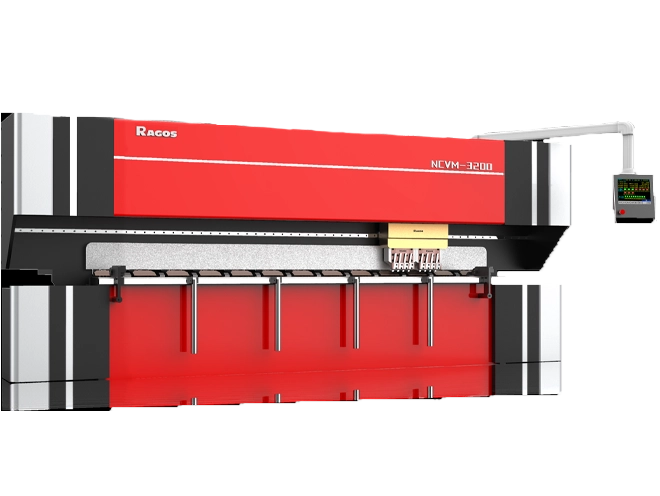
Oui, et c’est là que le retour sur investissement est le plus visible. Pièces complexes de CVC, comme les transitions du carré au rond, nécessitent plusieurs courbes à des angles et positions variables. Un contrôleur CNC permet de programmer toute la séquence en un seul programme. L’opérateur suit simplement les indications affichées à l’écran, et la jauge arrière se déplace automatiquement entre les coups. Cela réduit le besoin de marquer les pièces et accélère considérablement le Courbure d’enceinte électrique ou flux de travail de conduits.
Quel est l’équipement recommandé pour la tôle d’acier CVC?
Parce que l’acier CVC est relativement fin, Tu n’as pas besoin du lourd, Outillages surdimensionnés nécessaires pour l’acier de structure. Au lieu de, Tu devrais te concentrer sur la polyvalence et la rapidité.
- Outillage durci standard: Même si l’acier est fin, Les revêtements galvanisés peuvent être abrasifs. L’utilisation d’outils durcis prévient l’usure et maintient la précision de l’angle dans le temps.
- V-La Sélection: Suivre la règle standard de l’industrie selon laquelle l’ouverture en V = 6 à 8 fois l’épaisseur de la feuille. Pour un 1,2 mm standard (Calibre 18) Conduit, Une ouverture en V de 10 mm ou 12 mm est idéale.
- Rayon de poing: Un rayon de perforation petit est généralement préféré pour les conduits afin de créer une netteté, angles tranchants qui facilitent l’assemblage des assemblages. C’est aussi un facteur majeur dans le haut de gamme Pliage de la quincaillerie de mobilier.
Quelle est la tonnelage typique pour la tôle en acier doux à la maîtrise de l’air?
Le calcul du tonnage est essentiel pour éviter la surcharge des machines et les dommages aux outils. Les matériaux CVC sont légers, ce qui signifie que votre tonnage total par mètre est faible, Mais vous devez quand même être conscient des limites de votre machine.
| Épaisseur | Tonne par mètre (Environ.) | Jauge CVC typique |
| 1mm | 1.3 – 1.6 Ton | Écartement 20-22 |
| 3 mm | 12 – 15 Ton | Écartement 11-12 |
| 6 mm | 50 – 65 Ton | 1/4" Plaque |
| 10 mm | 130 – 150 Ton | Soutien lourd |
Comment fonctionne le flux de travail de pliage des conduits dans un atelier professionnel?
L’efficacité est une question de mouvement, pas seulement plier. Un flux de travail à haute productivité suit une séquence spécifique:
- Programmation: La conception est importée directement à partir d’un logiciel CAO/FAO dans le contrôleur CNC. Le logiciel identifie la séquence de courbure et les positions de la jauge arrière.
- Chargement: L’opérateur place la plaque plate contre le cartolier arrière.
- Cyclage automatique: La machine effectue la première courbure, le cartolier arrière se rétracte et se réinitialise pour le deuxième virage, et l’opérateur retourne ou fait pivoter la pièce selon la direction du contrôleur.
- Vérification: La première partie du lot est vérifiée pour la précision de l’angle. Les systèmes CNC modernes peuvent utiliser des capteurs d’angle laser pour effectuer des ajustements automatiques lors du courbe.
Quelles industries utilisent des freins à pression CNC en tôle?
Alors que le CVC est un moteur principal, La même machine et les mêmes techniques sont utilisées dans plusieurs secteurs clés:
- Infrastructures électriques: Pour les armoires pliantes et les enceintes spécialisées.
- Enceintes industrielles: Caches de machines, Garde-corps, et des boîtiers de sécurité.
- Design d’intérieur: Étagères en acier sur mesure, Cadres, et luminaires.
- Construction: Flashing, gouttières, et composants de garnitures structurelles.
Quels sont les meilleurs conseils pratiques pour réussir en CVC?
- Test Bend pour chaque lot: La dureté de l’acier peut varier selon les expéditions. Fais toujours un test de coup quand tu commences une nouvelle palette de matériau pour calibrer ton ressort.
- Regardez la direction du grain: Comme du papier, L’acier a un grain. Plier parallèlement au grain est plus facile mais peut provoquer des fissures dans les matériaux de plus grande épaisseur. Essayez toujours de plier dans le sens du fil pour maximiser la résistance structurelle.
- Évitez les petits chips en V: Tandis qu’un minuscule dé en V fait un angle très vif, Cela augmente le tonnage requis et accélère l’usure des outils. Respectez la règle 6x-8x pour la durée de vie de l’outil la plus longue.
- L’entretien est roi: Gardez vos outils propres. Les éclats galvanisés peuvent s’accumuler au fond de votre die en V, ce qui modifie la profondeur du coup et perturbe vos angles.
Comment optimiser le cartolier pour les pièces CVC?
Dans la conduite, Le manomètre arrière est votre outil le plus utilisé. Parce que les pièces CVC sont souvent grandes et encombrantes, Vous devriez chercher une machine avec au moins un cartolier arrière 4 ou 6 axes. Cela permet un pliage effilé et des décalages complexes où la ligne de flexion n’est pas parallèle au bord de la feuille.
De plus, En utilisant un "Support de la feuille" Le système est essentiel pour les travaux à écartement mince. Sans soutien, Un grand panneau de conduits peut s’affaisser sous son propre poids, ce qui rend la mesure du backgauge imprécise.
Dépannage avancé: Résoudre les problèmes courants de déformation du CVC
Le problème: Surflexion ou sous-flexion constante
Si vos angles sont constamment décalés d’un ou deux degrés, Vérifiez vos constantes de matériau dans le contrôleur CNC. Souvent, La résistance à la traction est réglée à un "Par défaut" Valeur de l’acier doux, Mais l’acier galvanisé se comporte différemment. La mise à jour de la bibliothèque de matériaux peut résoudre le problème immédiatement.
Le problème: "Navigation en canoë" sur les sections de conduits longs
Si vos sections de conduit de 3 mètres sont carrées aux extrémités mais ouvertes au milieu, Le système de couronnement de votre machine doit être ajusté. Une machine de haute qualité utilise un système de couronnement hydraulique dans le lit pour contrer cette déviation.
Le problème: Marquage sur les conduits décoratifs en inox
Si vous réalisez des conduits exposés haut de gamme dans un restaurant ou un laboratoire, Utilisez un film en uréthane. Cette fine couche se place entre l’outil et l’acier, empêchant les épaules du dé de quitter "Marques de témoins" à la ligne d’arrivée.
Dernière réflexion: L’avantage concurrentiel en CVC
Le marché CVC est de plus en plus une marchandisation, c’est-à-dire que vos marges bénéficiaires sont directement liées à votre vitesse de production. Un frein à pression CNC ne se contente pas de plier le métal; elle supprime le "Erreur humaine" variable de votre atelier.
En investissant dans une machine offrant une grande répétabilité, Programmation en plusieurs étapes, et contrôle précis du tonnage, Vous vous assurez que chaque conduit quitte votre atelier parfaitement, Prêt pour une installation sans couture. Que vous augmentiez la taille pour des contrats industriels ou que vous affiniez votre flux de travail sur atelier personnalisé, le frein à pression CNC est le cœur de la chaîne moderne de fabrication CVC.
Questions fréquemment posées (FAQ)
Puis-je utiliser le même frein à pression CNC pour le CVC et les travaux sur plaques lourdes?
Oui, Mais vous devez vous assurer que la machine a la capacité structurelle nécessaire pour la plaque lourde. La plupart des machines CVC sont optimisées pour la vitesse sur des écartements étroits. Si vous passez fréquemment à la plaque 10mm+, Vous pourriez avoir besoin d’une machine de qualité plus lourde avec un tonnage nominal plus élevé.
Est-ce que plier ou faire le downdown de l’air est préférable pour les conduits CVC?
La maîtrise de l’air est presque toujours préférable. Cela nécessite moins de tonnage, Ça met moins de stress sur la machine, et permet une plus grande flexibilité d’angle avec un seul ensemble d’outils. Le revêtement de bas est rarement nécessaire pour les conduits et peut entraîner un marquage excessif sur les surfaces galvanisées.
Comment empêcher l’acier galvanisé de coller à mes coins?
Cela est causé par "exaspérant." Pour l’empêcher, Gardez vos outils polis et lubrifiés. Certains ateliers utilisent un lubrifiant spécialisé en film sec ou un fin ruban en uréthane sur les épaules de la puce pour agir comme barrière.
Quel est l’avantage d’une longueur de lit de 4000 mm pour le CVC?
Un lit de 4000 mm permet de plier de plus longues sections de conduits en un seul coup. Cela réduit le nombre de joints lors de la dernière série, ce qui améliore l’écoulement de l’air et réduit le temps d’installation sur le chantier.
Ai-je besoin d’un logiciel spécialisé pour la flexion du CVC?
Alors que les commandes CNC standard sont puissantes, Des logiciels spécialisés de chauffage et de climatisation peuvent générer automatiquement des motifs plats et des séquences de courbure à partir de vos conceptions de conduits, qui peuvent être téléchargés directement sur la machine pour économiser des heures de programmation manuelle.