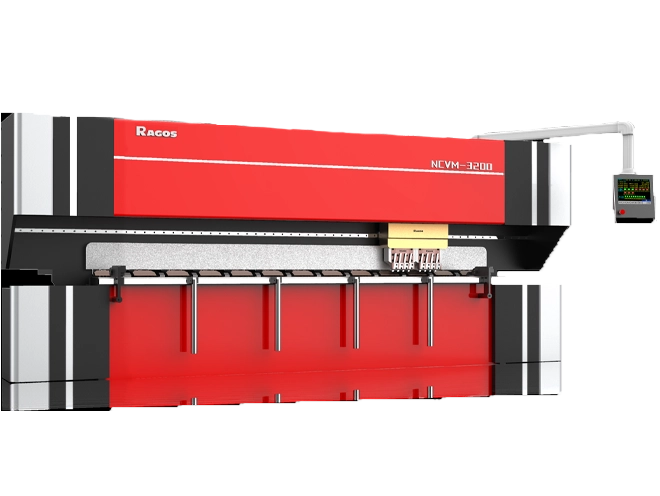


Frein à pression CNC pour quincaillerie de mobilier: Embouts de flexion à tolérance serrée
Choisir un frein à pression CNC pour la quincaillerie de mobilier est le choix le plus important que vous puissiez faire pour votre chaîne de production. Contrairement au travail du métal général, La quincaillerie de mobilier implique de minuscules pièces qui doivent s’assembler parfaitement en assemblages complexes. Vous devez vous assurer que votre machine offre une grande répétabilité et une stabilité de la flexion à micro-tolérance pour éviter les défaillances d’assemblage. Dans ce secteur, La précision positionnelle du bélier et de l’écartement arrière compte bien plus que le tonnage brut. Vous travaillez souvent avec des matériaux fins où même une petite déviation de précision de courbure de rayon peut abîmer une pièce. Protéger la finition de surface est également une priorité absolue, car la quincaillerie est souvent un élément décoratif visible.
Ce guide explore comment gérer le contrôle de la déformation des petites brides et comment choisir les bons outillages pour les micro-flexions. Vous comprendrez pourquoi la précision positionnelle en cycle répété est au cœur de la fabrication matérielle. En suivant ces conseils de précision, Vous pouvez réduire les déchets et améliorer la qualité esthétique de vos charnières, diapositives, et crochets.
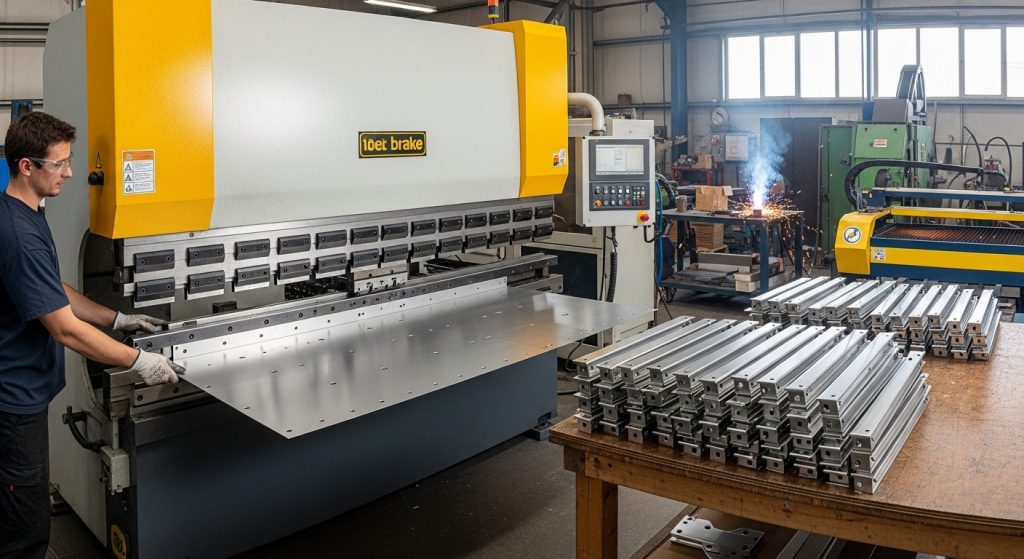
Votre succès en production dépend de la résolution de ces défis spécifiques d’application:
- Obtenir une fenêtre de tolérance à la micro-flexion pour les lots à fort volume.
- Empêcher l’amplification de la visibilité des marques de surface sur l’aluminium ou le laiton décoratif.
- Contrôle de l’effet de dérive positionnelle de l’alignement de l’outil lors de longues séries de production.
- Gestion de l’accumulation de tolérance à la flexion de petites pièces dans des séquences à multiples courbures.
Pourquoi la production de quincaillerie de mobilier dépend de la précision des freins à pression CNC
Produire du matériel pour meuble est un jeu de millimètres. Tu ne fais pas que plier du métal; Vous créez le cœur mécanique d’une armoire ou d’un bureau. Si une charnière est décalée d’une fraction de degré, La porte ne se ferme pas droite. C’est pourquoi vous devez vous fier à une bande de précision micro positionnelle de répétition que seul un système CNC haut de gamme peut fournir.
- Limites dimensionnelles serrées: Les pièces matérielles sont petites, ce qui signifie que toute erreur représente un grand pourcentage de la taille totale.
- Dépendance de l’ajustement de l’assembleur: Vos pièces doivent avoir une tolérance d’ajustement parfaite pour travailler avec des composants en bois ou en plastique.
- Alignement des séquences: L’erreur de position de la pile de courbure à plusieurs étages peut abîmer une pièce si la première courbure n’est pas exactement correcte.
- Consistance des lots: Tu as besoin du 1,000la pièce doit être identique à la première pour assurer une ligne d’assemblage fluide.
Les petites pièces présentent souvent de nombreux courbes rapprochées. Si votre manomètre arrière a ne serait-ce qu’un tout petit dévier, L’accumulation de tolérance à la flexion des petites pièces rendra le produit final inutilisable. Un frein à pression CNC utilise des servomoteurs pour maintenir ces positions avec un soin extrême. Ce niveau de contrôle permet de produire du matériel de haute qualité à grande échelle.
Pièces de quincaillerie de mobilier typiques nécessitant une courbure CNC à tolérance stricte
Vous constaterez que la plupart des quincailleries de meubles reposent sur des formes complexes faites de tôle fine. Chacune de ces pièces a une exigence spécifique de contrôle du dégagement mécanique que vous devez respecter.
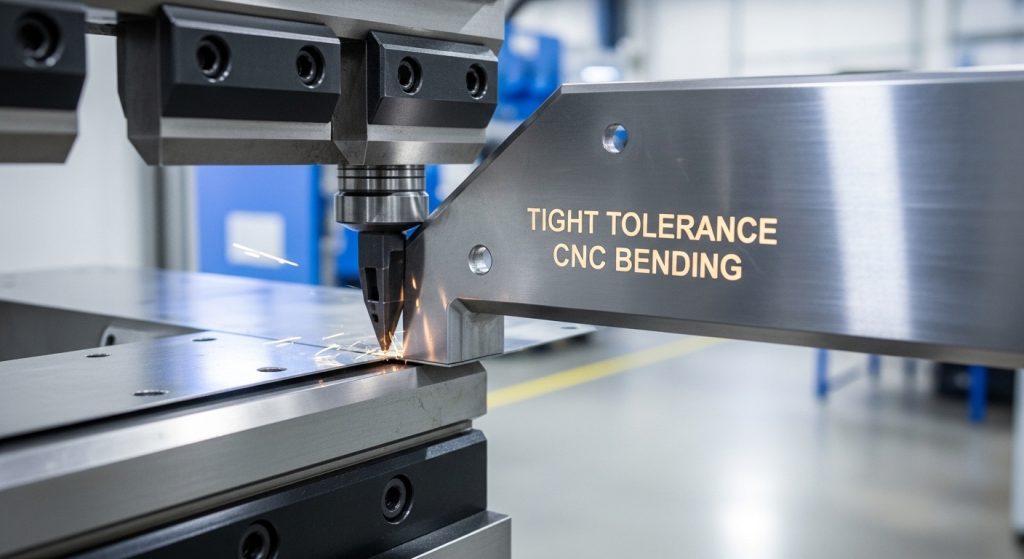
- Charnières: Celles-ci nécessitent un alignement précis de l’axe de charnière afin que la goupille s’ajuste et tourne sans coincer.
- Supports coulissants de tiroir: Vous devez maintenir une tolérance d’alignement stricte de l’assemblage pour que les tiroirs glissent en douceur sans osciller.
- Supports de montage pour armoires: Ces pièces nécessitent une grande résistance et des angles précis pour supporter le poids d’un mobilier lourd.
- Connecteurs pour cadres de meubles: Celles-ci impliquent souvent des courbes de retour où la géométrie d’évitement des interférences de retour est vitale.
- Quincaillerie décorative visible: Ces pièces sont sensibles à la sensibilité visible aux distorsions cosmétiques du matériel et doivent être pliées sans rayures.
Quand on plie une glissière de tiroir, La distance entre les deux côtés doit être exacte. Si l’angle de flexion est décalé, La culasse se bloque ou paraît desserrée. L’utilisation d’un frein à pression CNC permet de programmer ces distances et angles exacts en une seule séquence. Cela garantit que chaque support que vous fabriquez s’adapte parfaitement au mécanisme de glissement à chaque fois.
Différences de comportement des matériaux dans la courbure de la quincaillerie de mobilier
Différents métaux réagissent de manière unique lorsque vous appliquez une pression. Vous devez ajuster votre procédé en fonction de la façon dont le matériau se déplace et se récupère.
| Matériel | Défi de la primaire | Ajustement du processus |
| Acier laminé à froid | Variations du point de limite d’élasticité | Utilisez des capteurs d’épaisseur pour le contrôle de l’angle |
| Acier inoxydable | Récupération élastique élevée | Augmentez la surflexion pour atteindre l’angle de la cible |
| Aluminium | Risque de rayure en surface | Utilisez un film protecteur ou des inserts en nylon pour outils |
| Spécialité du laiton | Instabilité de faible épaisseur | Ralentissez la vitesse de la RAM pour éviter les fissures |
Les pièces en acier inoxydable présentent souvent une instabilité de déformation à faible épaisseur si la pression est trop élevée. Vous devez également surveiller le risque de propagation de rayures superficielles sur le laiton décoratif ou l’aluminium. Chaque matériau possède un comportement spécifique de micro-déplacement de récupération élastique que votre programme CNC doit compenser automatiquement. Si vous ne tenez pas compte de la sensibilité au durcissement par travail en surface, Le métal peut devenir cassant et se casser lors de la deuxième ou troisième courbure d’une séquence.
Pourquoi le choix des petits outillages est plus important dans la quincaillerie de mobilier que la fabrication lourde
Dans la fabrication lourde, on utilise de grosses matrices en V pour déplacer des plaques épaisses. En matériel, Tu as besoin de Tiny, Outils spécialisés pour manipuler de petites brides. La répartition des contraintes de support de votre micro-bride doit être uniforme pour éviter que le métal ne se déforme.
- Matrices en V étroites: Il faut une petite concentration de pression en V pour plier des brides qui ne font que quelques millimètres de long.
- Outillages segmentés: Cela permet de configurer plusieurs stations sur une même RAM pour une flexibilité de batch.
- Coups de poing au cou de la gêne: Ces éléments sont essentiels pour la géométrie d’évitement des interférences de courbure de retour sur des supports complexes d’armoire.
- Outils à angle aigu: Cela vous aide à gérer des matériaux à fort rebond comme l’acier inoxydable.
Utiliser le mauvais outil peut entraîner un risque élevé de marquage de surface de contact avec l’outil. Pour le mobilier, où le regard est tout, Une marque sur le métal est un échec. Vous devriez chercher des outils avec un grand rayon sur les épaules de la puce pour répartir la charge. Cela empêche la "V-Mark" De ne pas apparaître à l’extérieur du virage. La production de petites pièces prospère quand on a le bon mélange de poinçons étroits et de matrices spécialisées.
Défis de contrôle du rebond dans les matériaux de quincaillerie fine pour meubles
Les matériaux fins sont très élastiques. Lorsque l’outil libère la pièce, Le métal veut reprendre sa forme plate. Cette dominance de récupération élastique à faible calibre est l’une des choses les plus difficiles à gérer dans le pliage matériel.
La cause est souvent un microdéplacement d’axe neutre à l’intérieur du métal fin. Parce que le matériau est si fin, Il n’y en a pas assez "permanent" Déformation au centre de la courbe. Cela entraîne un effet de récupération de la mémoire angulaire qui peut varier d’un lot de métal à l’autre. Vous devez utiliser une stratégie de compensation par surflexion pour atteindre votre objectif final à 90 degrés.
Pour contrôler cela, Suivez ces règles de mise en place:
- Mesurez l’épaisseur réelle de chaque nouvelle tôle de métal.
- Utilisez un système CNC avec "Suivi en angle" pour ajuster la profondeur en temps réel.
- Prendre en compte la courbe de relaxation des contraintes à faible épaisseur en maintenant la pression pendant une fraction de seconde.
- Gardez vos outils propres pour que la pression soit appliquée exactement de la même manière à chaque fois.
Pourquoi la précision de la jauge arrière impacte directement l’ajustement matériel
Votre manomètre arrière indique à la machine où plier. En matériel, Vos brides sont souvent très courtes. Une résolution de micro-positionnement de la jauge arrière de 0.01 mm est souvent nécessaire pour obtenir un ajustement parfait.
Si votre manomètre arrière est défectueux, Vous verrez un problème de stacking cumulatif de tolérance dans la séquence de courbe. Le premier virage pourrait être correct, mais au troisième virage, La dérive de répétabilité des références de bord de la pièce rend la pièce trop longue ou trop courte. Cela affecte directement la dépendance positionnelle de l’alignement des trous matériels. Si les trous ne correspondent pas aux trous pré-percés dans le meuble en bois, Le matériel ne peut pas être installé. Vous devez vous assurer que vos doigts de l’arrière-calibre sont parfaitement carrés et que le programme CNC prend en compte l’épaisseur du métal à chaque butée.
Vitesse de cycle vs Équilibre de précision dans la production de masse de quincaillerie pour meubles
Vous voulez fabriquer rapidement les pièces, Mais la vitesse peut entraîner des erreurs. Les coups à grande vitesse peuvent provoquer un transfert de vibration à grande vitesse qui déplace légèrement la pièce avant la courbe.
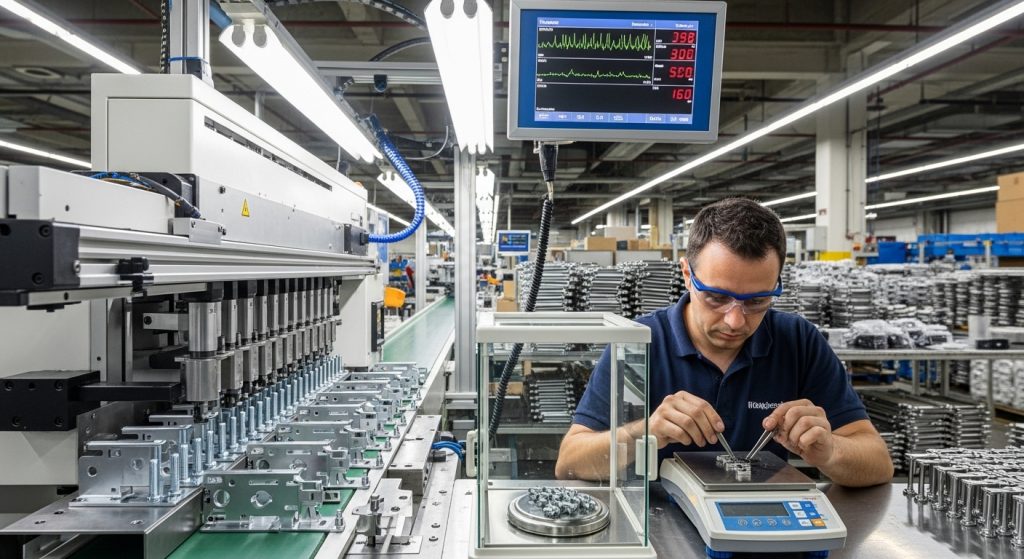
| Facteur | Impact sur la qualité | Stratégie |
| Cycle rapide | Chaleur et vibrations plus élevées | Utilisez des vérins servomoteurs pour un mouvement plus fluide |
| Dilatation thermique | L’outillage évolue et évolue | Surveillez la température de l’outil et recalibrez à midi |
| Bibliothèque de programmes | Temps de mise en place plus rapides | Utilisez des simulations 3D pour vérifier les impacts |
La production de masse conduit souvent à une déviation de dilatation thermique à haut cycle. Au fur et à mesure que la machine fonctionne, L’huile et les outils métalliques se réchauffent et se dilatent. Cela peut provoquer un léger changement de profondeur de courbure. Il faut une réponse micro-correction du positionnement servo pour gérer ces petits déplacements. Maintenir la tolérance à la répétabilité de votre programme élevée est la seule façon de rester rentable pendant une production de 24 heures.
Choisir la bonne plateforme de freinage à pression CNC pour la fabrication de matériel
Sélection d’un Stabilité de la plateforme de flexion servo de précision est la première étape pour n’importe quel magasin de bricolage. Vous avez besoin d’une machine qui gère la fiabilité des cycles répétés de production matérielle avec aisance. Cherchez une plateforme de compatibilité multi-outillage qui vous permette de passer de petites matrices de charnière à de grands supports. Une architecture de contrôle de la courbure de petites pièces de haute qualité garantit que votre RAM s’arrête exactement au même micron à chaque fois. Cette plateforme sera la colonne vertébrale de votre processus de fabrication de matériel pendant des années à venir.
Pourquoi le matériel en aluminium nécessite une stratégie dédiée de réglage de frein à pression
Quand vous travaillez avec Frein à piston en tôle d’aluminium Unités, Vous devez prévoir une amplification de récupération élastique en aluminium. Ce métal est tendre et présente une faible dureté au marquage de surface. Vous pourriez constater une instabilité fine du rayon de flexion en aluminium si vos outils sont trop tranchants. Une méthode de flexion de préservation cosmétique des surfaces est nécessaire pour garder les pièces propres pour le client. L’aluminium est populaire pour les moulures décoratives de meubles, Votre installation doit donc privilégier l’apparence et la sensation autant que l’angle final.
Comment la production de quincaillerie en tôle d’acier modifie la planification des forces et l’outillage
En utilisant un Frein à presse en tôle en acier nécessite une approche différente de celle de l’aluminium. La zone de stabilité de formage en acier laminé à froid est prévisible, Mais il faut observer le comportement de formation du plateau de l’acier. Il existe toujours un risque d’interface de galation de surface en tôle d’acier lorsque le métal glisse sur la puce. Vous devriez utiliser une courbe de prévisibilité de la pression en flexion de l’acier pour planifier la profondeur de votre bélier. La quincaillerie en acier est le type le plus courant, Donc maîtriser ce matériau est vital pour toute maison de production de matériel.
Leçons intersectorielles de la précision de pliage de tôle en CVC
On peut beaucoup apprendre d’un Frein à pression CVC Mise en place. Ces machines se concentrent sur la stabilité de la flexion des conduits en feuilles fines et sur la stratégie de contrôle de la déflexion des longues brides. Tandis que les pièces matérielles sont plus petites, La façon dont ils gèrent la tolérance aux vibrations des panneaux de tôle est très similaire. Même dans un simple système de pliage de joint de conduit d’air avec une précision répétée, L’objectif est de trouver un choix parfait. Ces leçons à grande échelle peuvent vous aider à améliorer la stabilité de votre station de pliage matériel.
Leçons de précision tirées de la courbure de tôle dans des boîtiers électriques
Un Courbure d’enceinte électrique Le procédé exige une tolérance d’alignement stricte des coins d’enceinte. C’est très similaire à la fabrication d’un coulissement à tiroir ou d’une boîte à meubles en métal. Il faut une exigence très stricte de cohérence entre portes de panneaux. La dépendance à la droiture des bords de la feuille est ce qui maintient ces boîtiers carrés. Appliquer ces astuces de précision d’alignement des joints d’assemblage d’enceinte sur la quincaillerie de votre mobilier donnera des résultats finaux bien meilleurs.
Contraste de flexion de la plaque lourde: Pourquoi la quincaillerie de mobilier est un jeu de précision
Comparer votre travail à un Courbure de plaques chaudières machine montre pourquoi le matériel est spécial. Dans le travail lourd, La dominance de la déformation plastique sur plaques épaisses est la force principale. Vous gérez l’uniformité de la distribution des contraintes de jauge élevée et le comportement de formation de la charge de compression des plaques. Ce contraste entre tolérance industrielle lourde et tolérance matérielle montre que, bien qu’ils déplacent plus de métal, tu le déplaces avec plus de précaution. Le matériel est un jeu de précision où les microns comptent plus que des tonnes.