

Usine de pliages métalliques personnalisés: Comment trouver la bonne configuration pour votre production
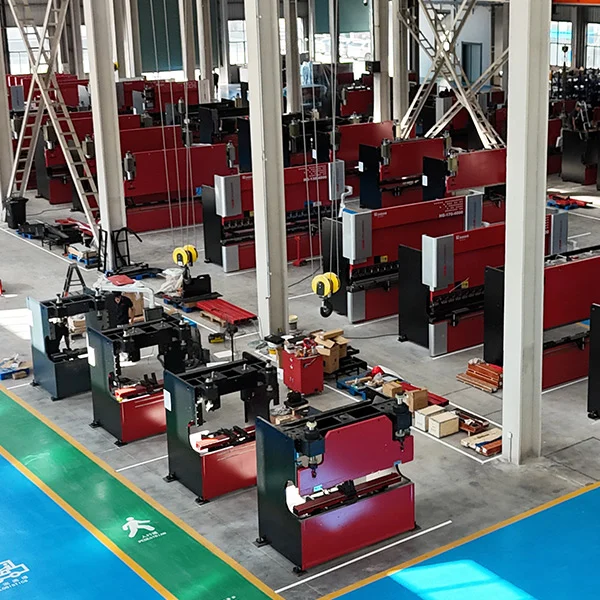
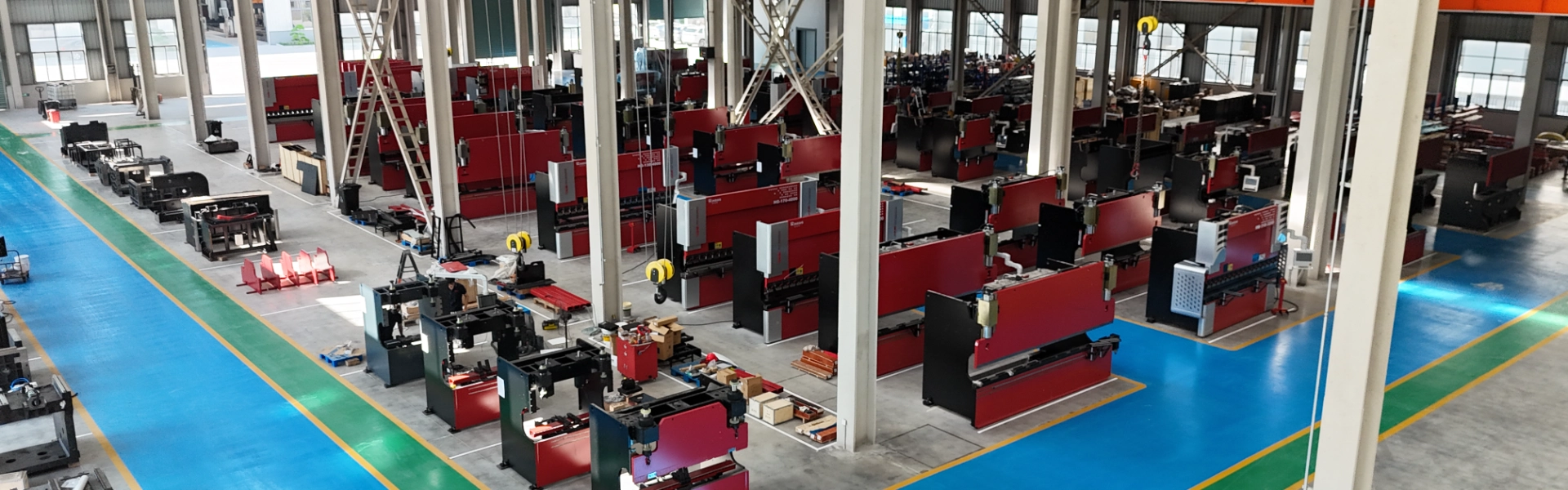
Travailler avec unUsine de pliages métalliques personnalisés Cela signifie que vous obtenez une machine construite autour de vos besoins réels de production — pas une unité stock pour laquelle vous devez compromettre votre flux de travail pour l’adapter. Que vous ayez besoin d’un nombre d’axes spécifique, une marque particulière de manette, Outillage adapté à l’application, ou une longueur de lit correspondant au format de votre matériau, Une machine spécifiée à un objectif est meilleure dès le premier jour que toute alternative prête à l’emploi.
Ce guide explique ce que les usines personnalisées proposent réellement, Ce que vous devez définir avant de passer une commande, et comment évaluer si une usine peut réellement tenir ses promesses.
Que propose réellement une usine de pliages métalliques personnalisés?
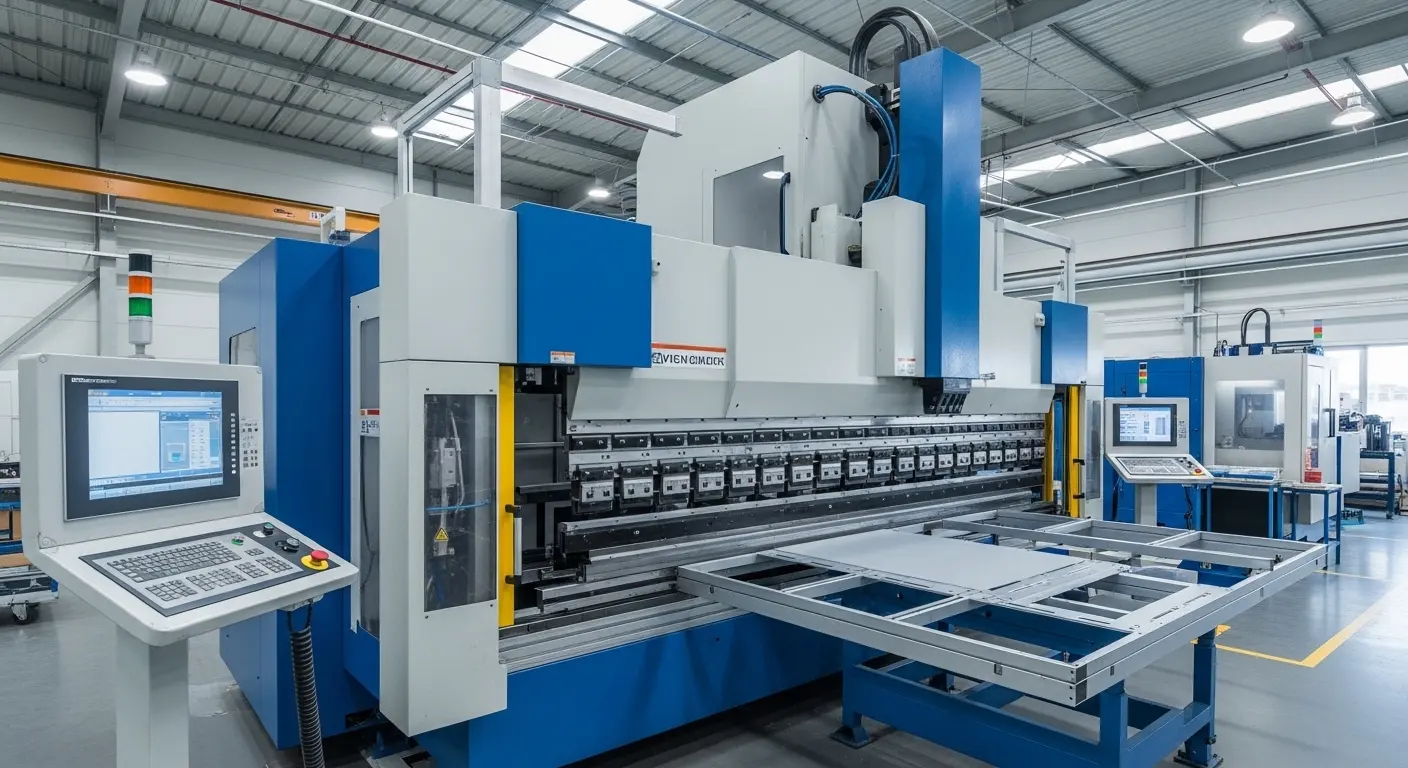
UnUsine de pliages métalliques personnalisés ne change pas simplement une couleur ou ajoute une plaque nominative. La vraie personnalisation concerne l’architecture des machines, Spécifications mécaniques, Systèmes de contrôle, et outillage — tous adaptés à votre environnement de production.
Voici ce que les usines custom réputées configurent généralement sur demande:
- Nombre d’axes — des systèmes de rétro-écartement basiques à 4 axes jusqu’aux 13-, 15-, ou des configurations de flexion de panneaux 18 axes pour les étapes multiples, Séquences de pli multidirectionnelles
- Longueur du lit et tonnage — correspondant à vos exigences en format de feuille et en épaisseur du matériau, Pas la taille standard la plus proche
- Marque de manette — En partie, Cybelec, CELA, ou des systèmes propriétaires selon vos préférences et la compatibilité existante de votre flotte
- Spécification des composants hydrauliques — Rexroth, Bosch, ou les systèmes Hawe pour les marchés où la disponibilité des pièces détachées est critique
- Configuration des outillages — outils de type cercle rouge mince pour applications délicates de plaques fines versus outillages standards pour la fabrication générale
- Système de pince — pinces manuelles à changement rapide, Pinces standard Amada-script, ou systèmes de changement automatique d’outil pour des environnements à haut débit
La différence entre commander dans une véritable usine de plieuses métalliques sur mesure et une société de négoce revendant des machines en stock réside dans la traçabilité, Contrôle technique, et la responsabilité post-vente.
Types de machines à plier en métal qu’une usine peut personnaliser
Toutes les machines plieuses ne servent pas le même contexte de production. Avant de contacter une usine de pliages métalliques personnalisés, Savoir quel type correspond à votre application évite toute mauvaise spécification dès le départ.
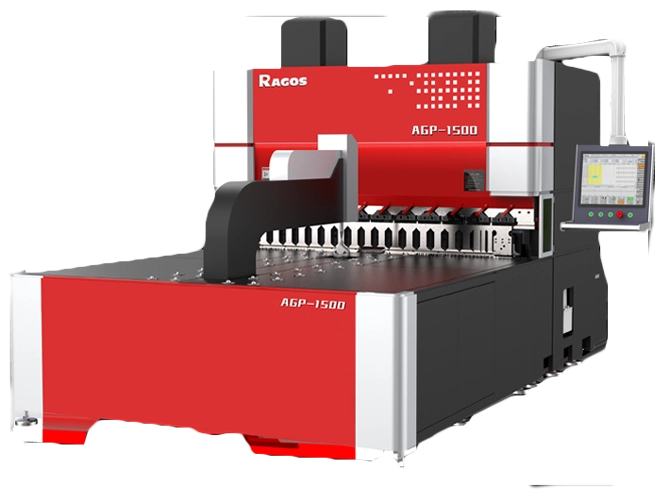
Plieuses de panneaux
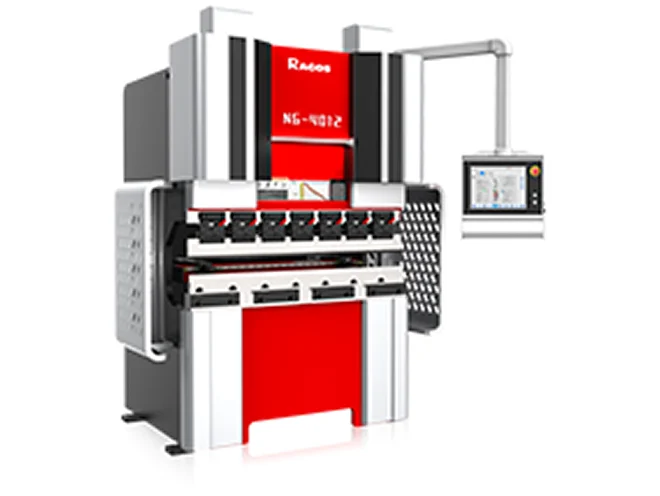
Les plieuses de panneaux sont l’option la plus performante pour le pliage automatisé en plusieurs étapes. Ils gèrent des séquences de plis complexes — déformations positives et négatives au sein d’un même programme — sans repositionner la feuille entre les opérations. Pour les portes d’armoires, Panneaux de réfrigérateur, Enceintes électriques, et les éviers de cuisine, Un pliage de panneau réduit drastiquement le temps de cycle par rapport à un frein à pression standard.
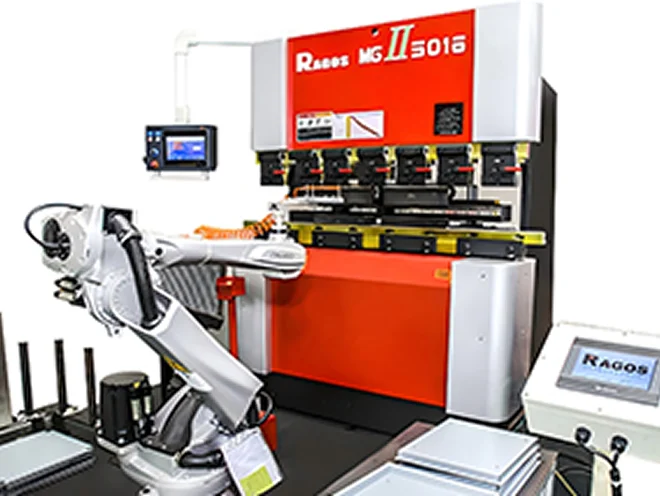
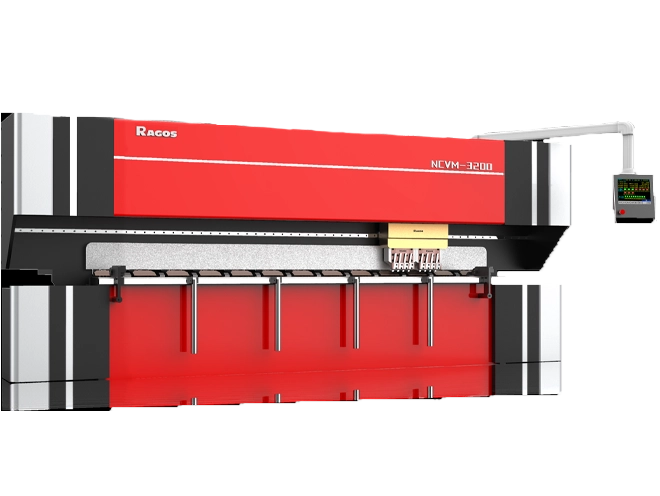
JS RAGOS fabrique des plieuses de panneaux en 13-, 15-, et des configurations 18 axes pour un pliage multi-étapes de haute précision jusqu’à 3 mm d’épaisseur du matériau. Pour les spécifications complètes du produit et les options de configuration, lePage produit de la machine JS RAGOS pour plier de panneaux Couvre les configurations d’axe, Options d’outillages, et la pertinence des applications en détail.
Freins à pression CNC avec spécifications personnalisées
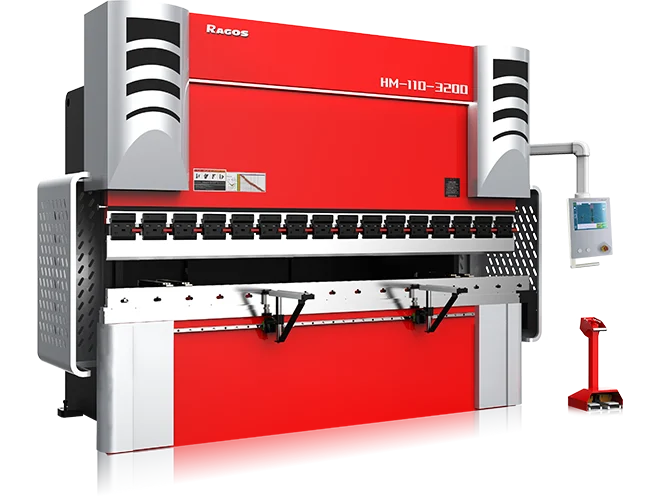
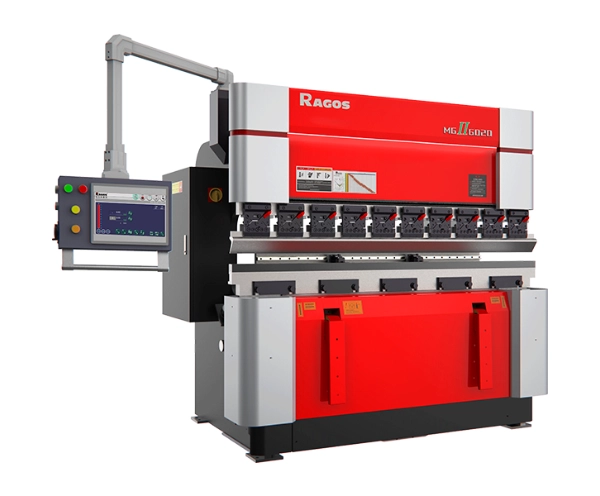
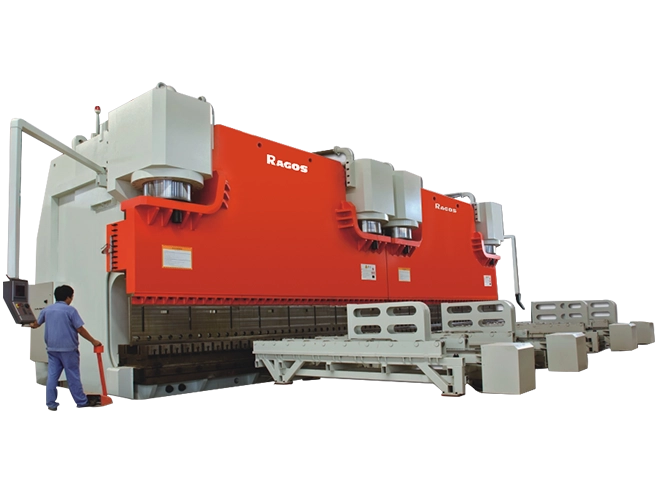
Un frein à pression CNC commandé auprès d’une usine de pliages métalliques sur mesure peut être configuré avec un tonnage spécifique, Longueur du lit, Nombre d’axes de la jauge arrière, et la marque de contrôleur pour correspondre à une ligne de production existante ou à une nouvelle configuration d’installation. Les freins à pression de catalogue standard nécessitent souvent des compromis d’outillage ou des limitations de tirage arrière qu’une construction personnalisée élimine complètement.
Pour les acheteurs évaluant les capacités de production des usines chinoises, leGuide d’approvisionnement en usine chinoise pour freins à pression CNC Couvre exactement ce qu’il faut vérifier dans la construction du cadre, Spécification hydraulique, et exporte la qualité de la documentation avant de passer une commande personnalisée.
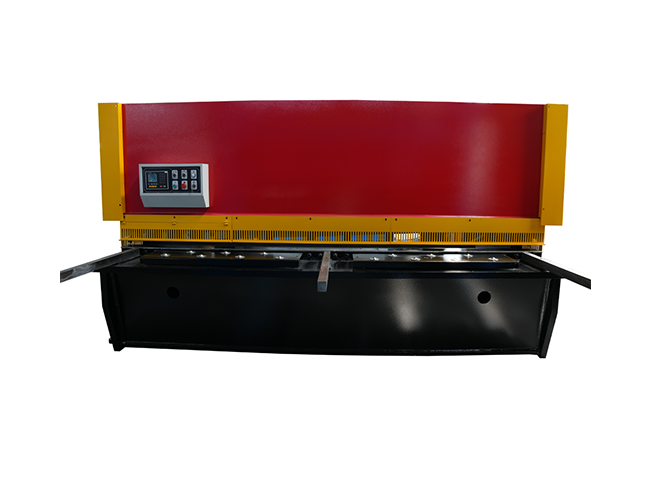
Machines plieuses pour profils de tôle métallique
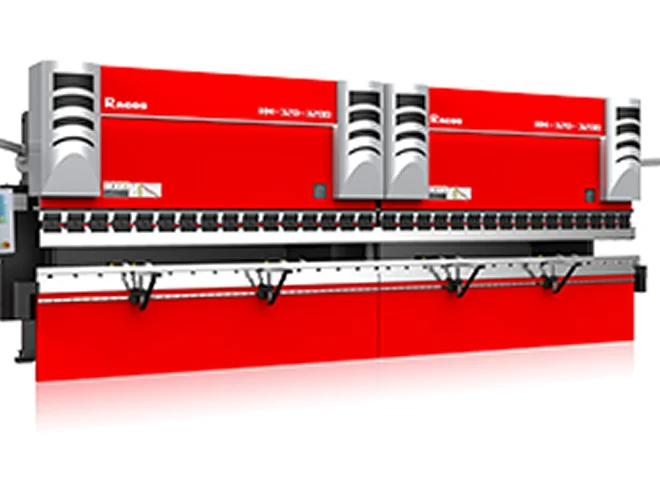
Les machines à plier des profils traitent la longueur, Lignes de pliage répétées sur des profils de feuilles standard — Toiture, Gainage, Panneaux architecturaux, et sections structurelles. Les usines sur mesure configurent ces éléments pour des géométries de profil spécifiques, Jauges de matériaux, et des vitesses de production basées sur vos besoins de débit.
Spécifications clés à définir avant de contacter une usine
Appeler une usine de plieuses métalliques sur mesure sans un briefing clair coûte du temps des deux côtés et produit souvent un devis qui ne correspond pas à vos besoins réels. Avant d’entrer en contact, Définissez ces cinq points:
1. Épaisseur et type maximaux du matériau. Acier doux, inox, et l’aluminium nécessitent chacun des calculs de force différents. Une machine spécifiée pour l’acier doux de 2 mm ne peut pas plier en toute sécurité un acier inoxydable de 2 mm sans sous-dimensionner le système hydraulique.
2. Format de feuille maximal (largeur × longueur). La longueur de la benne et la course de la longueur de la machine doivent couvrir votre plus grand format de feuille. Trop spécifier revient à gaspiller de l’argent; Sous-spécifier crée une machine qui ne peut pas traiter toute votre gamme.
3. Complexité de flexion requise. Si vos pièces nécessitent à la fois des up-folds et down-folds dans le même programme, ou se plie à plusieurs angles sur une même feuille, Il vous faut un pliage de panneau ou un système multi-axes — pas un simple frein à pression 4 axes.
4. Objectif de taux de production. Combien de pièces par quart? Une cible plus élevée nécessite des temps de cycle plus courts, ce qui informe les décisions sur le nombre d’axes, Capacité de changement automatique d’outil, et si la machine a besoin d’un logiciel de programmation hors ligne.
5. Préférence de manette. Si vos opérateurs connaissent déjà les contrôleurs Delem série DA, Demander ce même système dans votre nouvelle machine élimine le temps de rééducation et permet à vos programmes hors ligne existants de transférer directement.
Comment le nombre d’axes affecte les capacités de votre machine
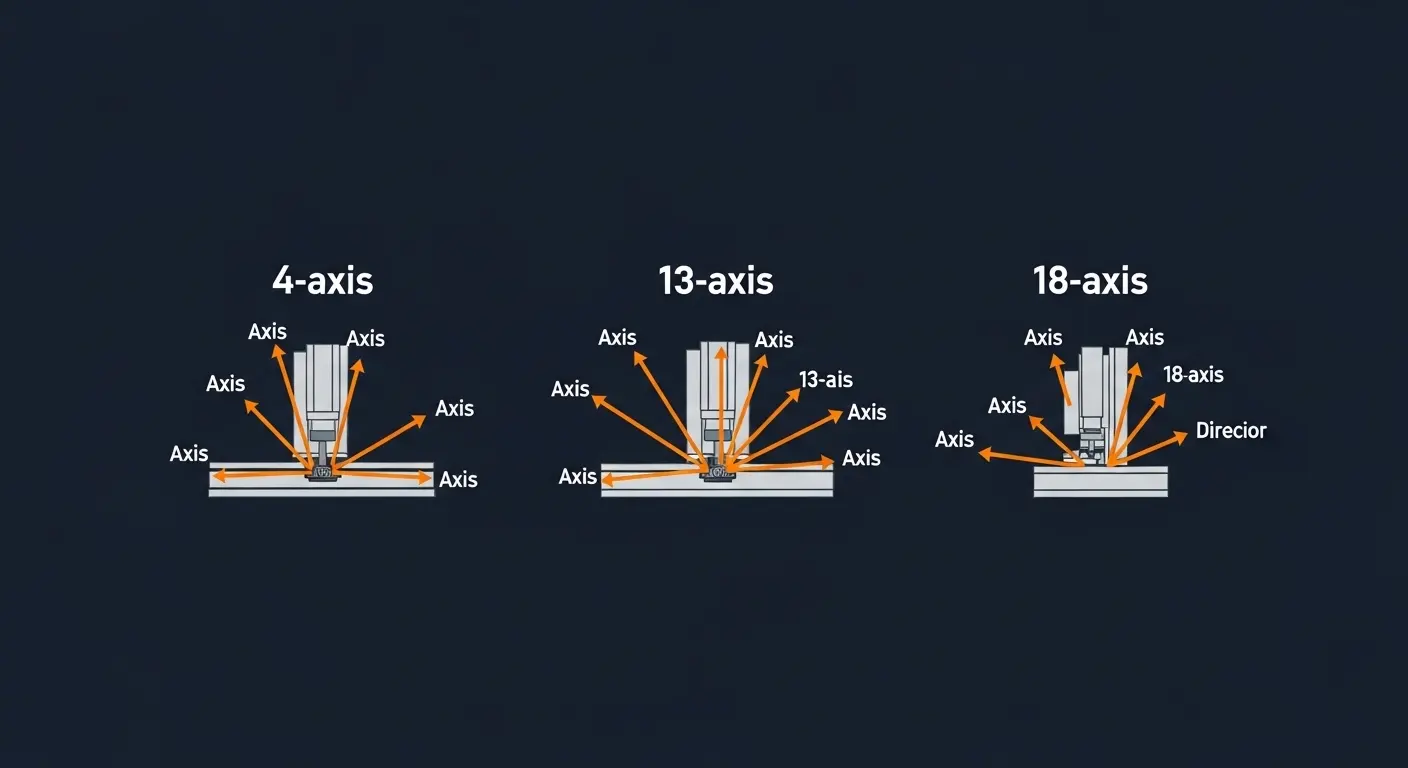
Le nombre d’axes est l’une des spécifications les plus mal comprises lorsqu’on se précipite dans une usine de plieuses métalliques sur mesure. Plus d’axes signifie un mouvement plus automatisé — ce qui se traduit directement par des temps de cycle plus courts sur des pièces complexes.
Un cartolier arrière basique à 4 axes contrôle X (Profondeur avant/arrière) et R (Hauteur verticale) sur deux doigts indépendants à l’arrière. Il gère la plupart des tâches standard de flexion sur un frein à pression CNC.
Un système à 6 axes ajoute un mouvement sur l’axe Z, Laisser les doigts du fond de la jauge se positionner latéralement pour les parties asymétriques ou les butées inclinées — essentiel pour les profils complexes.
A 13-, 15-, ou un système de courbure de panneaux 18 axes contrôle la poutre de flexion, Les pinces de maintien de la feuille, Le mécanisme d’alimentation, et l’outil positionnant tout simultanément et automatiquement. Le résultat est une machine qui forme des panneaux complexes — y compris des portes d’armoires de cuisine, Côtés de boîtier électrique, et les panneaux de tiroirs de bureau — dans un cycle de programme automatisé unique sans intervention de l’opérateur.
Pour les acheteurs dans la fabrication de meubles, Production d’appareils électroménagers, ou fabrication de panneaux électriques, Les pliages de panneaux JS RAGOS en configurations 13 à 18 axes représentent l’option la plus performante disponible dans une usine de pliages métalliques sur mesure à un prix compétitif directement d’usine. LeAperçu du jeu de panneaux JS RAGOS Couvre les capacités du système de flexion, Compatibilité des matériaux, et les applications prises en charge pour chaque configuration.
Applications où une usine de pliage métallique sur mesure a le plus de sens
Tous les contextes de production ne justifient pas une construction personnalisée. En général, Une commande d’usine de pliage métallique sur mesure constitue le cas le plus solide lorsque:
La géométrie de ta pièce n’est pas standard. Les machines prêtes à l’emploi forcent des solutions de contournement des outillages qui ralentissent le temps de cycle et réduisent la précision du pliage. Une machine conçue précisément pour la géométrie de votre pièce donne de meilleurs résultats dès le premier lot.
Vous équipez une nouvelle chaîne de production. Lors de la construction d’une usine de fabrication à partir de zéro, les machines personnalisées permettent à chaque unité de la ligne de partager des positions de cartolier compatibles, Logiciel de contrôleur, et les systèmes d’outillages — qui sont extrêmement importants pour la formation, Planification de la maintenance, et gestion des pièces détachées.
Votre gamme de matériaux est spécifique. Une usine produisant exclusivement de 0,5 mm à 1,5 mm d’acier inoxydable bénéficie d’un réglage hydraulique et d’outillages différents de ceux d’une usine qui produit des pièces structurelles en acier doux de 2 mm à 4 mm. Une spécification personnalisée capture que.
Vous fournissez une industrie réglementée ou sensible à la précision. Fabricants d’armoires électriques, Fabricants de dispositifs médicaux, et les fournisseurs de composants aérospatiaux exigent souvent une répétabilité documentée des angles de flexion à ±0,1° ou plus. Les machines sur mesure équipées de dispositifs de mesure d’angle de précision respectent cette norme, alors que les machines d’origine ne le font fréquemment pas.
Pour les acheteurs important des machines sur mesure depuis la Chine, S’approvisionner directement auprès d’un fabricant expérimenté en exportation réduit de 25 à 40 % le prix équivalent chez les concessionnaires locaux. LeGuide international des fournisseurs de machines à freins à pression CNC et de machines pliables en métal Explique comment fonctionnent les relations directes entre les différentes régions d’exportation, Options incoterm, et cadres de service post-vente.
Comment évaluer une usine de pliages métalliques personnalisés
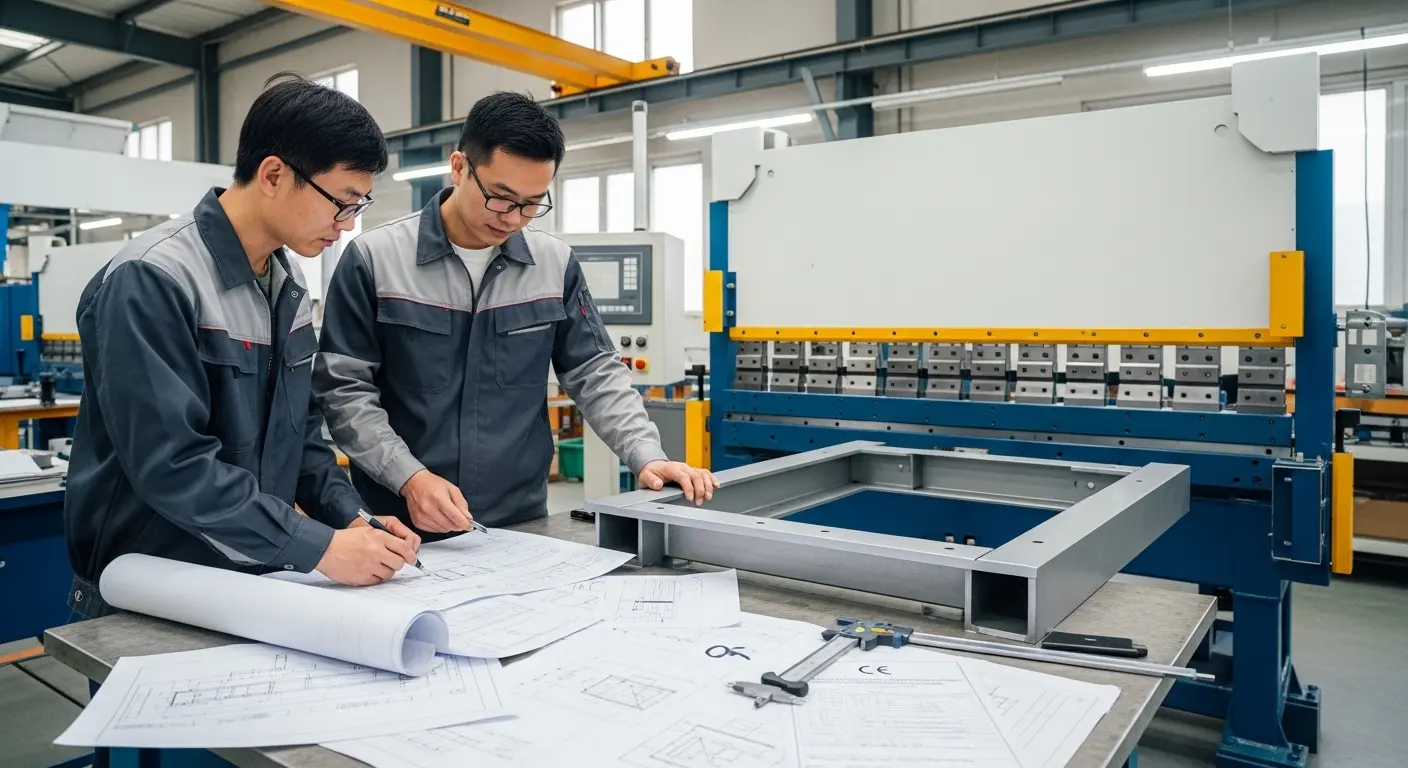
Trouver une usine qui prétend proposer des machines sur mesure est facile. Confirmer qu’ils peuvent réellement ingénier et livrer ce qu’ils estiment est le vrai processus. Voici comment s’y prendre:
Demandez les plans techniques avant le paiement. Une usine crédible de pliages métalliques sur mesure produit des dessins dimensionnels, Schémas électriques, et des schémas de circuit hydraulique selon votre spécification avant de demander un dépôt. S’ils ne peuvent pas produire de documentation technique au stade du devis, Ils ne font pas de vrais travaux personnalisés.
Demandez des projets de référence correspondant à votre candidature. Ont-ils déjà construit un plier de panneaux 15 axes pour la production de portes d’armoires auparavant? Ont-ils exporté un frein à pression personnalisé dans votre pays avec une mise en service documentée? Les projets de référence dans votre catégorie d’application spécifique confirment une réelle capacité, Pas seulement la portée théorique.
Vérifiez leur processus de fabrication de cadres. Demandez si le cadre est soudé et soulagé de contrainte ou en fonte. Les cadres en fonte offrent une rigidité supérieure et un amortissement des vibrations pour des applications de précision — particulièrement pertinent pour les courbeurs de panneaux multi-axes exécutant des séquences de pli à grande vitesse.
Confirmez la disponibilité des pièces détachées dans votre région. Une machine construite sur mesure avec des composants hydrauliques non standards ou des panneaux de contrôle propriétaires devient coûteuse à entretenir une fois la garantie initiale expirée. Confirme que le modèle de ton contrôleur, Marque de pompes hydrauliques, et la spécification du servomoteur ont toutes une disponibilité locale vérifiée.
Vérification de la documentation d’exportation. Une véritable usine de pliage métallique sur mesure gère la classification du code HS, Marquage CE là où nécessaire, listes de bagages précises, et la documentation de soutien à la mise en service comme norme. Ce ne sont pas des options supplémentaires — elles constituent la base opérationnelle de tout fabricant d’exportation sérieux.
Foire aux questions sur les usines de machines plieuses métalliques personnalisées
Qu’est-ce qu’une usine de pliages métallique personnalisés?
Une usine de pliages métalliques sur mesure conçoit et construit des machines à plier ou plier le métal selon des configurations spécifiées par l’acheteur — y compris le tonnage, Longueur du lit, Nombre d’axes, Marque de manette, Spécification hydraulique, et la mise en place des outillages — plutôt que de vendre des catalogues préassemblés. Le résultat est une machine adaptée précisément à la gamme de matériaux de l’acheteur, Géométrie des pièces, et environnement de production.
Combien de temps prend une commande de plieuse métallique sur mesure?
Les commandes en douane provenant d’une usine réputée prennent généralement entre 45 et 90 jours à compter de la confirmation des spécifications et du dépôt, selon la complexité de la machine. Freins à pression simples sur mesure (modification de la longueur du lit ou du tonnage par rapport au modèle de base) souvent terminé en 30 à 50 jours. Les pliages complexes sur mesure avec des systèmes de changement automatique d’outils et des configurations d’axes spécifiques durent généralement 60 à 90 jours.
Quelle est la commande minimale pour une machine à plier en métal sur mesure?
La plupart des usines de machines plieuses métalliques sur mesure acceptent les commandes personnalisées monounités. Des remises de quantité s’appliquent à deux unités et plus, avec des ajustements tarifaires plus importants pour des lots de cinq ou plus — particulièrement pertinents pour les revendeurs d’équipements ou les développeurs d’installations multi-sites.
Une usine peut-elle personnaliser un modèle existant plutôt que de construire de zéro ??
Oui — la plupart des travaux personnalisés consistent à configurer un modèle de base existant avec des ajouts d’axes spécifiques, Améliorations des manettes, Packages d’outillages, et réglages mécaniques, plutôt que d’une ingénierie entièrement nouvelle. Cela réduit les délais et les coûts tout en livrant une machine correspondant exactement à vos besoins de production.
Que dois-je envoyer à une usine lors de la demande d’un devis personnalisé?
Envoyez votre épaisseur et le type maximaux de matériau, Gamme de formats de feuilles, Complexité de flexion requise (angle, Direction, Nombre de plis par partie), Taux de production cible, Marque de manette préférée, et tout dessin ou échantillon de pièces pertinent. Plus votre cahier des charges est précis, Plus la citation est précise — et moins il y a d’échanges avant le début de la production.