

Frein à pression CNC pour plaque de chaudière: Comment éviter la dérive d’angle et la refonte
Faire fonctionner un frein à pression CNC pour plaques de chaudière est une tâche spécialisée qui nécessite une connaissance approfondie de la résistance du formage de plaques lourdes. Contrairement au travail avec des feuilles fines, La plaque de chaudière implique une dominance de déformation plastique lourde qui modifie la façon dont le métal s’écoule sous pression. Il faut prévoir un tonnage élevé car la force nécessaire pour déplacer ces sections épaisses est énorme. La dérive angulaire est l’un des plus grands risques auxquels vous êtes confronté, car cela peut entraîner des pièces qui ne respectent pas les normes de sécurité strictes pour les récipients sous pression.
Les coûts de retravail dans la fabrication lourde sont extrêmement élevés, cela nécessitait souvent un meulage coûteux ou même le démantèlement d’une grosse pièce d’acier de grande valeur. Vous devez comprendre qu’une déviation de récupération élastique en section épaisse est plus difficile à prévoir qu’un simple rebond en tôle.
Ce guide explore les causes profondes de l’instabilité et comment utiliser le contrôle CNC pour maintenir un procédé stable. En se concentrant sur la rigidité de la machine et le comportement des contraintes de l’outillage, Vous pouvez vous assurer que la fabrication de votre équipement thermique reste dans des tolérances strictes.
Les défis du pliage de plaques lourdes sont uniques et nécessitent un ensemble différent de déclencheurs techniques:
- Comprendre le comportement de décalage de l’axe neutre sur une plaque épaisse lors des cycles de haute pression.
- Gérer l’effet de mémoire de contrainte de flexion lourde à plusieurs passages qui déplace la plaque.
- Identifier les zones de pics de pression formant des charges élevées pouvant endommager le châssis de votre machine.
- Calcul de la courbe d’escalade de la résistance de limite d’élasticité des plaques pour différents grades d’alliage.
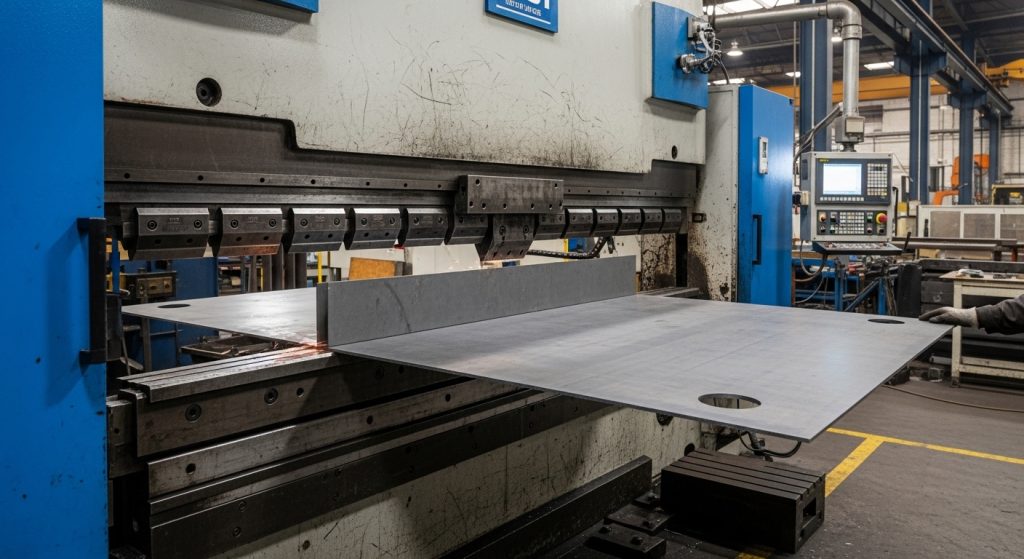
Pourquoi le pliage des plaques de chaudière nécessite des freins à pression CNC à gros tonnage
Quand on passe au travail standard, Vous faites face à un seuil de résistance à la déformation de jauge élevé que les machines standard ne peuvent pas atteindre. Vous avez besoin d’un frein à pression CNC équipé d’un système de contrôle de stabilité hydraulique à haute tonnage pour maintenir le bélier stable sous des charges extrêmes.
- Contrôle de la résistance: Vous devez surmonter le schéma de répartition de la charge de compression sur plaque qui lutte contre l’outil.
- Rigidité du châssis: Une machine robuste empêche le risque de déviation d’angle de flexion du cadre, ce qui arrive lorsque la machine "bâillement" Sous pression.
- Marges de sécurité: Vous devriez toujours avoir une marge de sécurité de charge pour planifier la marge de charge afin d’éviter que vos hydrauliques fonctionnent à 100 % de leur capacité.
- Précision positionnelle: Même à forte force, la CNC doit maintenir une position précise du bélier pour garantir que l’angle est correct.
La rigidité de la machine est la base de la précision. Si le châssis de votre machine fléchit, Votre angle ne sera jamais constant sur toute la longueur de la plaque. Les systèmes CNC à haute tonnage sont conçus pour compenser cette flexibilité, veillant à ce que la pression soit appliquée de manière uniforme d’une extrémité à l’autre de la matrice.
Matériaux courants des plaques de chaudière et leur comportement de flexion
Différentes qualités de plaque réagissent de manière unique au processus de formage. Vous devez ajuster votre tonnage et votre surflexion en fonction de la courbe de stabilité du rendement du réservoir sous pression de chaque matériau.
| Matériel | Comportement de maîtrise | Note technique |
| Plaque de chauffe carbone | Formage fiable | Plaque la plus prévisible pour la stabilité angulaire |
| Grade de récipient sous pression | Haute résistance | Il nécessite des larges chips en V pour gérer la pression |
| Alliage à haute température | Résistance extrême de formage | La hausse de la résistance à la déformation des alliages à haute température est brutale |
| Plaque de chaudière en inox | Haut retour à ressort | L’effet d’amplification à ressort de la plaque à haute résistance est énorme |
La plaque de type « carbone » est le cheval de bataille de l’industrie, mais les plaques à haute teneur en alliage utilisées pour les réservoirs chimiques offrent une dureté beaucoup plus élevée pour former une amplification de pression. Vous constaterez que les qualités en acier inoxydable nécessitent beaucoup plus de surflexion en raison de leur récupération élastique. Comprendre ces différences matérielles est la seule façon d’éviter un "Essais et erreurs" Approche qui gaspille des actions coûteuses.
Causes profondes de la dérive angulaire lors de la courbure lourde des plaques de chaudière
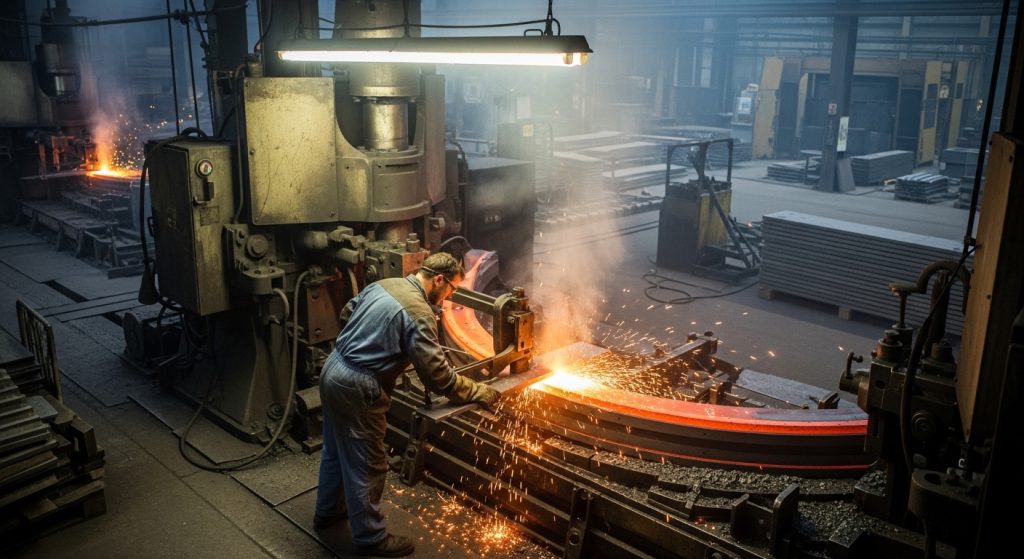
La dérive d’angle se produit lorsque la courbure finale ne correspond pas à l’angle programmé, Variant souvent d’un bout à l’autre de la partie. Cela est généralement causé par une déviation épaise de la section épais, récupération élastique, qui n’a pas été correctement prise en compte.
Facteurs de machines et d’outillage:
Si le bélier ou la benne fléchit de manière inégale, On obtient un effet de déséquilibre de charge de déviation de la RAM. Cela donne un "Bateau" forme où le milieu du coude est plus large que les extrémités. En outre, Le risque de déformation plastique de l’épaule de l’outil augmente avec un tonnage élevé. Si les épaules du dé s’aplatissent même légèrement, Votre angle va dériver au cours d’un seul shift.
Facteurs matériels:
Le comportement de redistribution des contraintes résiduelles de la plaque est une autre cause majeure. Chaque plaque subit des contraintes internes dues au laminoir. En pliant la plaque, Ces contraintes sont libérées, provoquant la torsion ou le fléchage de la pièce. Cette instabilité de la distribution des contraintes de la plaque explique pourquoi un système CNC avec mesure d’angle en temps réel est si précieux dans les ateliers lourds.
Stratégies de sélection des outillages pour la stabilité de la formation des plaques chaudières
Vos outils doivent être conçus pour survivre à la fenêtre de tolérance à la forte fluctuation de charge de formage du travail sur plaques. Les outils standards tomberont rapidement en panne sous ces pressions, ce qui conduit à une rupture du seuil de fatigue structurelle de charge de l’outil.
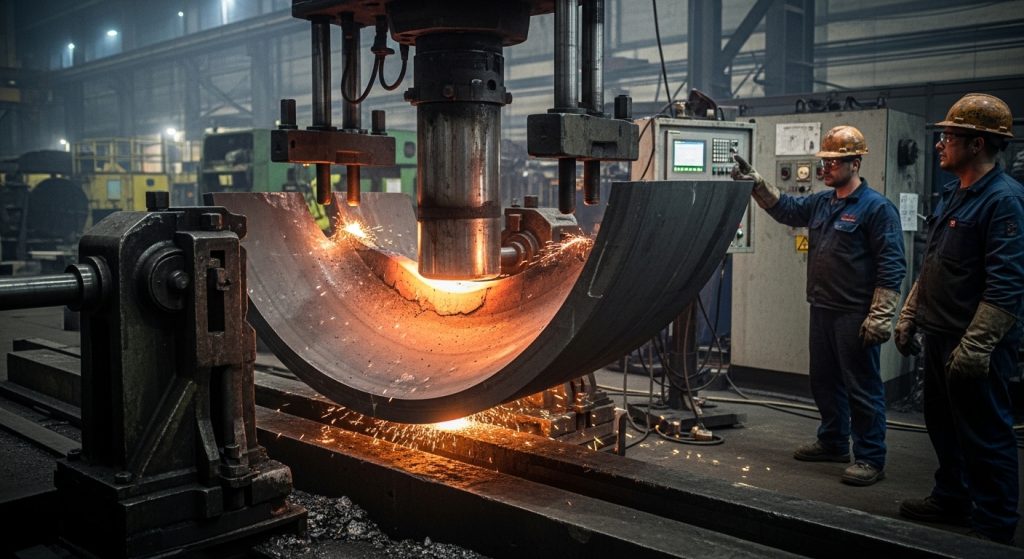
- La dureté est la clé: Utilisez des outillages robustes à haute dureté qui ne se déforment pas sous des charges de mille tonnes.
- Poinçons à grand rayon: Le choix d’une poinçonne à grand rayon permet de réduire les contraintes de déformation plastique, empêchant l’outil de "craquelement" l’extérieur de la plaque.
- Larges V-Dies: Un effet d’élargissement large de la distribution de pression en V sur l’épaule est nécessaire pour réduire le tonnage nécessaire et protéger la surface de la pièce.
- Contact Zones: Utilisez une zone de stabilisation de pression de contact sur la plaque lourde sur vos matrices pour éviter que la plaque ne glisse pendant la course.
Utiliser une ouverture en V trop étroite est une recette pour le désastre. Cela provoque une hausse de la pression et peut entraîner l’effondrement de l’outil. En élargissant le V, Vous répartissez la charge sur une plus grande surface, ce qui stabilise la courbure et rend le rebond plus prévisible.
Comment l’épaisseur de la plaque se multiplie rapidement, formant une force et une instabilité d’angle
Vous devez respecter la courbe d’échelle de la résistance de la section transversale de la plaque. Dans le travail de la tôle lourde, La force requise croît exponentiellement avec l’épaisseur, Suivant un comportement de charge de déformation du cube d’épaisseur.
| Épaisseur de la plaque | Force relative nécessaire | Risque de stabilité |
| 10 mm | Base Force | Faible risque de dérive |
| 20 mm | ~4x Force de base | Variabilité modérée du retour à ressort |
| 30 mm | ~9x Force de base | Risque élevé de déviation du bélier |
| 40 mm | ~16x+ Force de base | Instabilité de l’angle de flexion à forte charge |
Ce schéma de montée exponentielle de la pression en formation signifie qu’une petite augmentation d’épaisseur peut pousser votre machine au-delà de sa limite. Si vous vous trompez dans le calcul, Vous risquez une fatigue structurelle du frein à pression. Vous devez utiliser des tableaux de tonnage précis et vous assurer que votre contrôleur CNC est programmé avec l’épaisseur du matériau et l’ouverture en V appropriées pour éviter le surtonnage.
Techniques de mise en place pour réduire le retravail lors de la flexion des plaques de chaudière
Réduire le retravail commence par une configuration intelligente et une stratégie de contrôle de calibration progressive de la charge. Il ne faut jamais viser l’angle final dès le premier coup d’une plaque épaisse.
- Stratégie de flexion de test: Utilisez un morceau de récupération du même lot pour trouver le vrai rebond.
- Profondeur progressive: Utiliser une méthode de stabilité par itération de correction d’angle, En se pliant de quelques degrés en degré puis en ajustant la profondeur.
- Stress Relaxation: Implémentez un contrôle du timing de relaxation des contraintes de la plaque en maintenant le bélier au fond pendant plusieurs secondes pour laisser les atomes "Calmez-vous."
- Vérification de l’alignement: Utilisez un protocole de vérification des angles répétés de courbure, vérifiant les deux extrémités de la pièce après la première bouffée.
En suivant ces étapes, Tu deviens une erreur avant que ça ne devienne une erreur permanente. Dans la fabrication lourde, Il est bien plus facile de plier une pièce plus loin que d’essayer de "inflexible" un morceau de plaque de 40 mm surcompressé.
Erreurs courantes de flexion des plaques lourdes qui conduisent à la ferraille ou à la remise en état
Éviter ces pièges courants protégera votre équipement et le calendrier de votre projet. La plupart des remaniements dans les ateliers de chaudières résultent de l’ignorance de la physique de base du formage à haute tonnerie.
- Coins sous-dimensionnés: Cela provoque une initiation localisée de fracture par pointe de contrainte de plaque à l’extérieur de la courbure.
- Fatigue des outils: Ignorer les signes d’effondrement ou de surcharge de l’outil peut entraîner une défaillance structurelle soudaine.
- Compensation pour les pauvres: Une forte récupération élastique de courbure sous compensation entraîne des pièces qui ne rentrent pas dans la coque cylindrique.
- Fissures de bord: Ne pas vérifier la zone de micropropagation des fissures sur le bord d’une plaque peut entraîner une défaillance catastrophique lors des tests de pression.
Choisir le bon frein à pression CNC pour la production de plaques de chaudière lourdes
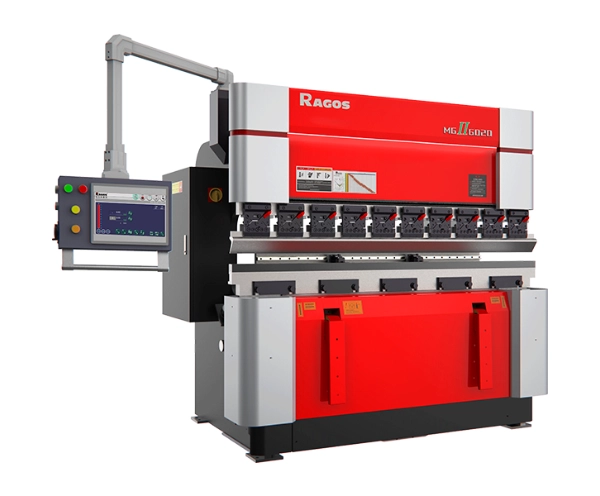
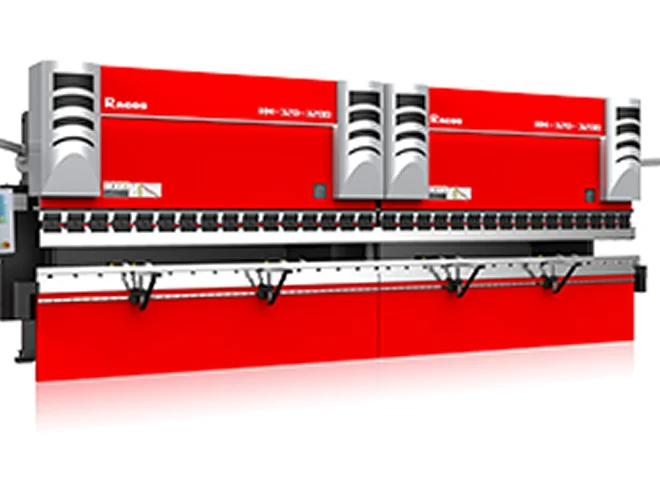
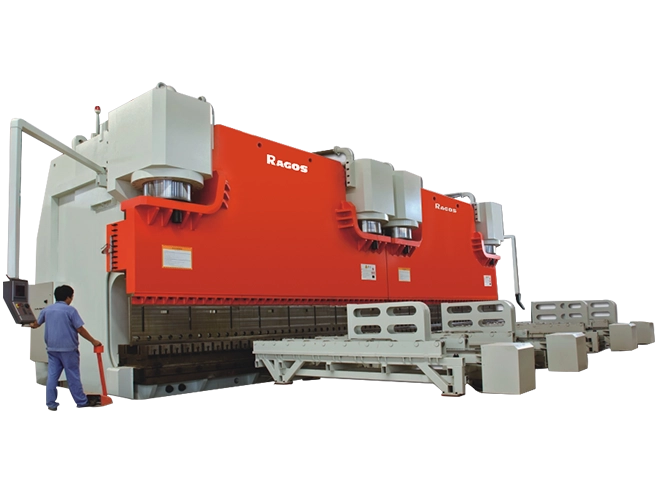
Investir dans un Plaque à tonnage élevé formant la rigidité du frein à pression plateforme est la seule façon de gérer les tâches sous haute pression. Il vous faut une machine qui offre une stabilité hydraulique élevée en flexion pour éviter la dérive du bélier. Cherchez une plateforme à cohérence d’angle répétée en formation de plaques capable de supporter des charges de milliers de tonnes jour après jour. Une architecture de compatibilité avec outillages lourds permet d’utiliser les matrices massives nécessaires pour les travaux sur les récipients sous pression.
Lorsque la plaque d’aluminium nécessite une stratégie de charge de flexion différente
Vous devriez utiliser un Frein à piston en tôle d’aluminium approche même pour des sections épaisses, car la plage d’instabilité de la section épaisse en aluminium est unique. Contrairement à l’acier, Vous faites face à une section très forte et peu dure, ce qui crée un risque d’effondrement. Le comportement de la section élastique en aluminium est différent de celui de l’acier, Et il faut surveiller un risque de fracture de radius de flexion en aluminium de l’épaisseur de la plaque si votre poinçon est trop tranchant.
En quoi le formage de tôle d’acier diffère de celui de la courbure lourde sur plaques de chaudière
A Frein à presse en tôle en acier Fonctionne dans une zone de domination de la déformation élastique de la tôle d’acier où tout est beaucoup plus léger. Vous gérez une répartition fine de la charge du matériau et une feuille formant une fenêtre de stabilité de pression plus basse. Le contraste entre le comportement de retour à ressort de la plaque et de la plaque est net; La plaque nécessite beaucoup plus d’attention sur la structure interne du grain et la libération des contraintes que sur une feuille fine.
Leçons tirées de la stabilité de la flexion des panneaux à gros calibre CVC
Vous pouvez postuler Frein à pression CVC Leçons pour les conduits lourds en se concentrant sur la stabilité de la formation des brides de panneaux de conduits lourds. Ils utilisent une méthode de flexion de compensation de déformation des panneaux à grande fin, essentielle pour les longues sections de chaudière. La gestion de la stratégie de répartition des charges de flexion des joints de panneaux aide à maintenir la structure carrée. Même le contrôle de la rectitude de la flexion longue des feuilles sur une feuille épaisse vise à empêcher le matériau de se courber sous son propre poids.
Problèmes de reculement à rebond et de formage résistant à la chaleur pour plaques de chaudière en inox
Travailler avec un Frein à pression en acier inoxydable Il faut gérer une amplification de récupération élastique en plaques épaisses en acier inoxydable. Ces alliages présentent souvent une plaque d’alliage résistante à la chaleur formant une escalade de pression qui peut surprendre un opérateur. Vous devez faire attention à une surface en acier inoxydable qui risque de déformation de la surface de la plaque inoxydable qui pourrait abîmer la pièce. Utilisez toujours une marge de compensation d’angle de flexion en alliage lourd élevée pour atteindre vos cibles.
Méthodes d’ingénierie pour réduire le recul dans la flexion CNC sur plaques épaisses
Pour vraiment maîtriser la précision, Tu devrais réduire le rebond Utilisation d’une stratégie de courbure de compensation de récupération élastique. Essayez une technique de formage à décharge de contrainte en flexion lourde à plusieurs étapes pour permettre au métal de se détendre entre les coups. Augmenter la méthode de contrôle de la profondeur de pénétration de l’outil est la méthode standard pour lutter contre le retour élastique. Finalement, Une technique de courbure de neutralisation des contraintes résiduelles de la plaque aide à maintenir la pièce stable après sa sortie de la machine.