

Machine de pliage automobile pour tôle métallique: Guide complet de l’acheteur pour la fabrication de pièces automobiles
La fabrication automobile fonctionne avec des tolérances strictes. UnMachine de pliage automobile de tôle Doit former des panneaux de carrosserie, Supports structurels, et des renforts de châssis aux angles exacts — de façon constante, à vitesse de production, À travers des milliers de cycles sans dérive. La mauvaise machine crée de la ferraille, retravailler, et des retards de production coûteux.
Ce guide décompose les types de machines, matériaux, Spécifications, et les étapes de sélection nécessaires pour prendre la bonne décision pour le travail de tôle automobile.
Qu’est-ce qu’une machine à plier la tôle automobile?
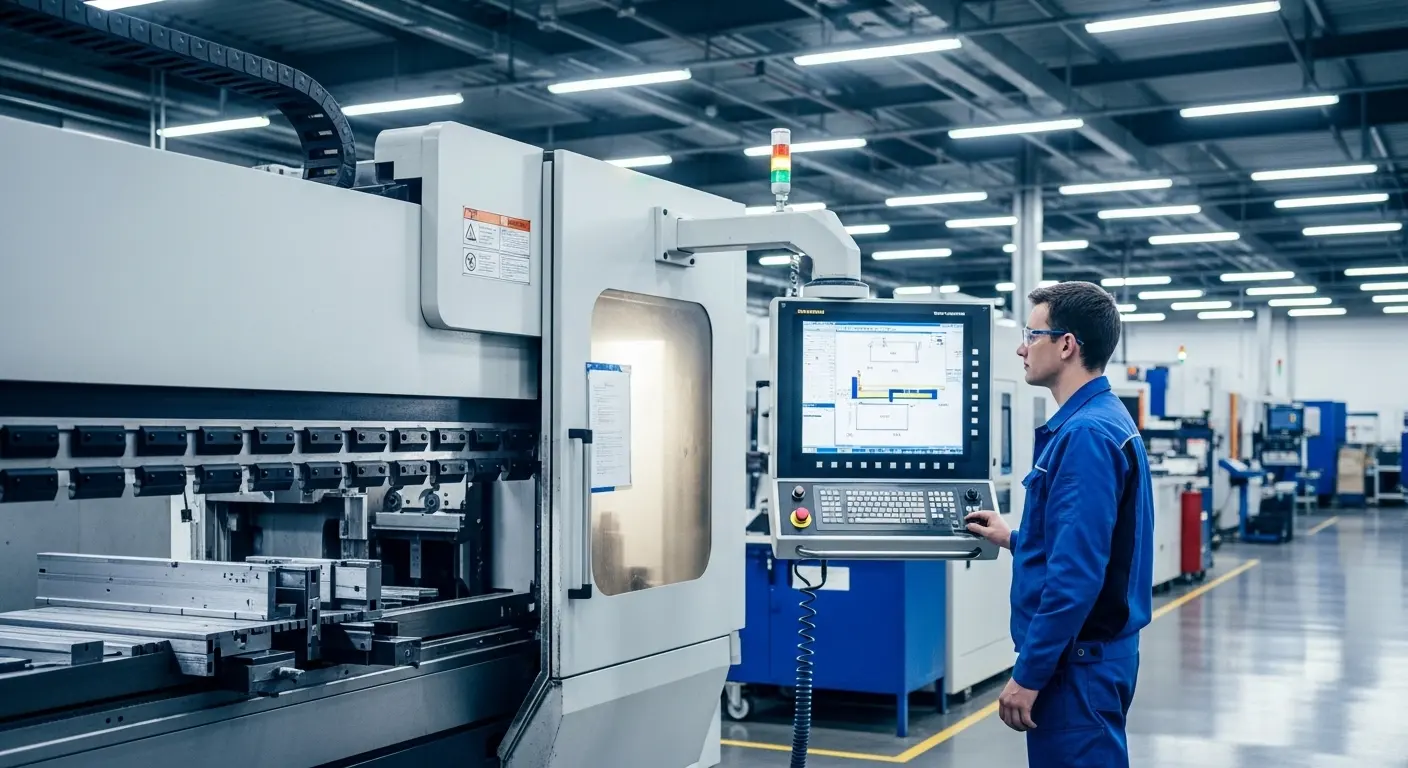
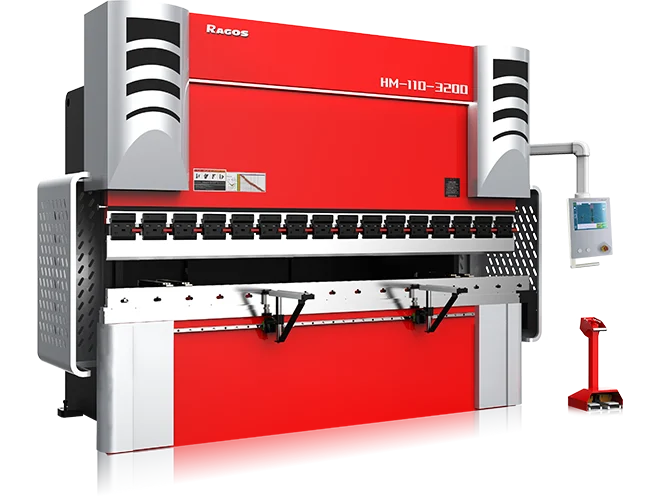
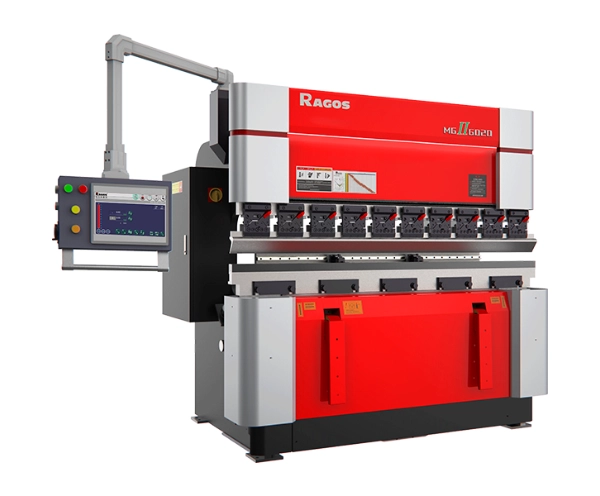
UnMachine de pliage automobile de tôle est un frein à pression ou un plieur de panneau conçu pour former des plaques de métal plates en formes précises, inclinées ou courbes, utilisées dans la fabrication automobile. Il applique une force contrôlée à travers un poinçonnage et un matrice pour plier la tôle à un angle spécifié, Rayon, et la géométrie.
Dans la production automobile, Ces machines s’occupent de tout, des panneaux de carrosserie en aluminium fins de 0,8 mm à des supports en acier de structure lourds de 6 mm ou plus. La machine doit le faire avec précision et répétition — en conservant généralement des tolérances de ±0,3° ou plus serrées à l’angle de courbe et ±0,1 mm à la position arrière de la jauge.
Les deux principaux types utilisés dans les contextes automobiles sont:
- Freins à pression CNC — Polyvalent, Machines programmables adaptées aux crochets, Renforts, Cadres, et des parties complexes à multiples courbures
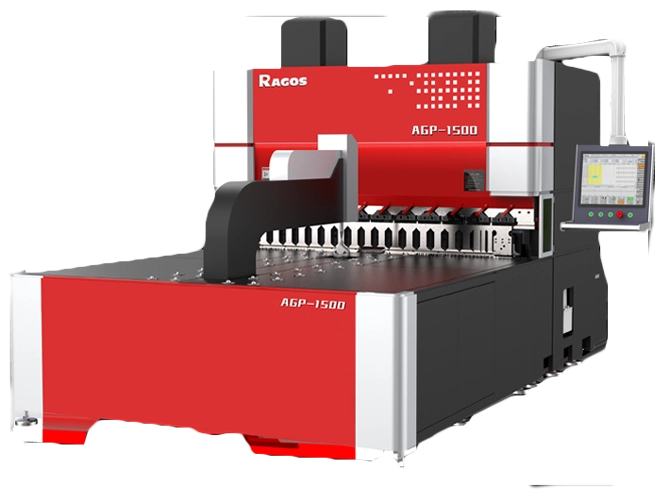
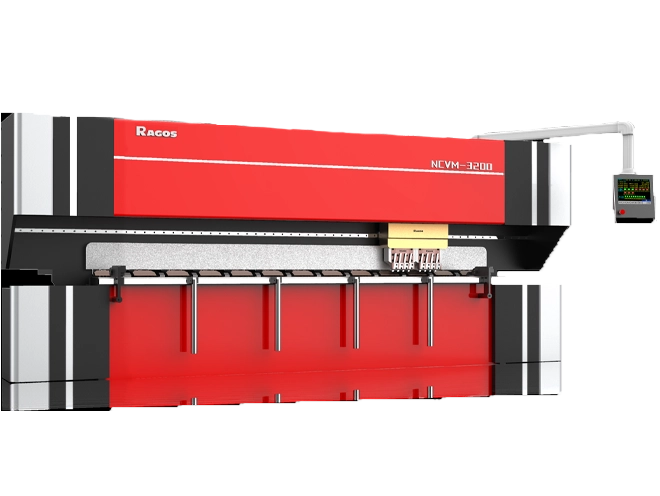
- Pliages de panneaux — Machines automatisées conçues pour la grande vitesse, Production à grands panneaux comme les peaux de porte et les panneaux de toit
Les deux servent la production automobile. Le bon choix dépend de la géométrie de votre pièce, Volume, et la composition des matériaux — que ce guide aborde en détail.
Composants automobiles clés fabriqués avec la tôle pliée
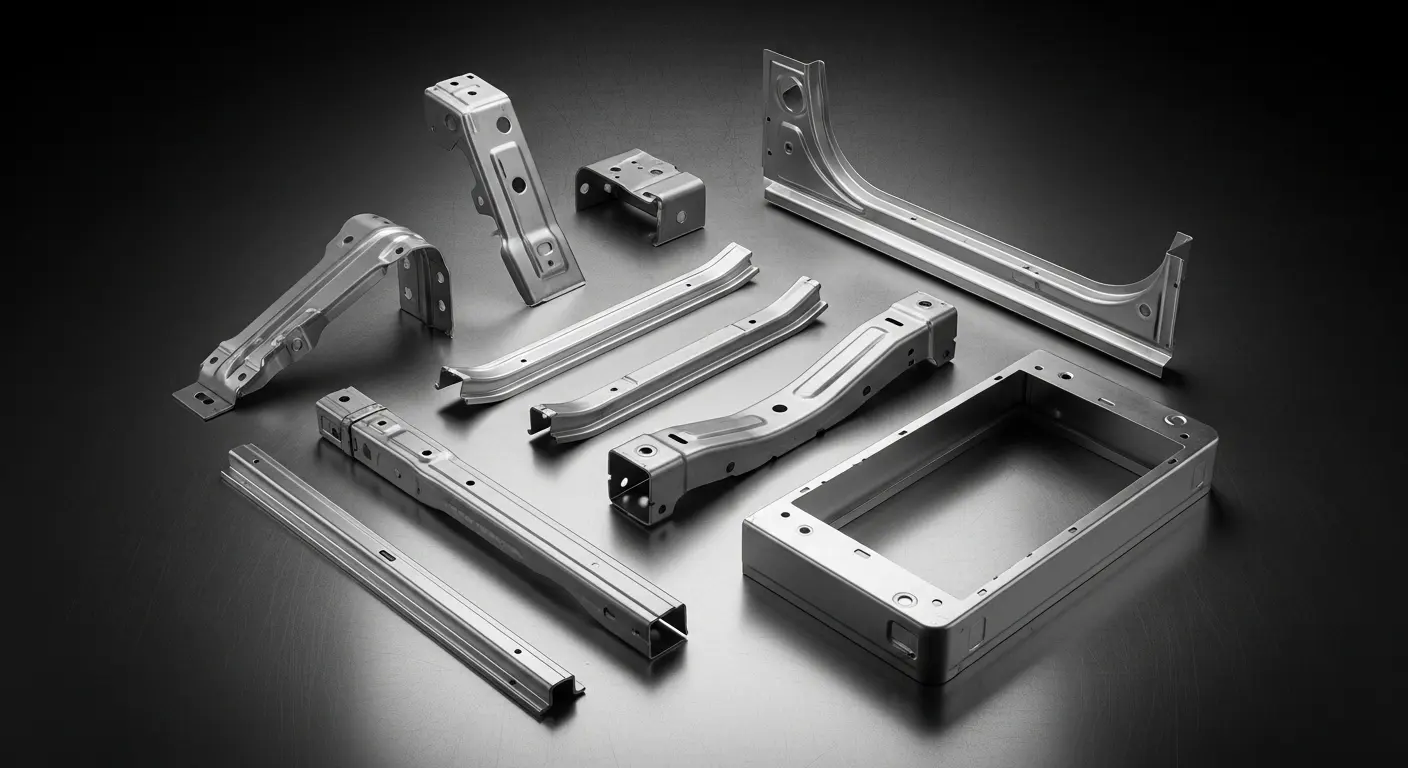
La gamme des partiesMachine de pliage automobile de tôle Produces est plus large que ce que la plupart des acheteurs imaginent.
Panneaux de carrosserie — Portes, Hots, Ailes, et panneaux de toiture. Celles-ci nécessitent une finition de haute qualité de surface et des angles de bride précis pour un ajustement correct des panneaux et des espaces de soudure.
Supports structurels — Supports moteur, Supports de siège, Renforts de sol, et supports de pare-feu. Ces pièces nécessitent une précision angulaire stricte et utilisent souvent de l’acier avancé à haute résistance (AHSS), ce qui impose des exigences importantes en termes de correction du tonnage et de reprise.
Composants du châssis et du châssis — Cross-members, Crochets de sous-châssis, et profils longitudinaux. Des matériaux plus épais et des lignes de courbure plus longues nécessitent des machines à haute tonnage avec compensation de couronnement.
Boîtiers et plateaux de batteries — De plus en plus courant dans la production de véhicules électriques. Ces pièces utilisent une feuille d’aluminium et nécessitent des rayons de courbure propres, sans fissures ni dommages à la surface.
Supports d’échappement et CVC — Composants en acier inoxydable avec plusieurs courbes serrées et tolérances serrées.
En résumé, La fabrication automobile couvre presque toutes les combinaisons de matériaux, épaisseur, et la complexité — c’est pourquoi la sélection machine est si importante.
Tôle automobile: Matériaux et ce qu’ils demandent
Le matériau que votre atelier plie le plus souvent façonne chaque décision de spécification pour unMachine de pliage automobile de tôle. Les grades automobiles ne sont pas toutes identiques, et chacun se comporte différemment sous le poing.
Acier doux (DC01, DC04) — La ligne de base. Rebond prévisible, Exigences de tonnage modérées, fonctionne bien sur la plupart des freins à pression CNC. Résistance à la traction typiquement de 270 à 410 MPa.
Acier avancé à haute résistance (AHSS, DP, Notes TRIP) — Utilisé pour les pièces structurelles et critiques pour la sécurité. La résistance à la traction peut dépasser 1,000 MPa. Le retour à rebond est agressif et incohérent — votre machine a besoin d’un contrôleur CNC avec une base de données de compensation de reprise ou un retour d’angle en temps réel. Les exigences en tonnage sont nettement plus élevées que celles de l’acier doux à la même épaisseur.
Aluminium (Séries 5xxx et 6xxx) — Utilisé pour les panneaux de carrosserie, Plateaux de batteries pour véhicules électriques, et des pièces structurelles légères. L’aluminium est plus tendre mais plus sujet aux marques de surface et aux fissures à des rayons étroits. PourRéglages de courbure de l’aluminium et sélection correcte du rayon Basé sur la qualité du matériau, Une connaissance spécifique de la configuration est essentielle avant de lancer la production.
Acier galvanisé et pré-enduit — Courant pour les panneaux extérieurs. Le revêtement en zinc est sensible à la pression de l’outil et aux bords tranchants de la matrice. Des rayons d’outillage plus souples et un choix correct du rayon d’épaule de la matrice empêchent les dommages au revêtement.
Le mélange de matériaux que votre atelier utilise détermine le tonnage minimum, La sophistication des manettes, et l’investissement en outillage votreMachine de pliage automobile de tôle nécessite.
Frein à pression vs Pliage de panneau: Ce qui correspond mieux au travail automobile?
Les deux types de machines jouent des rôles définis dans la production automobile. La question est de savoir lequel correspond à votre type de pièce et volume spécifiques.
| Caractéristique | Presse plieuse CNC | Cintreuse de panneaux |
|---|---|---|
| Meilleur type de pièce | Crochets, Cadres, Pièces complexes à plies multiples | Grands panneaux plats, par peaux, Enceintes |
| Gamme de matériaux | 00,5 mm – 25 mm | Typiquement 0,5 mm – 3 mm |
| Vitesse de flexion | Modéré à rapide | Très rapide (Automatisé) |
| Géométrie des pièces | Très flexible | Optimisé pour les formes de panneaux |
| Automatisation | Optionnel (Chargement robotisé) | Intégré (Ventouse, Alimentation servo) |
| Entrée opérateur | Requise pour des tâches complexes | Minimal — principalement supervisé |
| Coût | Basse à moyenne plage | Supérieur (Automatisation intégrée) |
Pour la plupart des ateliers automobiles et fournisseurs de niveau 2, unMachine de pliage à freins à pression CNC Offre la flexibilité de gérer plusieurs familles de pièces sur une même machine — essentielle lorsque votre répartition des tâches change régulièrement.
Pour la production de panneaux à grand volume, un dévouéPliage de panneaux avec alimentation CNC à ventouse il retire l’opérateur du cycle et augmente considérablement la production par quart.
Que rechercher dans une machine à plier la tôle automobile
Les tolérances de production automobile sont plus strictes que la fabrication générale. Lors de l’évaluation d’unMachine de pliage automobile de tôle, Ce sont les spécifications qui comptent le plus.
Tonnage avec marge de sécurité — Calculer votre force maximale requise en fonction de votre matériau AHSS le plus épais, puis ajouter une marge de capacité de 20 à 30 %. Les machines sous-dimensionnées s’usent plus vite et produisent des courbes irrégulières sous charge. AFrein à pression CNC de 100 tonnes pour la production d’acier est un point d’entrée courant pour les travaux de support automobile.
Nombre d’axes — minimum 4, 6 pour les pièces complexes — Une machine à 4 axes (Y1, Y2, X, R) gère la plupart des supports et des cadres. Les pièces à largeurs de bride variables ou à des positions de jauge reculées nécessitent un contrôle des axes Z1/Z2 pour automatiser le positionnement des doigts.
Contrôleur CNC avec compensation de rebond — Les pentes AHSS nécessitent une correction d’angle en temps réel ou une base de données stockée de reprise. Des contrôleurs comme Delem DA66S et DA69S gèrent bien cela avec des profils de matériaux programmés.
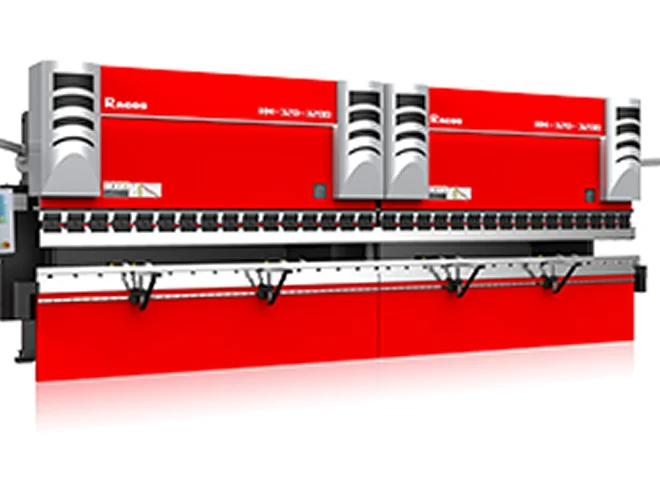
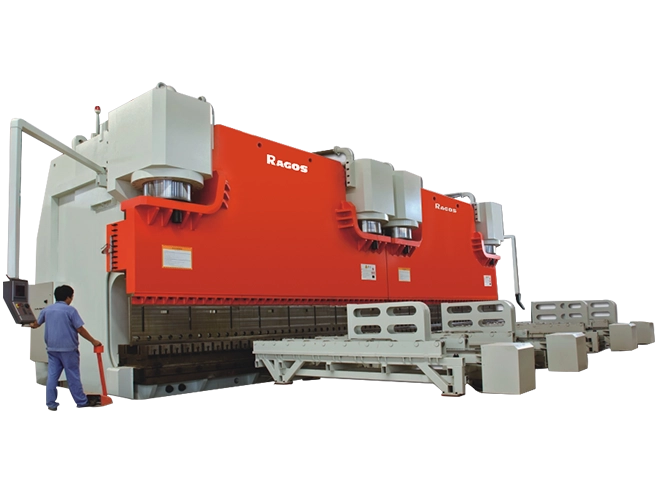
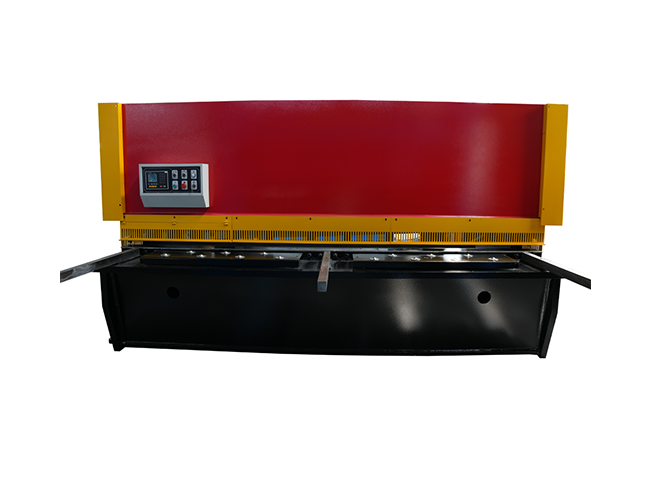
Compensation de couronnement — Pour les machines de plus de 2 mètres travaillant avec des profils structurels automobiles, Un couronnage hydraulique ou mécanique empêche le centre de la courbure de s’ouvrir plus largement que les extrémités. Pour les travaux structurels à grand profil, voir les spécifications surfreins à pression hydrauliques dans la gamme 600T–3000T.
Répétabilité de ±0.01 mm ou plus — Les chaînes de montage automobile n’ont aucune tolérance pour les pièces variant de lot en lot. Les machines avec encodeurs linéaires sur l’axe Y assurent cette cohérence.
Flexion et vitesse d’approche — La vitesse d’approche rapide réduit le temps de cycle sur des trajets à fort volume. Pour la production de supports automobiles à 300 virages par quart, même 1 à 2 secondes par cycle économisées s’additionnent pour des gains réels en production.
Automatisation et intégration robotique dans le courburage automobile
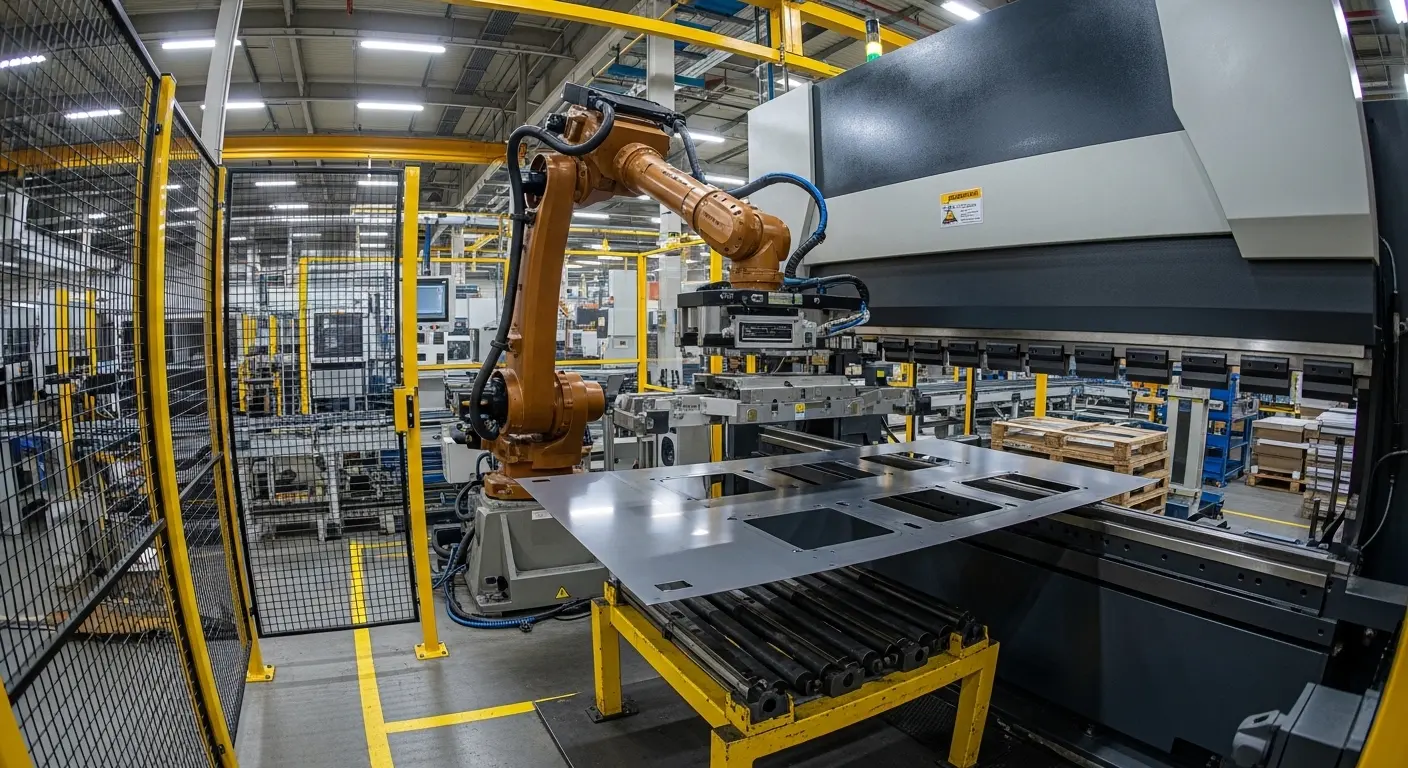
Les freins à pression manuels autonomes sont rares dans la production automobile sérieuse. Volume élevé, Le flexion répétable nécessite une automatisation — et unMachine de pliage automobile de tôle doit s’intégrer dans ce flux de travail automatisé.
Les lignes de courbure automobiles modernes intègrent généralement:
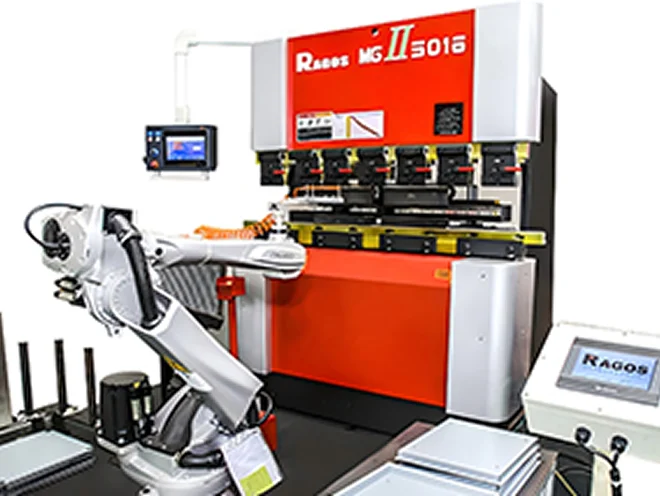
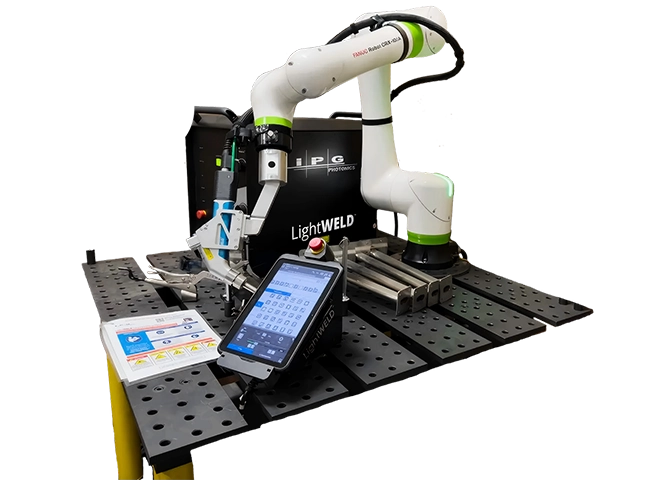
Chargement et déchargement robotisés — Un bras robotisé à 6 axes charge des faux à blanc sur le frein à pression, les positionne contre le compteur arrière, et enlève les parties tordues. Cela élimine la fatigue de l’opérateur et la variation de positionnement sur de longues périodes de travail.
Systèmes automatiques de changement d’outil — Les machines haut de gamme incluent le stockage des outils et l’échange automatique de poinçons/matrices, permettant ainsi de fonctionner des tâches à plusieurs étapes sans intervention de l’opérateur entre les configurations.
Systèmes de mesure de la vision et de l’angle — La mesure de l’angle en ligne à l’aide de capteurs laser ou de systèmes à caméra confirme chaque angle de courbure avant que la pièce ne passe à la station suivante. Les défauts sont détectés en temps réel, Pas lors de l’inspection finale.
Connectivité MES et ERP — Les fournisseurs automobiles OEM doivent suivre les données de production. Les machines dotées de connectivité Ethernet et de capacités d’exportation de données CNC s’intègrent directement aux systèmes de gestion d’usine pour assurer la traçabilité.
Pour les ateliers qui s’approvisionnent en équipements commeFournisseur international de freins à pression CNC ou l’évaluation complète deSolutions de formage de tôle pour la production automobile, La compatibilité de l’automatisation est une spécification à vérifier avant l’achat.
Comment choisir la bonne machine de pliage automobile pour tôlerie
Utilisez ce cadre en cinq étapes pour réduire votre choix avant de contacter un fournisseur.
Étape 1: Définissez votre plus épais, Matériau le plus dur
L’AHSS à 3 mm impose un besoin de tonnage très différent de celui de l’acier doux à 3 mm. Commencez par votre matériau le pire — cela détermine votre tonnage minimum de machine.
Étape 2: Identifiez votre plus long virage
La longueur du lit doit dépasser de loin votre partie la plus large. Le couronnement devient obligatoire au-delà de 2 mètres sur la plupart des matériaux.
Étape 3: Cartographiez votre complexité de courbure
Comptez le nombre maximal de virages par pièce et identifiez si certains nécessitent un repositionnement de la jauge en cours de séquence. Les pièces complexes nécessitent un contrôle sur 6 axes et un contrôleur graphique 3D.
Étape 4: Définissez votre exigence de volume
Production automobile à grande échelle (500 pièces par quart) justifie l’automatisation robotique. Les prototypes à faible volume ou les travaux de niveau 3 fonctionnent bien sur un frein à pression CNC standard 4 axes avec un opérateur expérimenté.
Étape 5: Confirmer les exigences d’automatisation et de connectivité
Vérifiez si votre client automobile nécessite une traçabilité des données, Suivi par pièce par machine, ou des protocoles de communication spécifiques. Confirmez que le contrôleur et le logiciel de votre machine peuvent les livrer avant de commander.
Pour les boutiques comparant les options entre les fournisseurs mondiaux, Le Guide deLes principaux fabricants de freins à pression en 2026 est un point de départ utile pour présélectionner des constructeurs réputés.
Foire aux questions sur les machines de pliage automobile en tôle
Qu’est-ce qu’une machine à plier la tôle automobile?
Une machine à plier la tôle automobile est un frein à pression CNC ou un pliage de panneau utilisé pour former des tôles plates en composants inclinés précis pour la fabrication de véhicules — y compris les panneaux de carrosserie, Supports structurels, Pièces de châssis, et enceintes de batteries. Il utilise un poinçonnage et un jeu de matrices pour plier le métal selon des angles et rayons spécifiés.
Avec quels matériaux fonctionnent les machines de pliage de tôle automobile?
Ils travaillent avec de l’acier doux, Acier avancé à haute résistance (AHSS), Alliages d’aluminium (Séries 5xxx et 6xxx), Acier galvanisé, et l’acier inoxydable. Chaque matériau nécessite des réglages de tonnage différents, tooling selection, et des programmes de rémunération de retour.
Combien de tonnage faut-il pour plier la tôle automobile?
Pour l’acier doux jusqu’à 3 mm, Une machine de 100 tonnes couvre généralement la plupart des supports et des cadres. Pour l’AHSS ou des composants structurels plus épais, 160 à 300 tonnes est une exigence courante. Ajoutez toujours une marge de capacité de 20 à 30 % au-dessus de votre force maximale de flexion calculée.
Quelle est la différence entre un frein à pression et un panier de panneau pour usage automobile?
Un frein à pression est une machine polyvalente adaptée aux pièces complexes à plusieurs courbes, Crochets, et les cadres. Un panne-panneau est une machine automatisée optimisée pour la production à grande vitesse de grands panneaux plats comme les peaux de porte et les panneaux de carrosserie. Les ateliers automobiles exploitent souvent les deux types pour différentes familles de pièces.
Un frein à pression CNC peut-il s’intégrer avec des robots de chaîne de production automobile?
Oui. Les freins à pression CNC modernes avec Delem ou contrôleurs similaires supportent l’intégration robotique via une E/S numérique, Communication sur le bus de terrain, et programmation en mode pédagogique. Le frein à pression et le robot fonctionnent en boucle synchronisée — le robot charge et décharge tandis que le contrôleur CNC gère automatiquement les séquences de flexion.