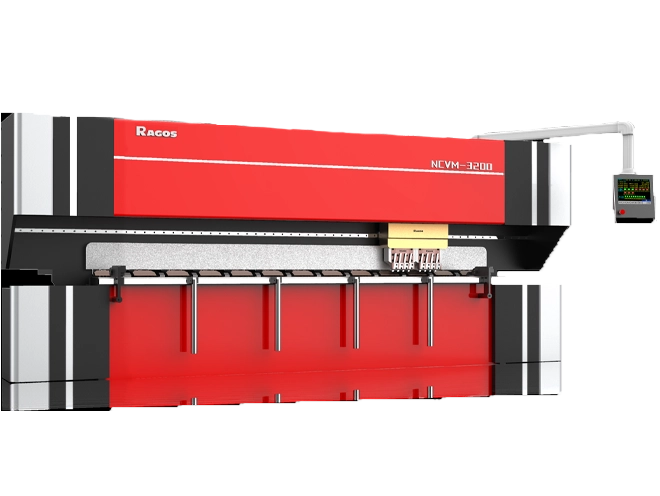



Пресс-тормоз стиля Amada: Технические характеристики, Совместимость инструментов & Альтернативы
An Amada style press brake uses the American-style tooling system — the most widely adopted press brake tooling standard in North America — and any CNC press brake built to the same 0.5-inch tang width accepts your full Amada tooling inventory. Most buyers searching this term are not looking to purchase an Amada OEM machine. They want a machine that fits their existing tooling at a fraction of the OEM price point. For a complete view of Amada-compatible press brake tooling options, посетите нашСтраница с инструментами для нажатия тормозов.
This guide covers what Amada style means in terms of machine architecture, a 5-point compatibility checklist, a comparison against European style tooling, and the RAGOS machines that pass every compatibility requirement.
What Is an Amada Style Press Brake?
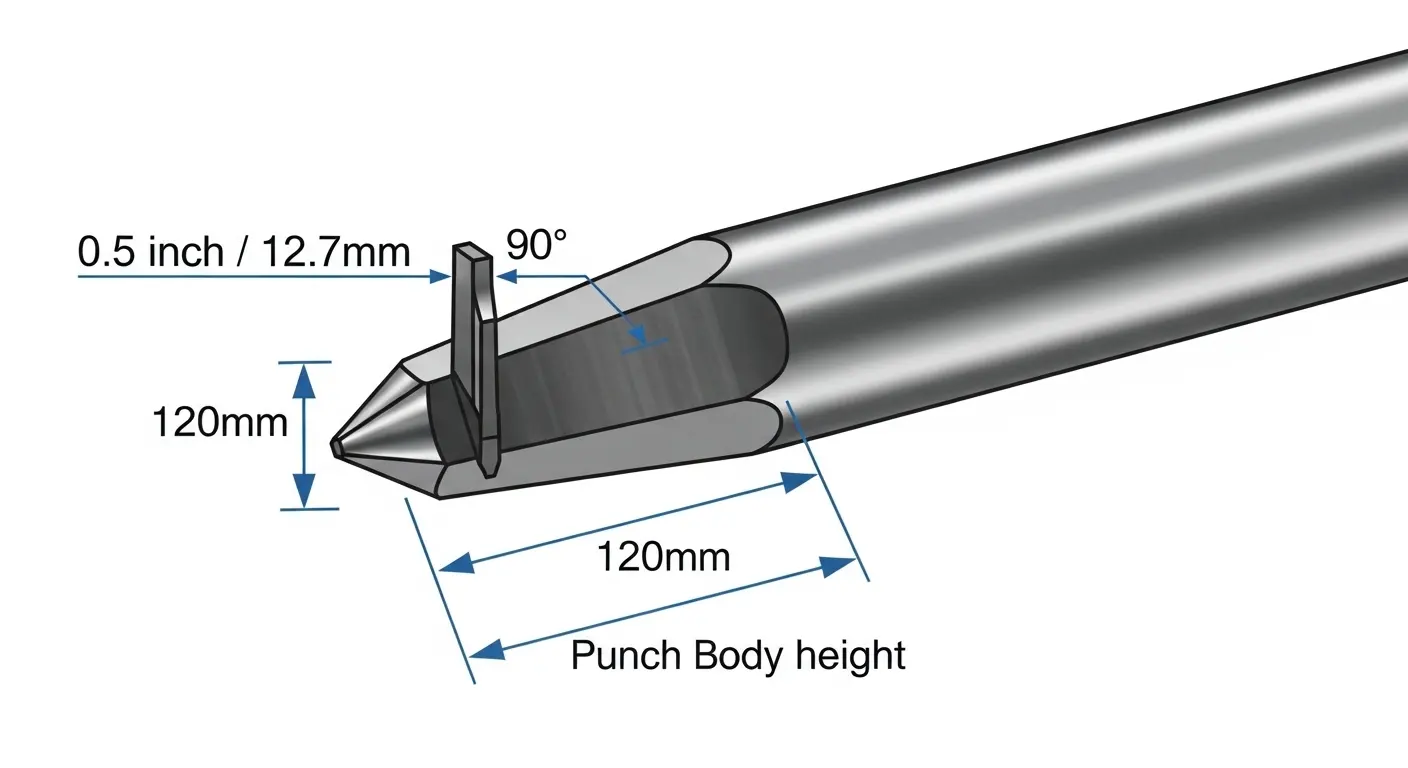
An Amada style press brake is a down-acting hydraulic CNC press brake that uses the American-style punch-and-die tooling system. Термин "Amada style" и "American style" are used interchangeably across the sheet metal fabrication industry — the standard predates Amada but the brand popularized it across North America.
Четыре спецификации определяют стандарт:
- Down-acting ram — the upper beam moves downward onto a fixed lower table
- Punch tang width: 0.5 дюймы (12.7миллиметр) — первичное измерение совместимости
- Standard punch height: 120миллиметр (4.72 дюймы) — Amada's AFH tooling series confirms this as the fixed-height standard
- American-style V-die geometry — wider die openings vs. European systems, with a broader range of V-die suppliers
Any press brake that matches these four specifications accepts Amada tooling — regardless of who manufactured the machine.
Amada Style vs. European Style Press Brake Tooling
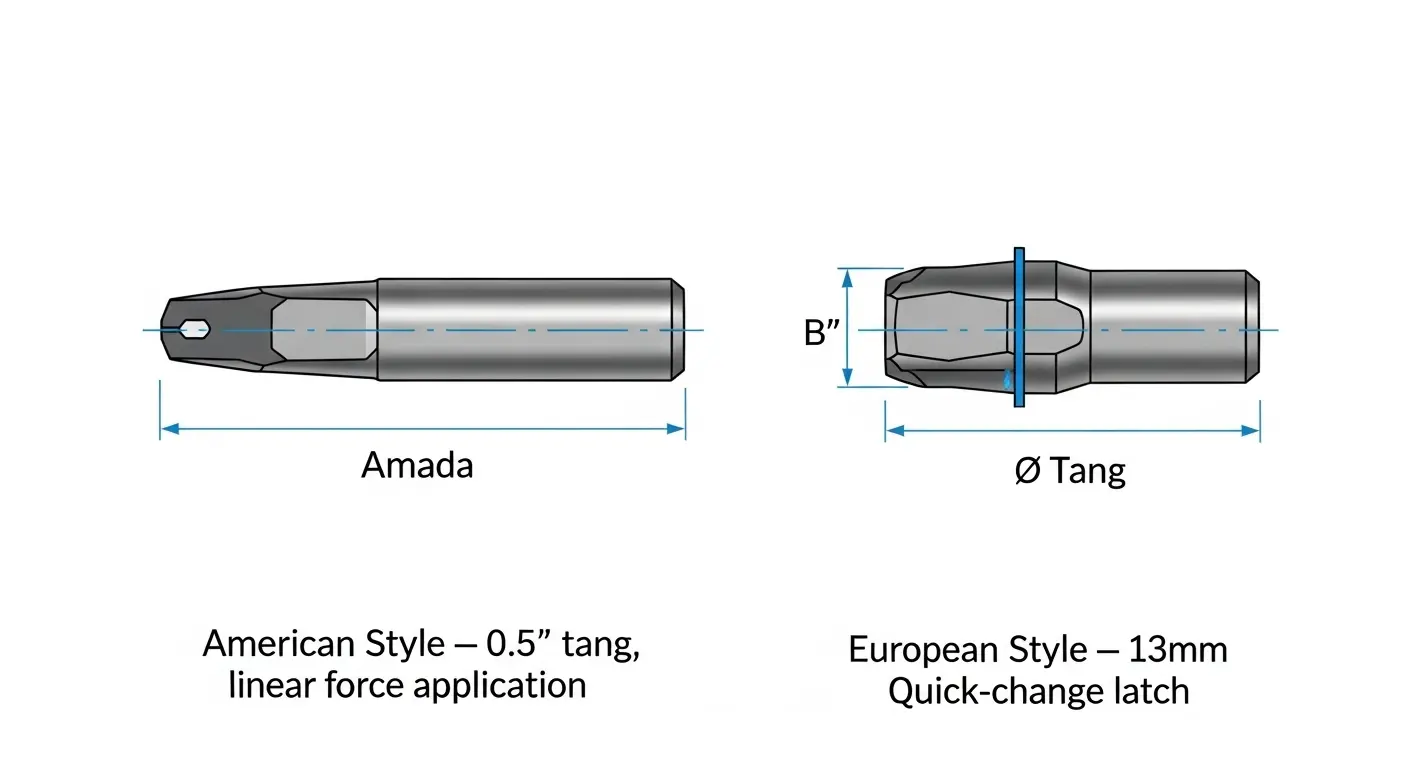
The main difference between Amada style and European style press brake tooling is the tang width, force application method, and clamping system. The two systems are not interchangeable — you cannot fit European-style tooling into an American-style punch seat, and vice versa.
| Особенность | Amada Style (Американец) | European Style (Trumpf/Wila) |
|---|---|---|
| Ширина Тан | 0.5 дюйм (12.7миллиметр) | 13миллиметр, narrower latch-type |
| Punch height (Стандарт) | 120миллиметр (4.72 дюймы) | Varies by system |
| Применение силы | Прямой, linear from top to tip | Offset, distributed along tool length |
| Safety latch | Manual ram clamp system | Snap-in quick-change latch |
| Скорость установки | Медленнее (manual alignment) | Быстрее (automated quick-change) |
| Стоимость инструментов | Lower — broader global supplier base | Higher — fewer compatible suppliers |
| Доминирование на рынке | Северная Америка | Европа, growing globally |
If your shop already holds an Amada tooling inventory, any machine built to the American-style standard gives you drop-in compatibility at zero retooling cost. European-style machines require a full tooling replacement.
The 5-Point Amada Style Compatibility Checklist
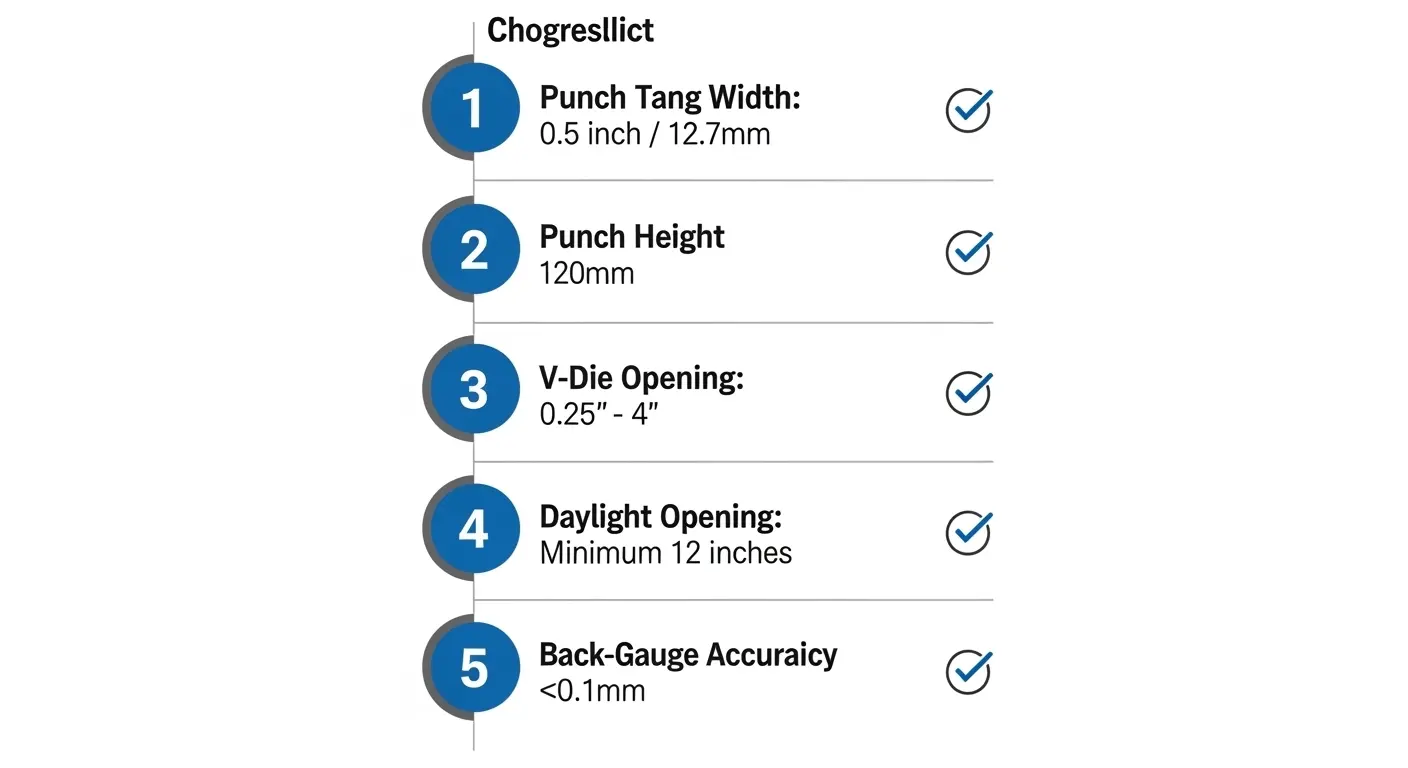
Before buying any press brake described as Amada-style compatible, verify these five specifications against the machine's technical sheet. Every point below corresponds to a real dimensional or accuracy requirement — not marketing language.
- Punch tang width: 0.5 дюймы (12.7миллиметр) — the primary entry requirement. Confirm this is the machine's standard punch seat dimension. Any deviation means the tooling will not seat correctly.
- Punch height: 120миллиметр (4.72 дюймы) — Amada's AFH standard fixed this as the reference height for CNC-controlled bending operations. Non-standard heights change the bending depth reference and require reprogramming every job.
- V-die opening range: 0.25"–4" — confirms the die block geometry matches the American-style die standard across common material thicknesses (0.5mm to 12mm).
- Ram stroke and daylight opening — the daylight opening (distance between beam and table) must accommodate punch height + Толщина материала + die height. Confirm minimum 12 inches of daylight for standard Amada-style tooling stacks.
- Точность повторения на заднем шкале: ±0.1mm or better — required for production-run accuracy when swapping tooling setups. This is where most generic machines fail vs. precision CNC press brakes.
In our experience supplying Amada-compatible press brakes to fabrication shops across North America and Asia, tang width is confirmed in 90 товары второго сорта. Punch height and daylight opening are where most compatibility issues appear — always request the full technical specification sheet, not just the tang dimension.
Why Punch Height Matters More Than Tang Width
Ширина Танга — это начальное требование для посадки инструмента. Punch height determines whether the tooling clears the machine's ram stroke correctly. A machine with the correct tang width but incorrect punch height causes the punch to bottom out before the bend angle is reached. Always request the complete tooling specification sheet before purchase — not just the tang measurement. Amada's AFH series standardised 120mm for exactly this reason: to eliminate laser safety device adjustments between job setups.
Amada Style Press Brake Specifications — What to Expect
Amada-style press brakes follow consistent specification patterns across tonnage classes. The table below shows what a buyer should expect from a correctly configured Amada-compatible CNC press brake at each capacity level.
| Тоннаж | Длина кровати | Ram Stroke | Back-Gauge Travel | Typical Application |
|---|---|---|---|---|
| 40–63 ton | 1,600–2,000mm | 100миллиметр | 500миллиметр | HVAC, light enclosures, thin sheet |
| 80–100 тонн | 2,500–3,200mm | 150миллиметр | 600миллиметр | Mid-range fabrication, Панели |
| 160–200 тонн | 3,200–4,000mm | 200миллиметр | 700миллиметр | Тяжёлая плита, construction profiles |
| 300–600 ton | 4,000–6,000mm | 250мм | 800мм | Конструкционная сталь, heavy industry |
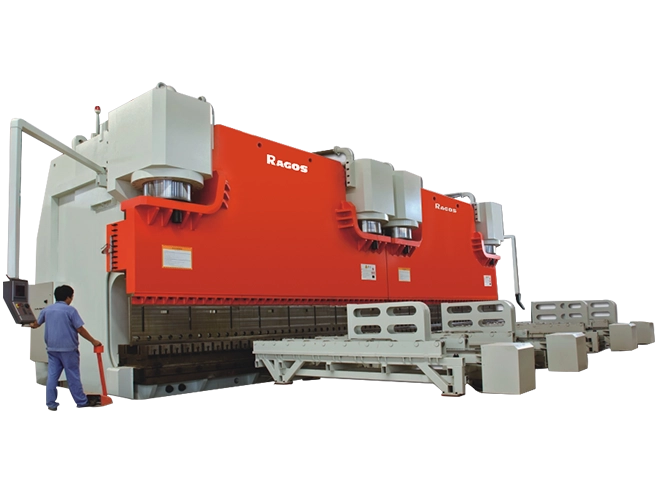
All RAGOS press brakes across this tonnage range use the 0.5-inch Amada-style tang seat as standard. For structural and heavy plate applications requiring 300+ тонны, посетите наш600-ton CNC press brake page.
CNC Controllers on Amada Style Press Brakes
Amada OEM machines use the proprietary AMNC 3i controller — not available on any third-party machine. Amada-compatible press brakes from other manufacturers use three industry-standard controllers that replicate or exceed AMNC 3i functionality.
- Delem DA-66T — the closest functional equivalent to the AMNC 3i; supports Y1/Y2 angle compensation, 8-axis back-gauge, 2D/3D part programming, and crowning correction. Operators transitioning from Amada typically need 1–2 days to adapt — not weeks.
- ESA S650 — full multi-axis CNC back-gauge, graphic bend simulation, and angle correction built in. Well suited to shops running complex profiles.
- Estun E21 — reliable mid-range controller for standard production bending with CNC back-gauge and springback compensation.
All three controllers support USB program import, G-code compatibility, and angle correction for springback — the three features shops miss most when leaving Amada OEM. For the RAGOS press brake with ESA S650 controller, посетитеESA S650 press brake product page.
Back-Gauge Compatibility When Transitioning from Amada
Amada OEM back-gauges use proprietary axis labeling (X, R, Z1/Z2). Delem and ESA controllers use the same physical axis layout but different menu naming. Before decommissioning existing Amada programs, export all bending sequences as PDF or DXF reference files. This prevents rebuilding programs from scratch on the new machine. All RAGOS CNC press brakes include a USB port and standard program import capability for a straightforward transition.
Why Buy an Amada-Compatible Press Brake Instead of Amada OEM
New Amada press brakes in the 80–160 ton range are priced from $120,000 Кому $300,000+ depending on configuration and lead time. Amada-compatible CNC press brakes from manufacturers like RAGOS deliver the same tooling standard, equivalent CNC back-gauge accuracy (±0,1 мм), and comparable structural rigidity at 40–65% lower cost.
Lead time is the second critical factor. Amada OEM typically ships in 16–28 weeks for new configurations. RAGOS Amada-compatible machines ship in 8–12 weeks on standard configurations — a meaningful difference for shops replacing a failed machine or expanding a production line on a deadline.
The third factor is spare parts. Amada OEM parts are proprietary and sourced through Amada's distribution network. RAGOS machines use standard hydraulic components, standard electrical parts, and Delem or ESA controllers — all available from multiple global suppliers with shorter lead times and lower per-part cost.
Based on installation feedback from shops with existing Amada tooling inventories, the transition to a RAGOS Amada-style machine carries zero tooling changeover cost and a standard 90-day operator adaptation period for full production efficiency. For the complete RAGOS CNC press brake range for sale, visit the product catalogue page.
RAGOS Amada Style Press Brake Models
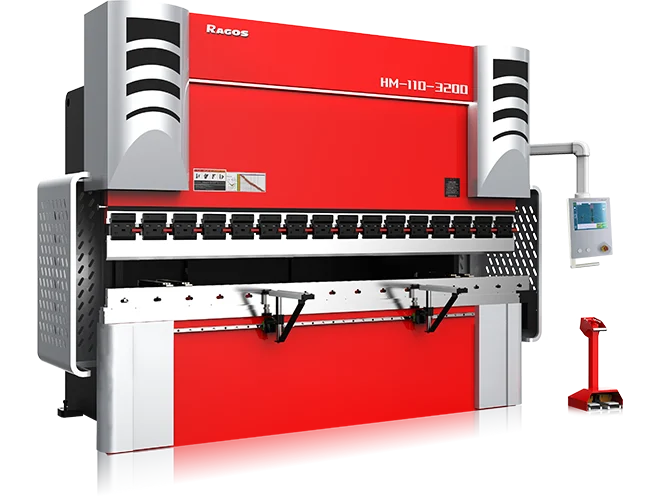
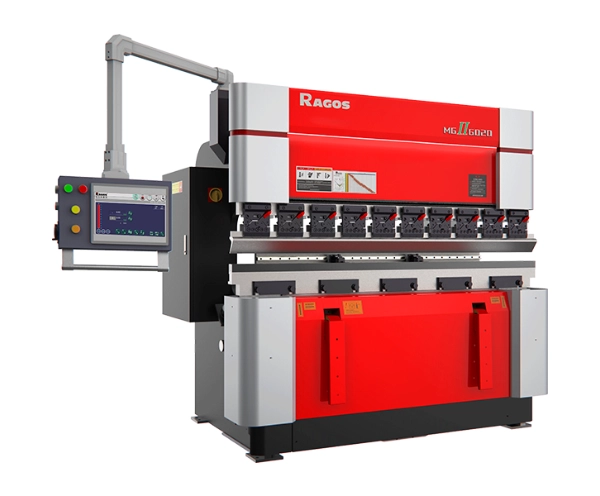
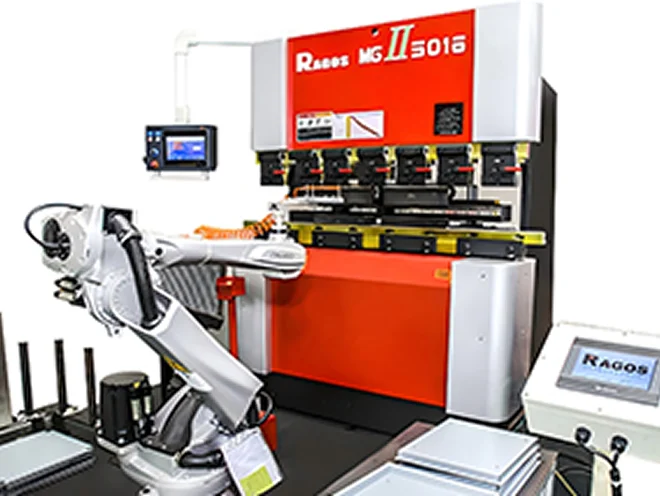
RAGOS builds Amada-style compatible press brakes across five configurations. Every machine uses a 0.5-inch (12.7миллиметр) punch tang seat as the confirmed standard — Amada, Mate Precision, Wilson Tool, and all other American-style tooling fits without adaptation.
Available configurations:
- Стандартный гидравлический пресс-тормоз с ЧПУ — 40-ton to 600-ton, Delem DA-66T или Estun E21, 3-Ось на 8-осевую заднюю колею
- Электрический сервопривод пресс-тормоз — energy-saving, low-noise, ideal for workshops requiring 220V single-phase operation: electric press brake product page
- Усиленный пресс-тормоз — нижний пучок движется вверх; предпочтительно для длинных или тяжёлых заготовок; Amada-style tooling compatibility confirmed: up-acting press brake page
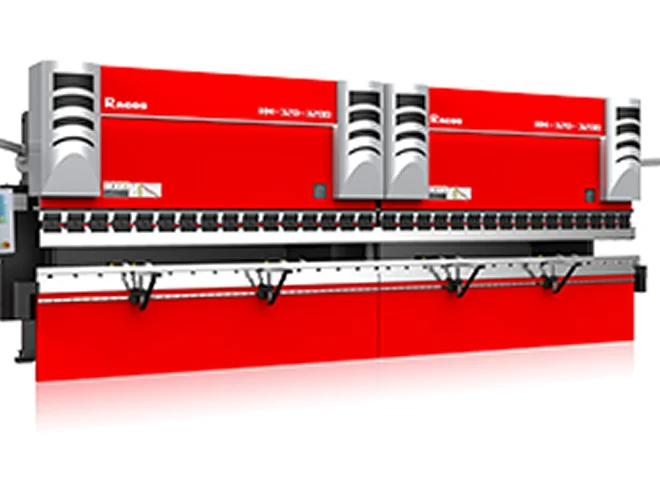
- 600-ton heavy-duty press brake — structural steel and plate bending above 20mm
- Пользовательские многоосевые конфигурации — available for shops requiring specific back-gauge travel, Длина кровати, or controller combinations
When production managers ask us which configuration to start with, the answer depends on one thing: your maximum material thickness and bend length. Those two figures determine tonnage and bed length — everything else follows. Tell us your tooling inventory, Требуемый тоннаж, and daily production volume — we will confirm Amada compatibility and recommend the correct configuration.
Часто задаваемые вопросы
Q1: What is an Amada style press brake?
An Amada style press brake is a down-acting hydraulic CNC press brake that uses the American-style punch-and-die tooling system — defined by a 0.5-inch (12.7миллиметр) punch tang width and a standard punch height of 120mm (4.72 дюймы). It is the most widely used press brake tooling standard in North America. Any press brake built to this same dimensional standard accepts Amada, Mate Precision, Wilson Tool, and all other American-style compatible tooling. Кexplore RAGOS Amada-compatible press brake tooling options, visit the tooling product page.
Q2: What is the difference between Amada style and European style press brake tooling?
The main difference is the tang width and force application method. Amada style uses a 0.5-inch (12.7миллиметр) tang with linear, direct force application and a manual clamping system. European style uses a narrower 13mm tang with an offset force design and a snap-in quick-change latch. The two systems are not interchangeable. If your shop holds an existing Amada tooling inventory, you need an American-style compatible machine to avoid full retooling cost. Кview the full RAGOS CNC press brake range for sale, visit the product catalogue.
Вопрос 3: Can I use Amada tooling on a non-Amada press brake?
Yes — any press brake built to the American-style tooling standard accepts Amada tooling without modification. The tooling is not proprietary to Amada OEM machines. Перед покупкой, confirm three things: the punch tang width is 0.5 дюймы (12.7миллиметр), the punch height matches the 120mm standard, and the daylight opening is sufficient for your tooling stack. All RAGOS CNC press brakes meet all three criteria. Кconfirm compatibility with the RAGOS ESA S650 press brake, visit the product specification page.
Q4: What CNC controller does an Amada style press brake use?
Amada OEM machines use the proprietary AMNC 3i controller, which is not available on third-party machines. Amada-compatible press brakes use industry-standard controllers: Delem DA-66T, ESA S650, or Estun E21 — all supporting Y1/Y2 angle compensation, multi-axis CNC back-gauge, crowning correction, and springback adjustment. The Delem DA-66T is the closest equivalent to the AMNC 3i in terms of programming logic. Operators transitioning from Amada typically adapt in 1–2 days. Кexplore the RAGOS up-acting press brake with CNC control, Посетите страницу продукта.
Q5: How much does an Amada style press brake cost?
New Amada OEM press brakes in the 80–160 ton range are priced from $120,000 Кому $300,000+ depending on bed length and controller. Amada-compatible alternatives from manufacturers like RAGOS deliver the same tooling standard and equivalent back-gauge accuracy at 40–65% lower cost, with lead times of 8–12 weeks vs. 16–28 weeks for Amada OEM. Entry-level Amada-style compatible machines in the 40–63 ton range are available at significantly lower price points. Кview the RAGOS 600-ton CNC press brake for heavy-duty applications, Посетите страницу продукта.
Three Facts That Define the Amada Style Press Brake Decision
Three facts close this decision. Первый: "Amada style" is a tooling standard — not a brand requirement. Any press brake with a 0.5-inch tang seat and 120mm punch height accepts your full Amada tooling inventory. Второе: the 5-point compatibility checklist — tang width, punch height, V-die range, Дневное открытие, back-gauge accuracy — is the only verification you need before committing to a machine. Третье: Amada-compatible alternatives now deliver equivalent specifications at 40–65% lower cost with shorter lead times. Рынок металлообработочного оборудования растёт в 6.9% CAGR — and shops that separate tooling standards from brand loyalty gain production capacity faster and at lower capital cost. Share your current tooling inventory, Требуемый тоннаж, and bed length with the RAGOS team for a compatibility confirmation and configuration quote.