

Meilleurs réglages de frein à pression pour plier des tôles d’aluminium (Configuration de démarrage)
Plier de l’aluminium sur un frein à pression ressemble moins à un travail industriel lourd qu’à de l’ingénierie de précision. Alors que l’aluminium est physiquement plus facile à déplacer que l’acier, Il est nettement plus exigeant en termes d’esthétique de surface et d’intégrité structurelle. Un mauvais paramètre peut entraîner un lot de pièces fissurées ou une finition de surface qui semble avoir été traînée sur un chemin de gravier.
Maîtriser l’aluminium nécessite de changer d’état d’esprit "combien de force puis-je appliquer" à "à quel point puis-je contrôler la déformation avec précision ?" Obtenir des résultats de haute qualité, Votre installation doit tenir compte du comportement unique de rendement du matériau, Récupération à haute élasticité, et une sensibilité extrême à la pression de surface.
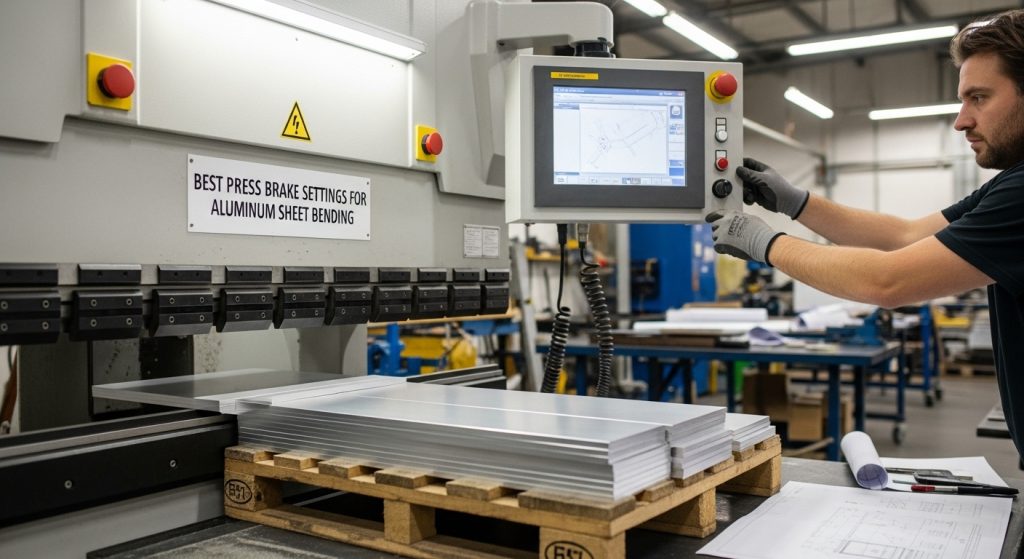
Qu’est-ce qu’un frein à pression?
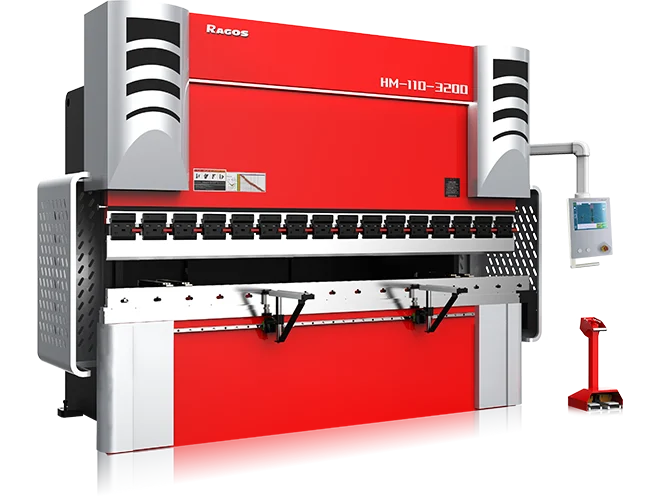
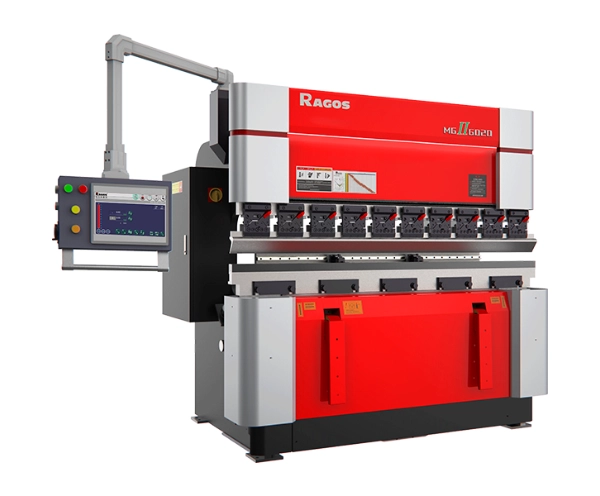
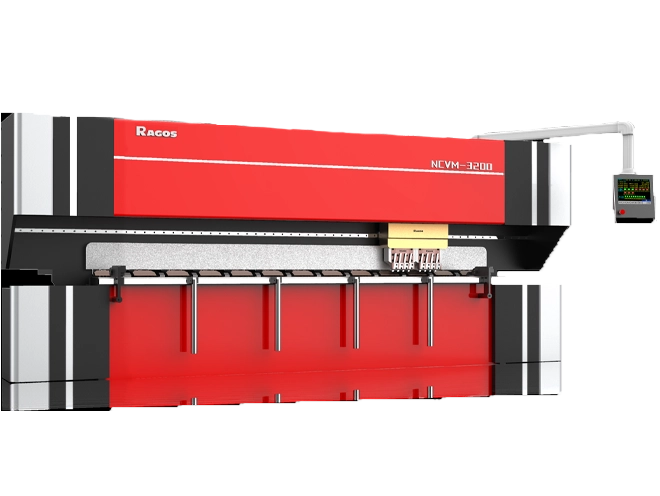
A Frein à pression est une pièce essentielle de machinerie industrielle conçue pour plier les feuilles et les plaques, la tôle la plus courante. Cela est réalisé en serrant la pièce entre un poinçon et une matrice correspondants. Bien que le concept semble simple — appliquer une force sur un morceau de métal pour en changer la forme — le frein à pression moderne est une merveille d’ingénierie de précision.
En 2026, La technologie s’est divisée en deux voies principales: Hydraulique et Électrique. Les freins à pression hydrauliques restent le choix pour les applications à haute tonnage, comme l’acier de structure, tandis que les freins à pression électriques ont pris le relais des vitesses à haute vitesse, marché de précision pour des matériaux plus fins comme l’aluminium. Le "Frein" dans le nom ne fait pas référence à l’arrêt; il dérive d’un terme archaïque signifiant : "Rupture" ou "Plier" Les fibres du matériau.
Les composants principaux de la machine
Pour maîtriser vos réglages, Tu dois comprendre les quatre piliers du frein à pression:
- Le Bélier: La partie supérieure mobile qui maintient le poinçon.. Dans les modèles CNC, La position du bélier est contrôlée à l’intérieur des microns.
- Le Lit: La partie inférieure fixe où le dé est placé.
- L’outillage: Cela se compose de Punch (L’outil supérieur) et le Le (l’outil inférieur en forme de V). La relation entre ces deux facteurs détermine l’angle de flexion et le rayon.
- Le Backgauge: Un système de positionnement automatisé garantissant que la feuille est placée à la profondeur exacte requise pour la courbure.
Pourquoi l’aluminium nécessite des réglages de frein à pression différents de ceux de l’acier
L’aluminium n’est pas seulement "acier doux." Elle a un seuil de déformation plastique plus bas et une finition de surface beaucoup plus sensible. Si vous utilisez des paramètres d’acier standards, Vous rencontrerez probablement ces problèmes spécifiques:
- Distorsion par tonnage excessif: Parce que l’aluminium cède facilement, Une force excessive n’améliore pas la précision — elle provoque un flambement ou un flambement du matériau "Évier" à la ligne de virage.
- Rayures de surface: L’aluminium est un "Irritant" Métal. Les surfaces d’outillage rugueuses transfèrent physiquement les marques sur la tôle beaucoup plus rapidement qu’elles ne le feraient sur l’acier au carbone.
- Sensibilité aux grains: L’aluminium a une structure de grain très prononcée. Se plier sans ajuster la direction du grain entraîne souvent des micro-fractures.
Pourquoi l’aluminium nécessite-t-il des réglages de frein à pression différents de ceux de l’acier?
L’aluminium se comporte différemment en raison de sa faible limite d’élasticité et de sa grande sensibilité de surface. Contrairement à l’acier doux, qui peut supporter une forte pression localisée sans marquage significatif, La faible dureté de l’aluminium signifie que chaque imperfection de votre outillage ou chaque pic de vitesse de votre RAM est enregistré sur la surface du matériau.
Un autre facteur critique est le Écartage d’angle en aluminium à récupération élastique. L’aluminium présente généralement plus de rebond que l’acier doux car son rapport entre la limite d’élasticité et le module d’élasticité est plus élevé. Si les réglages de votre machine ne prennent pas cela en compte "Dérive," Vos angles finaux ne répondront jamais aux spécifications d’impression.
Quelle quantité de tonnage faut-il utiliser lors de la pliée de la feuille d’aluminium?
Fixer le bon tonnage est un exercice d’équilibre. Il faut suffisamment de force pour créer une déformation plastique propre, Mais tu dois rester en dessous de la Seuil de distorsion de surface. Le surdimensionnage en aluminium n’use pas seulement vos outils; elle écrase physiquement le matériau, Affinement de la ligne de courbure et affaiblissement de la pièce.
En règle générale, L’aluminium nécessite à peu près 40 % à 50 % de la force Utilisé pour l’acier doux. Par exemple, Si vous pliez une feuille de 3 mm:
- Acier doux: ~25 tonnes par mètre.
- Aluminium: ~12 à 15 tonnes par mètre.
En utilisant un Formation de force faible approche empêche le poinçon de "Enterrement" lui-même trop profondément enfoncé dans le métal, ce qui maintient une épaisseur constante et évite le flambement par compression souvent observé sur les feuilles d’aluminium fines.
Quelle est la meilleure vitesse d’approche et de flexion pour l’aluminium?
Dans la fabrication de l’aluminium, La vitesse tue la qualité. Des vitesses d’approche élevées créent un "choc" Lorsque le poinçon touche pour la première fois le matériau, menant à Contrainte d’impact au contact de l’outil. Cet impact peut laisser une ligne horizontale visible (Mark témoin) sur la partie avant même le début du virage.
Niveaux de vitesse recommandés:
- Vitesse d’approche: Ralentissez la RAM avant qu’elle n’atteigne le "Point muet" (Le moment avant le contact). Cela garantit un toucher doux.
- Vitesse de pression: Garde ta vitesse de courbe constante. Une accélération soudaine du bélier provoque un transfert de vibration, ce qui peut conduire à "Marques de bavardage" sur le rayon de courbe.
- Retour de la course: Utilisez un déchargement contrôlé. Relâcher la pression trop rapidement peut provoquer la décharge de la pièce "Saut," Risquant de rayer le matériau contre les épaules de la matrice alors qu’il recule.
Pourquoi la pression de maintien est-elle importante pour la stabilité de l’angle de flexion en aluminium?
Les molécules d’aluminium ont besoin de temps pour "Détends-toi" dans leur nouvelle forme. En utilisant un Synchronisation de la relaxation des contraintes du matériau (Phase de séjour) au bas du coup, Vous laissez la déformation plastique se stabiliser.
Sans phase de séjour, le Délai de récupération élastique est imprévisible. Un court séjour (généralement 0,2 à 0,5 seconde) permet au matériau de prendre un "Ensemble," Améliorant significativement la répétabilité de vos angles de flexion sur une grande série de production. Toutefois, Évitez de trop habiter, car cela peut entraîner une compression de surface inutile sur des feuilles très fines.
Comment la sélection de la puce V influence-t-elle la qualité et la précision de la surface en aluminium?
Le choix de la largeur de la puce en V est la principale variable pour la protection de la finition de surface. Un dé V étroit augmente le Pression d’épaule à la dépression, qui est la principale cause du marquage de transfert de surface.
| Épaisseur de la feuille | Ouverture en V recommandée | Résultat |
| 1mm - 2 mm | 10x - Épaisseur 12x | Marquage réduit, Rayon plus grand |
| 3 mm - 5mm | 8x - 10x Épaisseur | Bilan standard |
| 6 mm | 10x - Épaisseur 12x | Plus sûr pour les plaques lourdes, Empêche les fissures |
En élargissant le dé V, On répartit la force de formation sur une plus grande surface. Cela réduit la pression aux points de contact et donne un résultat plus propre., Arrivée sans marque.
Quel rayon de poinçon convient le mieux pour la pliure des feuilles d’aluminium?
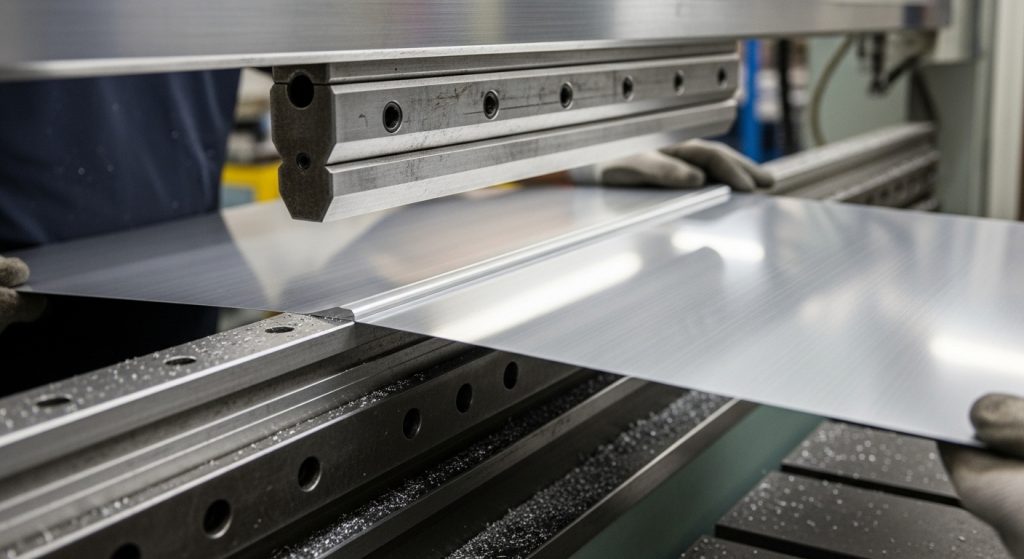
Utilisation d’un dièses "Couteau" Le punch sur de l’aluminium est une recette pour le désastre. L’aluminium nécessite un plus grand Rayon intérieur pour éviter une tension sur les fibres extérieures de la courbure. Si la pointe du poinçon est trop tranchante, Il agira comme une lame, créer un point de concentration de contrainte qui conduit à des fissures.
Pour déplacer le Stabilisation par compression de l’axe neutre, Utilisez toujours une poinçonne dont le rayon est au moins égal à l’épaisseur du matériau ($R ge T$). Pour les alliages plus durs comme le 6061-T6, Vous pourriez avoir besoin d’un rayon 2 ou 3 fois plus gros pour éviter les fractures.
Comment les freins à pression CNC améliorent-ils la consistance de la flexion de l’aluminium?
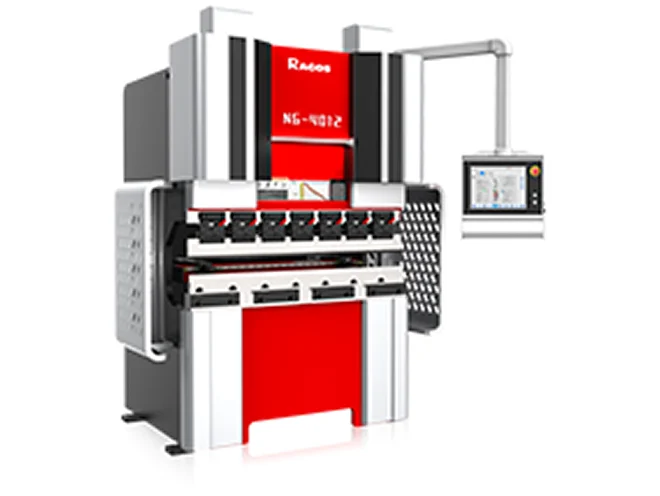
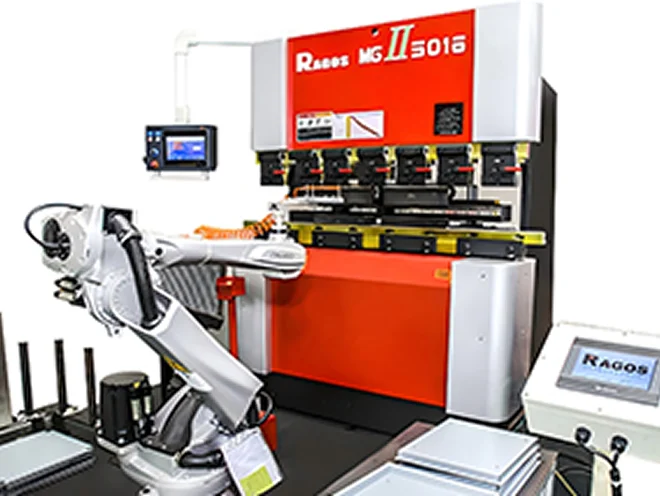
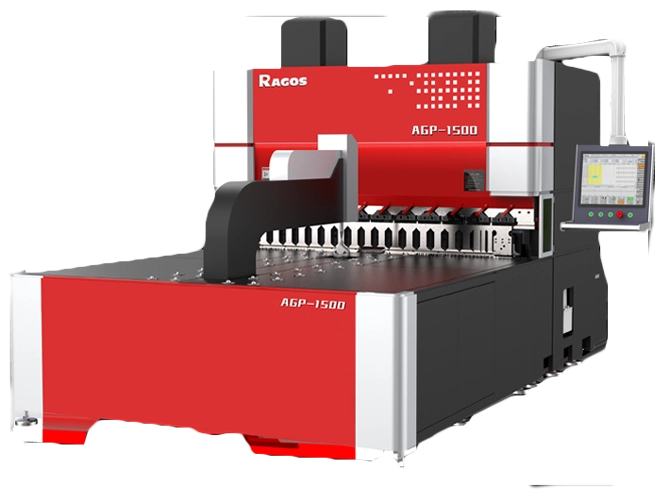
Moderne Freins à pression CNC sont essentiels pour l’aluminium car ils utilisent un Système d’apprentissage des paramètres de formage numérique. Car la dureté de l’aluminium peut varier selon les lots, un système CNC peut compenser ces fluctuations en temps réel.
- Retour en boucle fermée: Les machines avancées mesurent l’angle réel pendant le virage et ajustent la profondeur du ram pour atteindre le degré exact, Quel que soit le retour de ressort du matériau.
- Mémoire de programme: Une fois que vous trouvez la vitesse et les réglages de maintien parfaits pour une qualité spécifique d’aluminium, le CNC les stocke, Assurer Précision répétée À chaque fois que tu fais ce travail.
- Positionnement des servomoteurs: Les jauges de retour haute résolution empêchent la fine feuille de glisser, ce qui est essentiel pour la stabilité des petites brides.
Quelles sont les erreurs les plus courantes lors de la mise en place de travaux de pliage de l’aluminium?
Même les opérateurs expérimentés peuvent tomber dans des pièges lorsqu’ils passent de l’acier à l’aluminium. Évitez ces erreurs courantes de configuration de processus:
- Utilisation des paramètres de l’acier: Ne jamais supposer "Réglages en acier" ça marchera. L’aluminium nécessite moins de tonnage et des vitesses plus lentes.
- Coup trop tranchant: Une pointe tranchante fissurera le rayon extérieur. Utilisez un poinçon radieux.
- Négliger la direction des grains: La flexion parallèle au grain de laminage est une cause principale de Instabilité de la déformation et fractures. Pliez-vous toujours dans le sens du fil quand c’est possible.
- Dirty Tooling: Aluminium "micro" Sur les épaules, les épaules agissent comme du papier de verre. Gardez vos outils soignés et propres.
Comparaisons et leçons de la configuration stratégique
Pour ceux qui gèrent des lignes de production diverses, Comprendre en quoi le montage en aluminium diffère des autres matériaux est essentiel pour l’efficacité sur le plancher d’atelier.
- Aluminium vs. Acier: Tandis que Frein à presse en tôle en acier Les réglages se concentrent sur la gestion des charges élevées, Les réglages en aluminium se concentrent sur la gestion de l’intégrité et de la ductilité de la surface.
- Aluminium vs. Inox: Frein à pression en acier inoxydable Le travail nécessite une force bien plus élevée et prend en compte un reculement extrême, tandis que l’aluminium nécessite de la finesse et de la prévention des fissures.
- Panneaux fins HVAC: Leçons tirées de Frein à pression CVC Les flux de travail montrent que la prévention de la déformation de surface sur les longues brides nécessite une couronne précise et une légère pression.
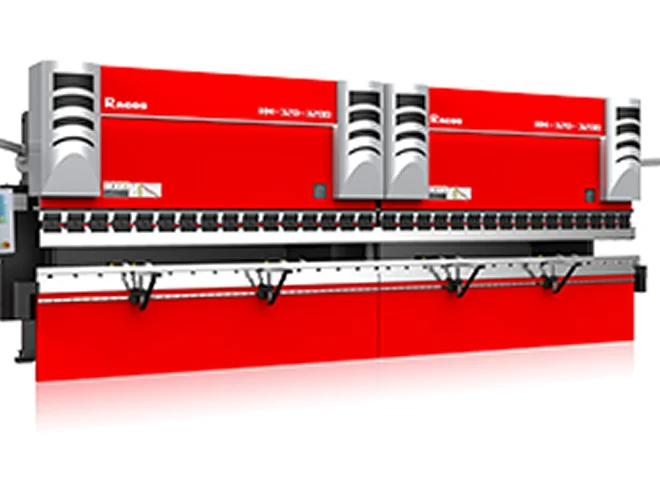
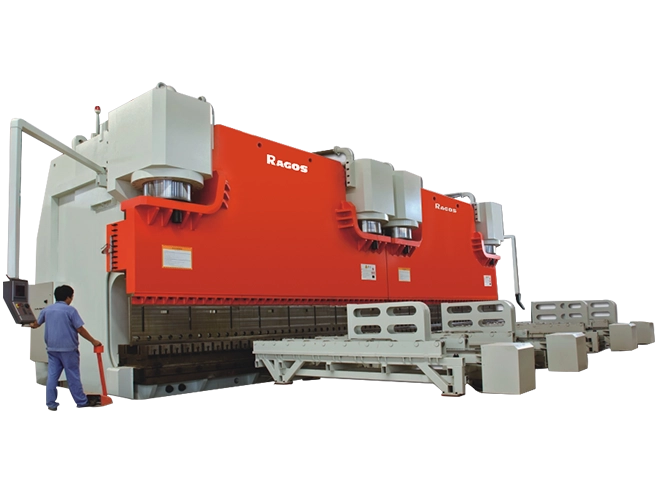
- Flexion des longs panneaux: Lors de la pliabilité des panneaux d’aluminium architectural sur plus de 4 mètres, En utilisant un Frein à pression en tandem assure l’équilibre de la répartition de la charge et évite la torsion de la longue feuille.
Dernière réflexion
Le succès en flexion de l’aluminium est une transition de la force à la finesse. En ralentissant votre approche, élargir vos matrices en V, et en utilisant un rayon de poing généreux, On peut produire des pièces en aluminium aussi solides que belles. Lorsque vous respectez la courbe de déformation unique du matériau, Votre taux de ferraille disparaît et votre stabilité de production atteint de nouveaux sommets.