

Usinage par faisceau laser: Processus, Types, Avantages et applications
Usinage par faisceau laser (LBM) désigne un procédé d’usinage sans contact basé sur l’énergie thermique et pouvant être utilisé pour découper un matériau en focalisant un faisceau laser à haute énergie sur une pièce. Chauffage localisé, La fusion et la vaporisation du matériau sont toutes impliquées grâce à l’utilisation d’un faisceau intense pour produire une coupe précise, Forage ou modification de surface.
Contrairement aux techniques d’usinage traditionnelles où l’outil mécanique est en contact, La LBM implique une énergie lumineuse focalisée, ce qui signifie qu’il n’y a pas d’usure de l’outil et que la contrainte mécanique exercée sur les matériaux fins est minimale.
Cet article décrit le fonctionnement de l’usinage laser par faisceau, ses principaux constituants, Avantages, Défis, et actuellement utilisé dans l’industrie.
Qu’est-ce que l’usinage par faisceau laser?
L’usinage par faisceau laser est un exemple de procédé d’usinage non traditionnel qui nécessite l’utilisation d’un faisceau focalisé d’énergie laser pour abraser les surfaces métalliques et non métalliques.
Fondamentalement, LBM se concentre volontairement sur une cohérence, lumière monochrome sur une pièce. L’énergie absorbée augmente rapidement la température, Faisant ainsi fondre et vaporiser le matériau.
Puisqu’elle n’implique aucune force de coupe ni déformation mécanique, selon les forces non contactées, Le procédé n’affecte pas les feuilles fines ni les matériaux fragiles ni les caractéristiques de moins d’un micromètre de diamètre - Idéal.
Principe de fonctionnement de l’usinage par faisceau laser
Le mécanisme fondamental de la LBM comprend trois étapes:
1. Génération laser
Une source laser à haute énergie (comme le CO₂ ou les lasers à semi-conducteurs) génère un faisceau intense de lumière cohérente .
2. Focalisation par faisceau
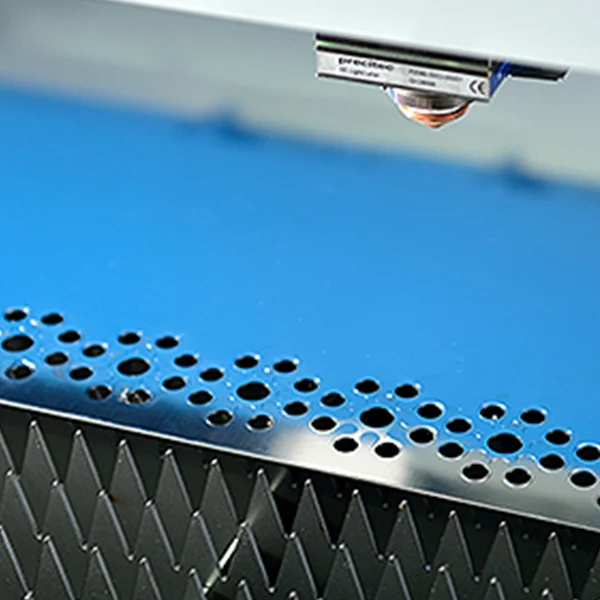
Les lentilles optiques et les miroirs focalisent le faisceau sur une taille de tache très petite, augmentation significative de la densité d’énergie .
3. Retrait des matériaux
Le faisceau focalisé interagit avec la surface, provoquant un chauffage rapide, Fonte, et vaporisation. Le matériau est expulsé de la zone de coupe .
L’absence de contact mécanique empêche l’usure des outils et permet l’automatisation des trajectoires de coupe complexes .
Principaux composants d’un système LBM
Un système typique d’usinage à faisceau laser comprend:
-
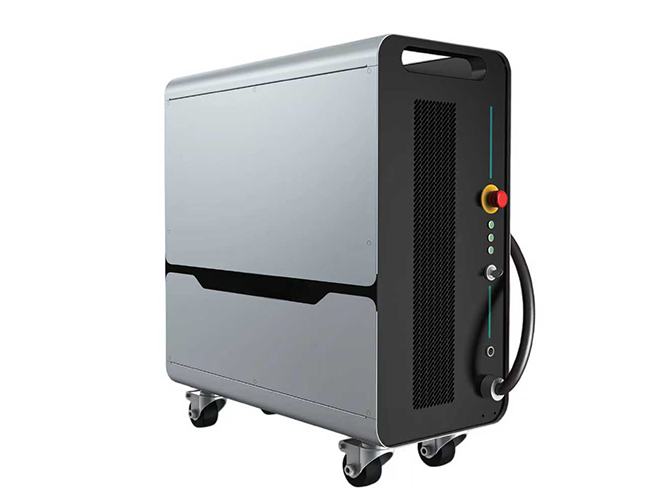
Source laser (CO₂, Fibre, ou à semi-conducteurs)
-
Alimentation électrique et système d’excitation
-
Objectifs de mise au point optique et miroirs
-
Système de contrôle CNC pour un mouvement de précision
-
Système de refroidissement et d’assistance à gaz
Les systèmes laser modernes contrôlés par CNC permettent des opérations reproductibles et automatisées .
Types de lasers utilisés en usinage
Différents types de laser sont utilisés selon l’application:
CO₂ Lasers
Courant dans la découpe industrielle; fonctionnent avec des mélanges gazeux et sont largement utilisés pour le traitement de la tôle .
Lasers à fibre
Reconnu pour sa grande efficacité et sa performance de coupe précise dans les métaux .
Semi-conducteur / Nd:YAG Lasers
Utilisé dans le forage de précision, Marquage, et applications de micro-usinage .
Chaque type offre des caractéristiques différentes de longueurs d’onde, Influence sur l’absorption et la performance de coupe.
Avantages de l’usinage à faisceau laser
L’usinage par faisceau laser offre plusieurs avantages majeurs:
1. Haute précision
La LBM peut atteindre une précision de traitement au niveau micron et des géométries complexes .
2. Aucune usure des outils
Puisqu’il n’y a pas de contact physique, Les outillages ne se dégradent pas avec le temps .
3. Œuvres sur plusieurs matériaux
Il peut usiner les métaux, matière plastique, Céramique, verre, et composites .
4. Zone minimale affectée par la chaleur
Comparé à certains procédés thermiques conventionnels, LBM peut maintenir une zone relativement faible affectée par la chaleur .
5. Automatisation et intégration CNC
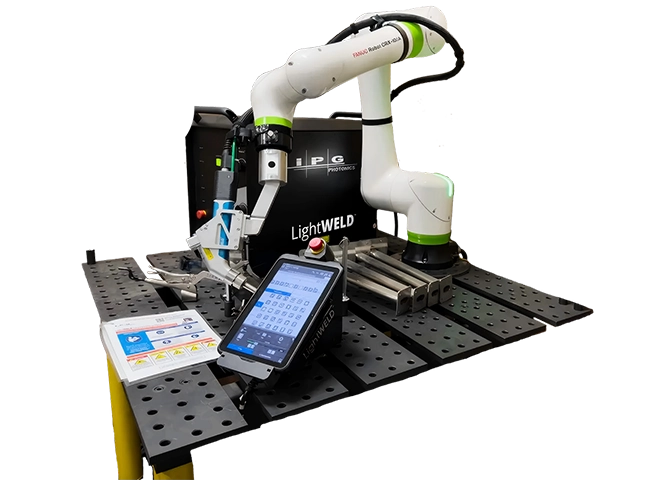
Les systèmes laser s’intègrent facilement avec l’automatisation et les systèmes robotiques pour la production de masse .
Limitations de l’usinage par faisceau laser
Malgré ses avantages, LBM a certaines contraintes:
1. Investissement initial élevé
Les systèmes laser nécessitent un coût d’investissement important .
2. Limitations d’épaisseur
L’usinage laser peut présenter des limites lors de la découpe de matériaux très épais .
3. Affinité et qualité du trou
Le forage profond peut entraîner un léger affinement ou une variation dimensionnelle .
4. Consommation d’énergie
L’usinage laser consomme une énergie importante, Contribuant aux coûts d’exploitation .
Ces facteurs doivent être pris en compte lors du choix de la LBM pour des applications industrielles.
Applications industrielles de l’usinage par faisceau laser
L’usinage laser à faisceau est largement utilisé dans:
Aérospatiale
Découpe de précision et micro-perçage pour composants légers .
Automobile
Découpe de tôle et fabrication de pièces structurelles .
Électronique
Usinage micro-caractéristique et fabrication de circuits .
Dispositifs médicaux
Microcomposants de haute précision et applications chirurgicales .
Parce que LBM supporte l’automatisation et une grande répétabilité, Il joue un rôle central dans les systèmes de fabrication avancés.
Usinage laser par faisceau vs usinage conventionnel
Comparé à la découpe mécanique:
-
Aucun contact avec l’outil mécanique
-
Capacité d’automatisation supérieure
-
Une plus grande précision dans les matériaux fins ou délicats
Cependant, L’usinage conventionnel peut encore être préféré pour des sections très épaisses ou un enlèvement lourd de la pièce.
Conclusion
L’usinage par faisceau laser désigne un guide efficace sans contact qui consiste à utiliser une énergie lumineuse focalisée pour trancher, Aléser ou graver les matériaux à un niveau extrêmement précis. LBM facilite des formes complexes, intégration de l’automatisation et du traitement des matériaux multiples en utilisant la force thermique plutôt que mécanique.
Bien que les coûts d’investissement et la restriction d’épaisseur soient élevés, Ce sont les avantages de l’usinage laser: précision, Pas d’usure des outils, et la compatibilité CNC, qui lui permettent de constituer un pilier de la fabrication moderne.