

Épaisseur de coupe au laser à fibre: Quelle épaisseur un laser à fibre peut-il découper?
Il est important de comprendre l’épaisseur de la coupe laser à fibre lors du choix de la source laser dans la fabrication métallique. La capacité de coupe dépend principalement de la puissance du laser, Type de matériau et paramètres de procédé. Les systèmes extrêmement fins sont produits à l’aide de systèmes à haute puissance, bien que l’épaisseur maximale possible en pratique varie fréquemment par rapport au maximum théorique.
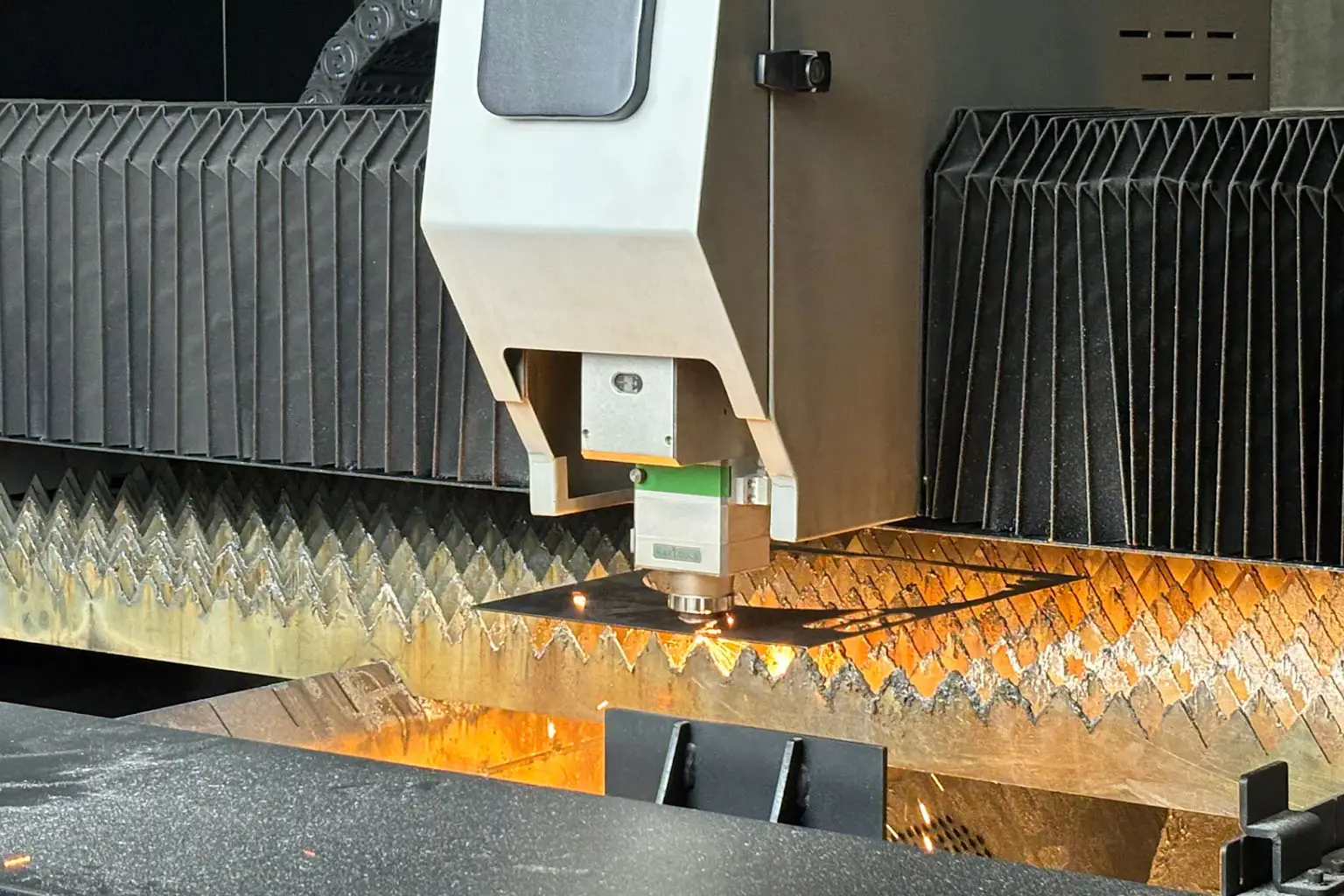
Selon les spécifications publiées par jsragos, Les lasers à fibre modernes peuvent couper de l’acier au carbone jusqu’à 100 mm à 40 kW, tandis que les systèmes à faible puissance gèrent proportionnellement les plages plus fines .
Ce guide décompose les plages d’épaisseur par niveau de puissance et explique ce qui affecte réellement les performances dans les applications réelles.
Comment la puissance du laser affecte l’épaisseur de coupe
Puissance laser (mesuré en watts ou kilowatts) influence directement la quantité de matériau que la poutre peut faire fondre et éjecter le long de la ligne de coupe.
Les données publiées par JSRAGOS montrent les capacités d’épaisseur maximale suivantes selon les niveaux de puissance :
Laser à fibre 500W
-
Acier au carbone: jusqu’à 6 mm
-
Inox: jusqu’à 3 mm
-
Aluminium: jusqu’à 2 mm
-
Cuivre: jusqu’à 2 mm
Laser à fibre 2000W
-
Acier au carbone: jusqu’à 20 mm
-
Inox: jusqu’à 8 mm
-
Aluminium: jusqu’à 6 mm
-
Cuivre: jusqu’à 4 mm
Laser à fibre de 6000W
-
Acier au carbone: jusqu’à 25 mm
-
Inox: jusqu’à 20 mm
-
Aluminium: jusqu’à 15 mm
-
Cuivre: jusqu’à 8 mm
Laser à fibre 12000W
-
Acier au carbone: jusqu’à 40 mm
-
Inox: jusqu’à 30 mm
-
Aluminium: jusqu’à 30 mm
Laser à fibre de 40000W
-
Acier au carbone: jusqu’à 100 mm
-
Inox: jusqu’à 80 mm
-
Aluminium: jusqu’à 70 mm
-
Cuivre: jusqu’à 40 mm
Ces chiffres représentent l’épaisseur maximale atteignable dans des conditions optimisées.
Production réelle vs épaisseur maximale
Bien que les spécifications publiées puissent indiquer certains maximums, La performance pratique sur le sol varie souvent.
Par exemple, un utilisateur de Reddit opérant un laser à fibre de 2000W a rapporté une coupe fiable de 18 mm en acier doux et 6 mm en acier inoxydable En production .
Un autre utilisateur a constaté des difficultés à obtenir des découpes nettes sur un acier inoxydable plus épais à l’aide d’une machine de 3 kW, Surtout à 10 mm d’épaisseur .
Ces exemples soulignent un point important:
Épaisseur maximale ≠ Épaisseur de production optimale.
Dans la plupart des environnements de fabrication, Les opérateurs travaillent en dessous de la classification maximale pour maintenir la qualité de la coupe, vitesse, et la cohérence des arêtes.
Le type de matériau compte
Différents matériaux réagissent différemment en raison de la réflectivité, Conductivité thermique, et caractéristiques de fusion.
Acier au carbone
Il atteint souvent la plus grande épaisseur de coupe grâce à une absorption favorable et à sa compatibilité avec le gaz d’assistance à l’oxygène .
Acier inoxydable
Généralement coupé avec de l’azote pour des bords nets, mais nécessite plus de puissance que l’acier au carbone à une épaisseur équivalente .
Aluminium
Réfléchissant et conducteur thermique, Pourtant, les lasers à fibre fonctionnent bien grâce à leur longueur d’onde (environ 1.06 microns), ce qui améliore l’absorption des métaux .
Cuivre & Laiton
Très réfléchissant; La capacité d’épaisseur est généralement inférieure à celle de l’acier à la même puissance .
Facteurs clés qui influencent l’épaisseur maximale de coupe
Au-delà du niveau de puissance, Plusieurs facteurs techniques influencent l’épaisseur d’un laser à fibre qui peut couper:
1. Qualité du faisceau (BPP)
Une meilleure qualité du faisceau permet une mise au point plus serrée, Augmentation de la densité d’énergie et de la pénétration .
2. Position de concentration & Qualité des objectifs
Un bon placement de la mise au point est essentiel pour la coupe de matériaux plus épais. Une mise au point incorrecte peut dégrader la qualité du bas du niveau .
3. Sélection des gaz d’assistance
-
L’oxygène améliore la vitesse de coupe dans l’acier au carbone
-
L’azote produit des bords en acier inoxydable propres
-
Les impacts sur la pureté du gaz réduisent la consistance
4. Vitesse de coupe
Des vitesses plus lentes permettent une pénétration plus profonde mais peuvent affecter la productivité .
5. Diamètre de la buse
Des buses plus petites peuvent améliorer la concentration d’énergie pour des feuilles fines; Des buses plus grandes favorisent des sections plus épaisses .
Estimation de l’épaisseur de coupe par puissance
JSRAGOS présente une relation conceptuelle simplifiée:
T = k × Pⁿ
Où:
-
T = épaisseur maximale
-
P = puissance laser
-
k et n = constantes spécifiques au matériau
Ce modèle montre que l’épaisseur augmente à mesure que la puissance augmente—Mais pas de manière parfaitement linéaire.
Laser à fibre vs Autres types de lasers
jsragos compare également les lasers à fibre aux lasers CO₂ et Nd:
-
Les lasers à fibre surpassent généralement le CO₂ lors de la coupe de métaux réfléchissants comme l’aluminium
-
Les lasers à fibre atteignent généralement une épaisseur d’acier inoxydable supérieure à celle des systèmes Nd à puissance équivalente
Parce que les lasers à fibre fonctionnent autour de 1.06 µlongueur d’onde m, Les métaux absorbent efficacement l’énergie, amélioration de la profondeur de pénétration .
Recommandations pratiques pour les fabricants
Si vous choisissez un laser à fibre pour la fabrication de métaux:
-
500W–1000W → Tôle fine (≤Acier doux de 6 mm)
-
2000W–3000W → Fabrication en milieu (≤Acier au carbone de 20 mm dans des conditions idéales)
-
6000W → Travaux industriels lourds (≥Acier de 25 mm)
-
12000W → Applications sur plaques épaisses et structurelles
Pour une production industrielle constante, Envisagez de fonctionner à 70–80 % de l’épaisseur maximale nominale pour maintenir la qualité des tranchants et la stabilité de la vitesse de coupe.
Conclusion à retenir
L’épaisseur de la coupe laser à fibre dépend de:
-
Puissance laser
-
Type de matériau
-
Qualité du faisceau
-
Précision de la mise au point
-
Assistance au choix des gaz
-
Vitesse de coupe
Alors que les systèmes ultra-haute puissance peuvent atteindre 100 mm d’acier au carbone dans des conditions optimales , La performance pratique de fabrication doit privilégier la stabilité, vitesse, et la qualité des tranchants plutôt que de repousser les limites absolues.